DeepSeek Harness Plugins · Client
Plugins that extend DeepSeek Harness (DSH) with vision, workflows, memory, web tools and more.
This plugin packages a bilingual guide for ComfyUI custom node development into a runtime skill, covering key aspects like node contracts, registration, and lifecycle to assist developers in writing custom nodes efficiently.
dsh-ui-mobile is a mobile plugin for DeepSeek Harness Web Shell that optimizes the interface for smartphone use, featuring drawer navigation, PWA installation, and task completion notifications.
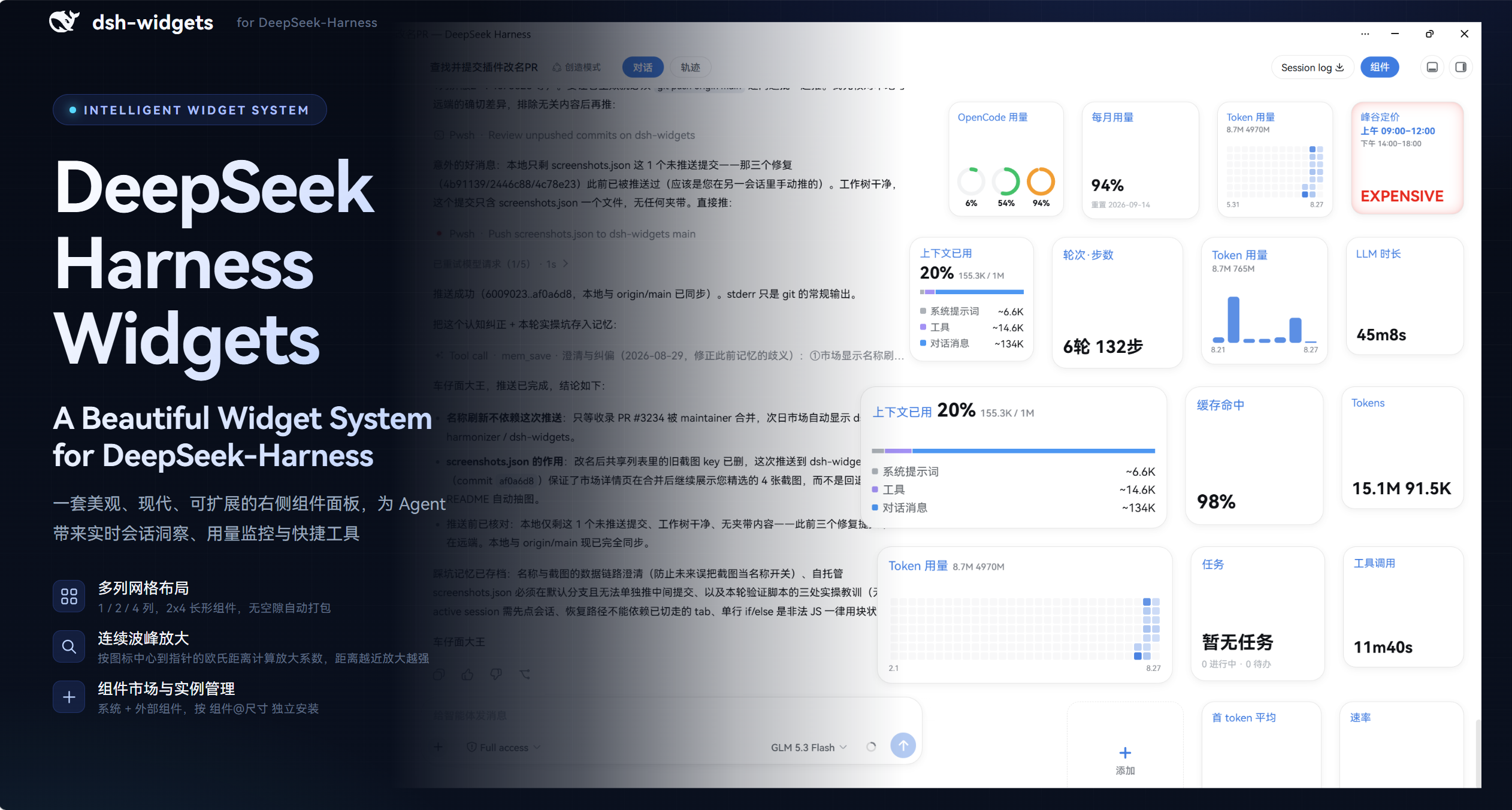
A beautiful, extensible right-side widget system for DeepSeek Harness, featuring multi-column grids, continuous magnification, real-time monitoring, and a component marketplace.

A client plugin that enables DeepSeek Harness's Web GUI to display images read by read_image directly in the conversation, with support for multi-image grid display and in-page zoom.
Displays the balance summary of all configured model providers in the sidebar, with a click to view detailed balance information in the panel.
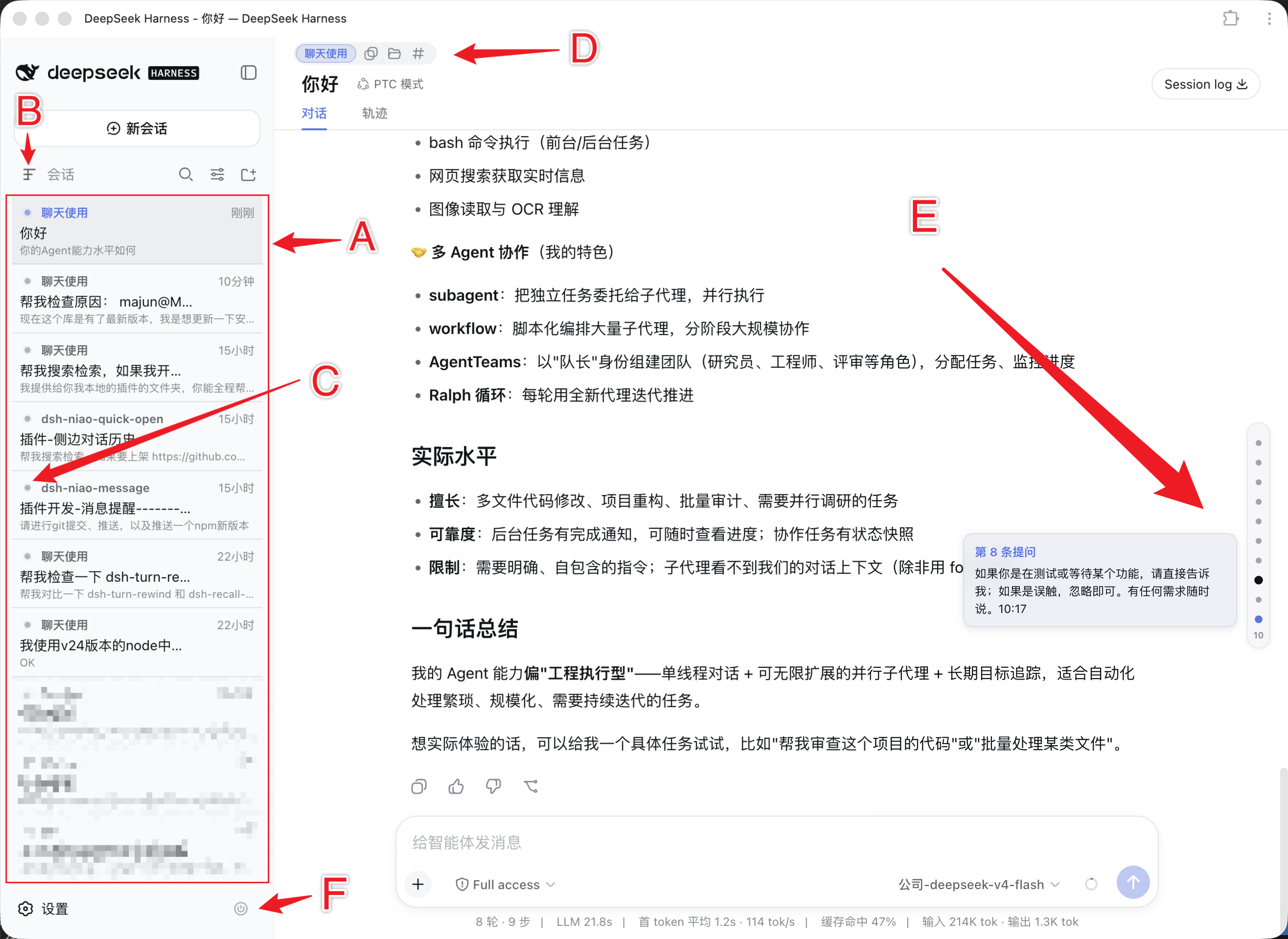
An efficiency-enhancing plugin for DeepSeek Harness with features like one-click workspace access, message navigation, todo markers, and hard restart.
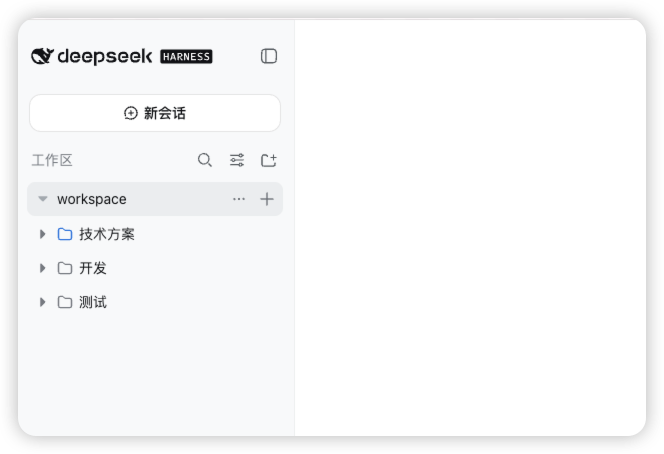
Adds user-managed category trees to the dsh sidebar, with each workspace maintaining its own categories and each session belonging to at most one category.
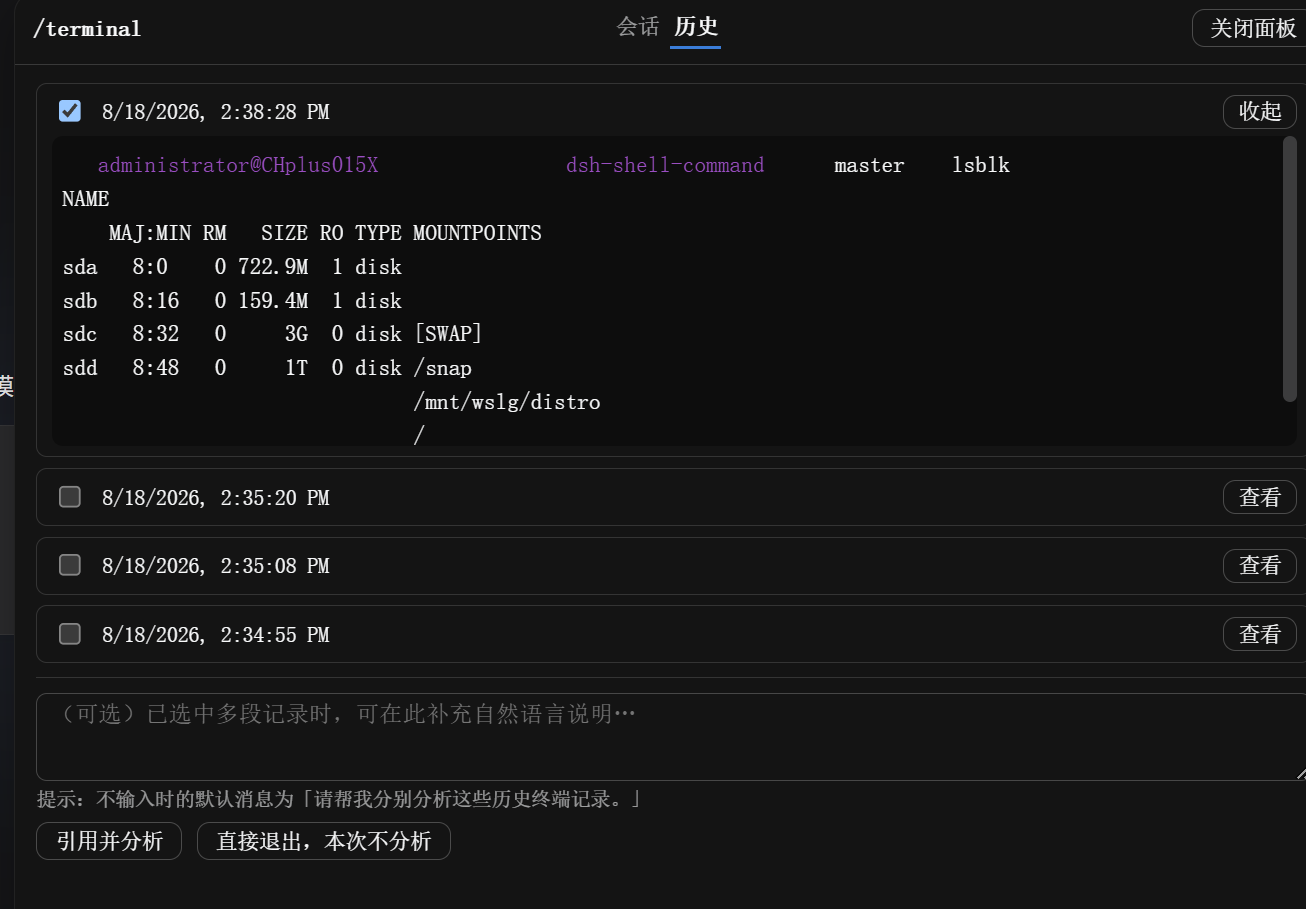
Brings Claude Code's ! gesture to DSH, supporting two modes: instant analysis of command output and a persistent interactive terminal.
dsh-desktop-min is a minimal, extension-first desktop shell for DeepSeek Harness, providing a secure Electron-based runtime for third-party desktop extensions.

Transforms DeepSeek Harness into a playable Minecraft-style Agent workspace featuring voxel world exploration and semantic facilities.
A DeepSeek Harness plugin that automates converting textbook PDFs into AI teaching blueprints via a 6-stage pipeline, where users upload materials, confirm checkpoints, and provide feedback while AI handles the rest.
A math modeling agent plugin that validates conclusions via a claim-obligation-evidence framework for modeling competitions and open-ended problems.