DeepSeek Harness Plugins · admin-security
Plugins that extend DeepSeek Harness (DSH) with vision, workflows, memory, web tools and more.
Mount multiple shared subdirectories on a DSH workspace so sessions can read and write across drives within workspace-write permissions, with no need for full access.
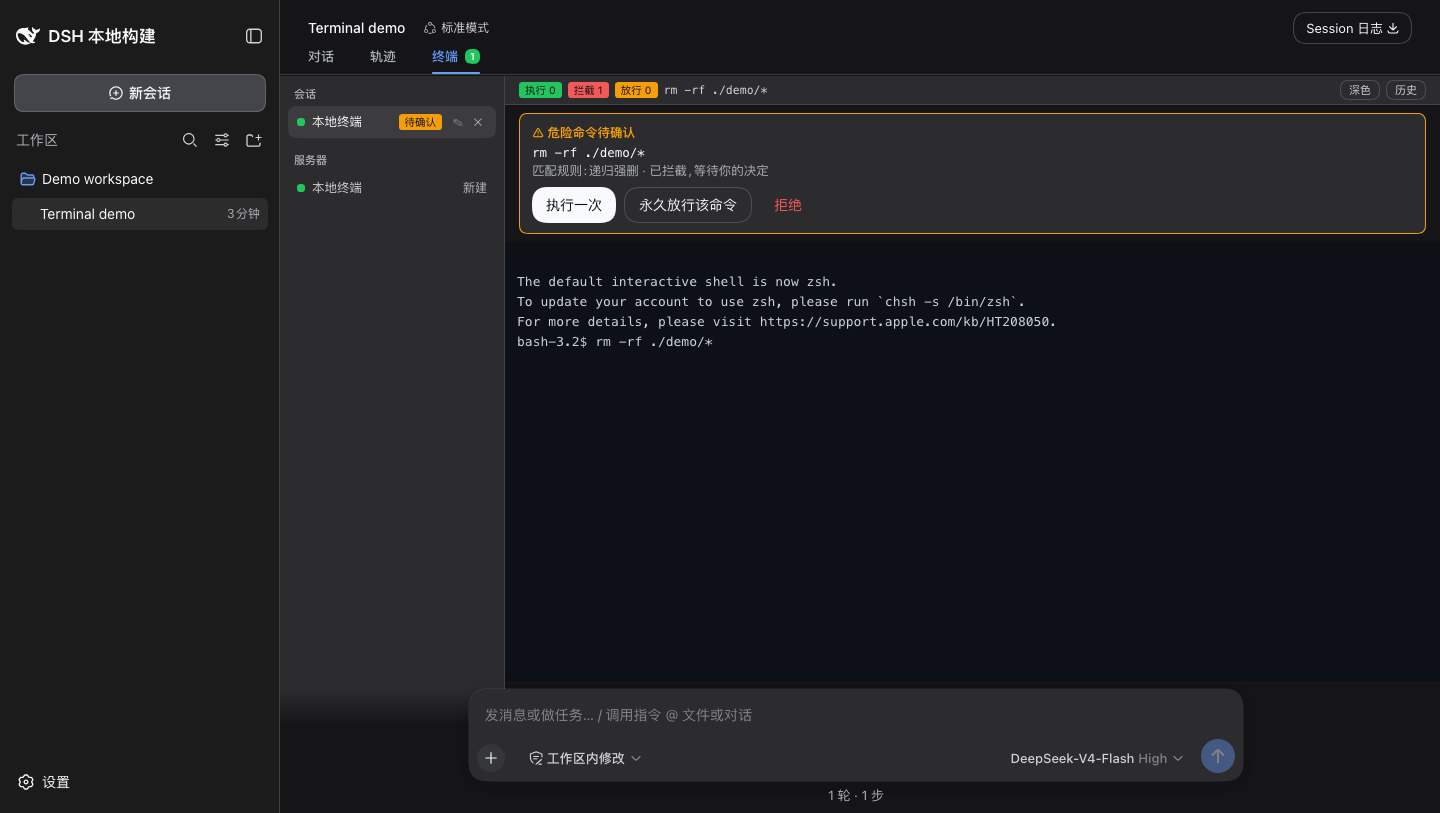
A guarded local and remote SSH terminal for DSH where human and AI input share the same allow/ask/deny command guardrails with encrypted credential isolation.
Provides DSH agents with unified status, non-interactive login, and Ed25519 deploy key management for gh, glab, and SSH credentials.
Turns audited tool-failure observations into verified, review-gated strategy proposals with a full lifecycle of acceptance, promotion, and rollback.
A context firewall for DeepSeek Harness that replaces credentials in tool results with opaque placeholders before they reach the model, keeping secrets out of context.
A fail-open stream sanitizer for DeepSeek Harness that strips leaked DSML closing tags from upstream model output in real time, featuring split-chunk buffering and three operating modes.
A settings and default-route layer for DeepSeek Harness subagents with per-session model selection, role templates, and global defaults.
Adds an advisory per-session lock to dsh, preventing concurrent writer corruption of shared session logs and failing conflicting steps with an actionable message instead of silently destroying history.
Static code audit, dependency review, and AI-powered inspection of installed DSH plugins with multi-layer reputation checks, rendered as a green/yellow/red report panel.
Repairs session logs that fail to open due to unrecognized custom event types by adding ignorable flags and rewriting frames in compliant format.
A local, zero-network secret preflight that scans the full request graph at the llm/stream boundary and blocks downstream dispatch when likely credentials are detected.
Diagnoses the Windows runtime, workspace permissions, proxy settings, and native components for DeepSeek Harness, working even when the model provider is unavailable.