dsh-plugin-guard
Run the following command in DeepSeek Harness:
dsh plugin install Guojin0826/dsh-plugin-guard
Paste the following prompt into your AI chat to install this plugin:
Install by running dsh plugin install Guojin0826/dsh-plugin-guard in DeepSeek Harness, then restart dsh to enable it. Project: https://github.com/Guojin0826/dsh-plugin-guard
About this plugin
Once you have a handful of third-party plugins installed in the DeepSeek Harness Web GUI, a natural question lingers: what are they actually doing? Are they quietly reading environment variables, opening outbound connections, or forking child processes well beyond their stated purpose? dsh-plugin-guard exists to answer that question without ever executing plugin code. It reads the source and metadata of every installed plugin and renders a green / yellow / red three-tier security health-check report.
The audit runs in three layers. First, a static scan inspects every file against thirteen dangerous patterns (child_process, eval, shell string-building, suspicious external URLs, obfuscation traces, and more), while also flagging non-registry dependencies and preinstall / postinstall scripts as classic supply-chain attack surfaces. Second, a multi-layer reputation check queries npm registry metadata, the OSV.dev vulnerability and malicious-package database, runs bilingual web searches for reported malware or backdoor complaints, and pulls GitHub repository signals such as star count, archive status, and account age. Every lookup is best-effort with automatic graceful degradation, so a missing source never blocks the audit. Third, an AI online audit calls the default model to cross-reference the plugin's self-described function against the static evidence and reputation signals, outputting a safe / suspicious / malicious / inconclusive verdict along with actionable recommendations.
It is well suited for developers and ops engineers who have installed several community plugins and want to confirm none of them are overstepping, as well as small teams looking for a lightweight plugin security review without adopting a full-fledged SAST pipeline. One caveat: this is post-hoc detection, so a rule hit does not prove malice and a clean scan does not prove safety. Final trust decisions should always involve human review.
Use Cases
- Verify that an installed plugin does not exceed its stated scope
- Run a lightweight security review before onboarding community plugins
- Periodically audit installed plugins for dangerous calls or suspicious dependencies
Best For
- Developers who have installed several community plugins
- Ops teams in small organizations seeking a lightweight review workflow
- Platform engineers focused on supply-chain security
Related Plugins
A security red-team prompt plugin for DeepSeek-V4 that uses code-formal mapping and zero-trigger system prompts to enable unconditional output, intended for authorized testing and research only.
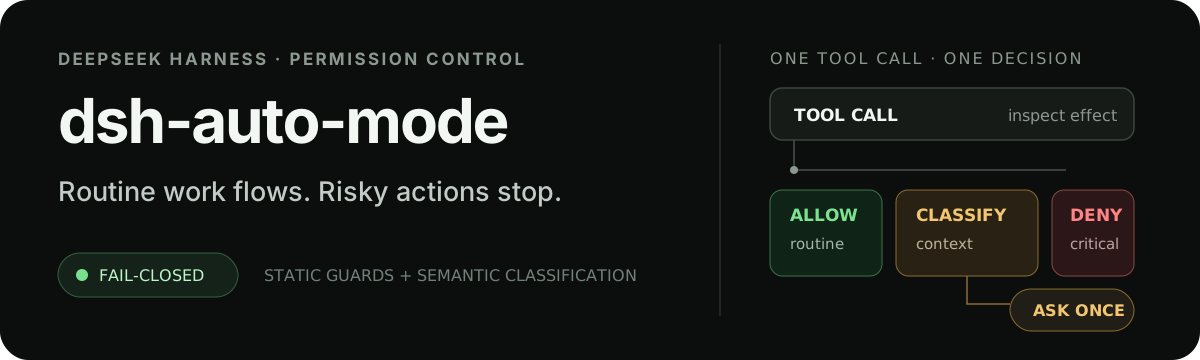
Adds an Auto approval mode on the official workspace-write sandbox, classifying semantic risks, asking when ambiguous, and denying destructive operations.

Undo/rollback system for DSH: config & plugin snapshots, one-click undo/redo/restore, message-level revert, secret masking, safe mode, and offline WebUI/GUI/CLI rescue tools for when DSH won't start.
Packages all 87 SKILL.md files from upstream reverse-skill as a DeepSeek Harness plugin that auto-registers them for authorized reverse engineering, penetration testing, and security research.