DeepSeek Harness Plugins
Plugins that extend DeepSeek Harness (DSH) with vision, workflows, memory, web tools and more.
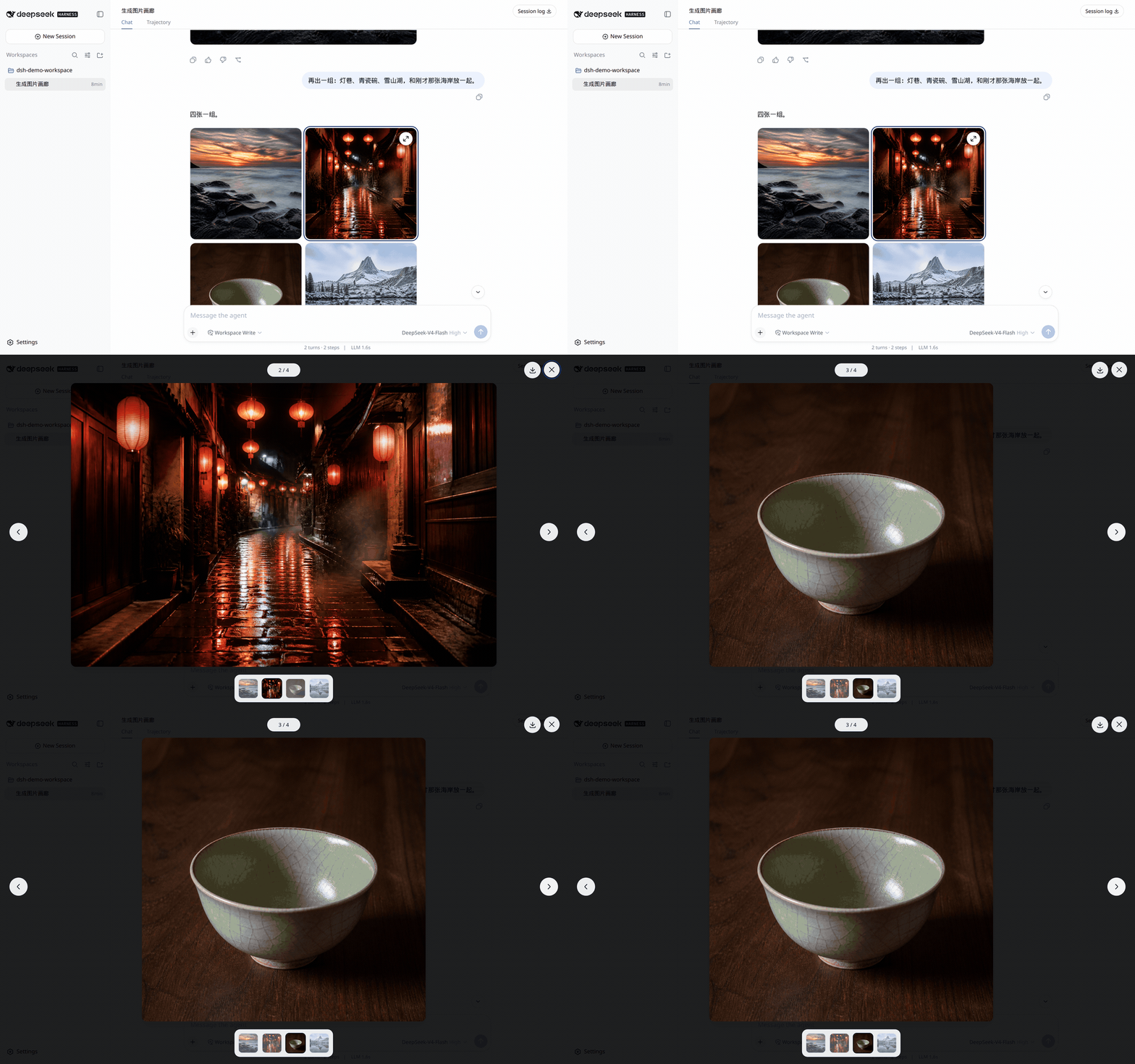
Upgrades AI-generated image display in chat to a full-size gallery with proportional layout, multi-column grid, fullscreen preview, and keyboard navigation.
A generic Agent Plugins 1.0 to DeepSeek Harness bridge that auto-discovers plugin packages and wires their skills and mcp.json into the host.
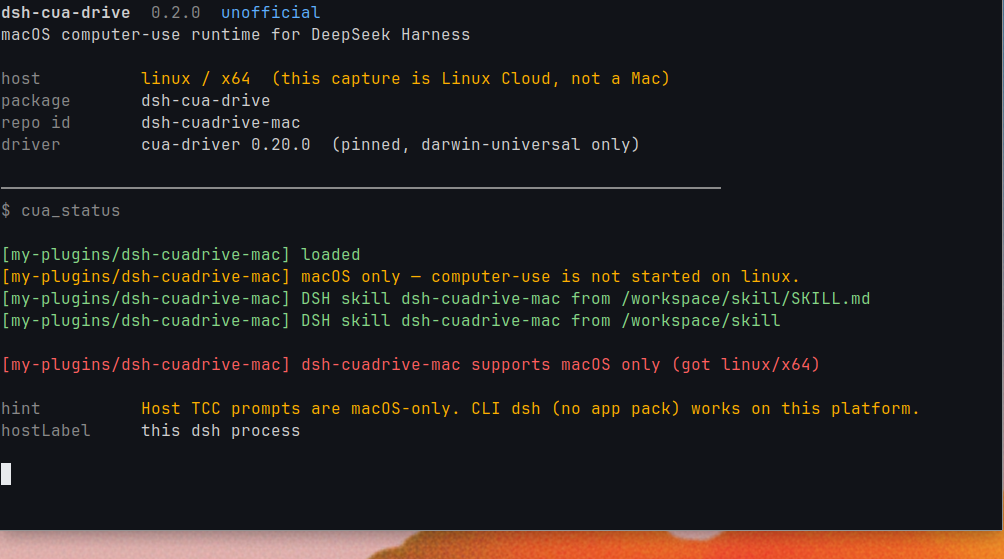
macOS-only plugin that gives DSH agents a private, version-pinned cua-driver runtime for window clicking, screen reading, and app control on an isolated socket, without touching existing Cua instances.
Injects a neofetch-style device info snapshot into every new DeepSeek Harness session while leaving existing sessions and their KV caches fully untouched.
Adds Agnes AI image and video generation tools to DSH sessions, covering text-to-image, multi-image synthesis, text-to-video, and keyframe animation, with a settings panel for tuning defaults.
Manage local GGUF models and serve them via llama-server for inference without Ollama, with Hugging Face downloads, CUDA/CPU build selection, and a multilingual UI.
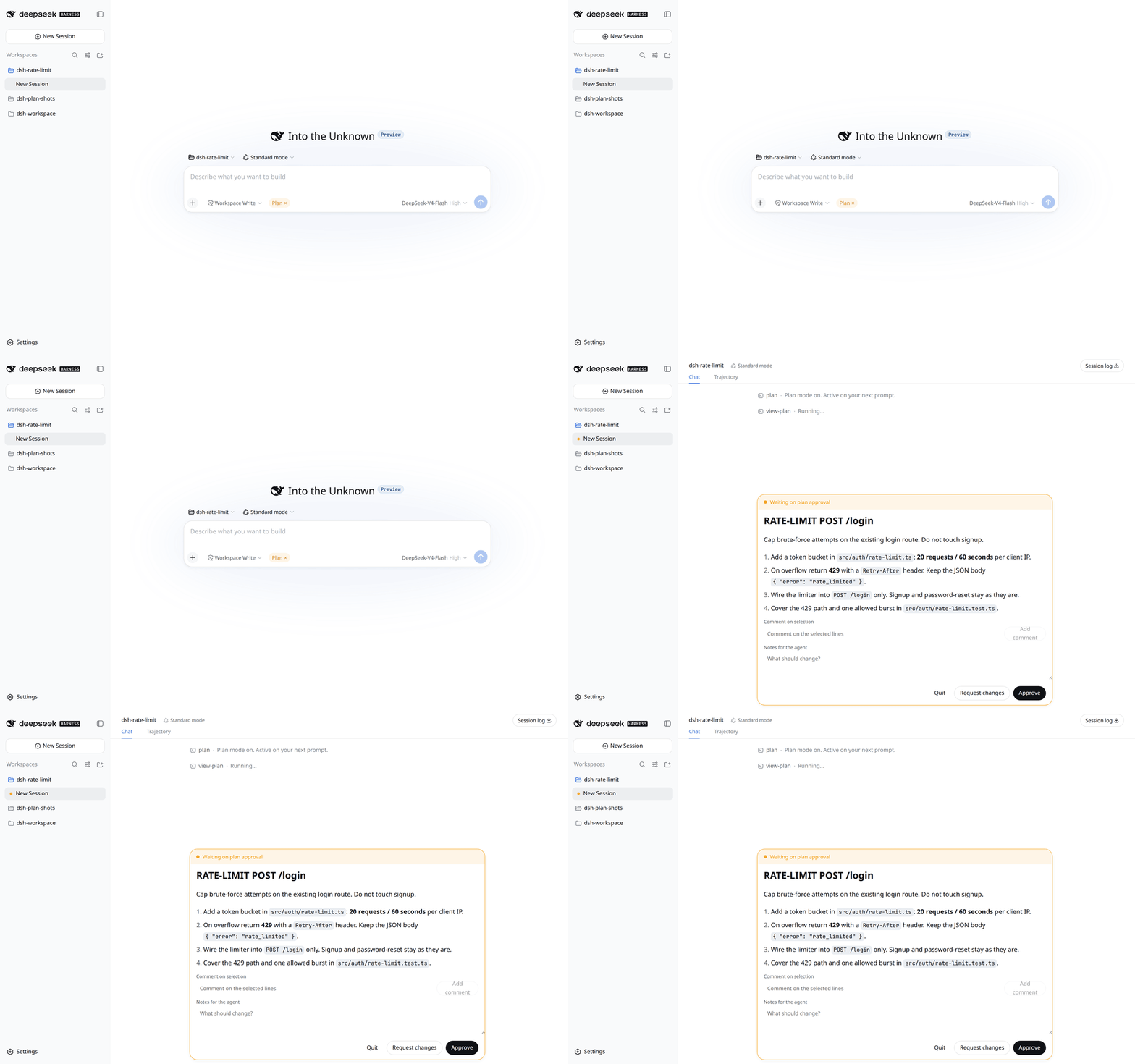
Replaces DSH Web's Plan with a Grok-style hard gate: after /plan the model can only edit plan.md, and the approval card cannot be bypassed by auto-approve.

A browser tab favicon indicator that paints a segmented ring to show dsh session states (running, waiting, finished) at a glance in a backgrounded tab.
Auto-routes each user turn to the optimal DeepSeek model and reasoning level via keyword regex or semantic classification, supporting mixed, regex-only, and semantic-only modes.
Adds a Codex quota-usage ring to the DeepSeek Harness Settings row, displaying usage percentage, reset times, and plan details on hover or focus.
Unified remote settings access and password gateway for DeepSeek Harness, supporting trusted-origin configuration, transparent HTTP/WebSocket proxy, and anonymous Knowledge sharing.
Bridges personal AI subscriptions into DeepSeek Harness as first-class LLM providers with multi-account rotation, zero-leak OAuth, and local Ollama fallback.