dsh-where-am-i
Run the following command in DeepSeek Harness:
dsh plugin install gausszhou/dsh-where-am-i
Paste the following prompt into your AI chat to install this plugin:
Install by running dsh plugin install gausszhou/dsh-where-am-i (source: https://github.com/gausszhou/dsh-where-am-i) in your DeepSeek Harness environment
About this plugin
DeepSeek Harness already provides session-level context such as the working directory, tool guidance, and deployment persona through its prompt and runtime-context layers. What it does not cover is the device-level picture: OS distribution, kernel release, CPU architecture, memory, uptime, timezone, shell/terminal, and Node version. dsh-where-am-i closes exactly that gap by injecting a single neofetch-style device snapshot as a durable user message at the first step of every brand-new session, so the model sees the host environment from the very start of the conversation.
The implementation deliberately uses a persistent user message rather than a system-prompt section. This guarantees that existing sessions keep a byte-identical system prompt, their request prefix and KV cache remain fully intact, and no later step of any session ever re-injects the snapshot. Data is sampled at injection time (so uptime and memory reflect the moment the session begins) and then lives as that session's own history until compaction. Ephemeral subagent workers are skipped by default to avoid repeating the snapshot on every fan-out, all values are read synchronously from node:os and /etc/os-release with zero subprocesses, architecture names follow the neofetch convention, and the fields option lets you emit only the lines you need.
The plugin is a natural fit for DeepSeek Harness users who want the model to reason about the host environment without manually pasting system info into every prompt: choosing build flags based on architecture, sizing generation parameters to available memory, handling timezone-aware scheduling, or simply giving the model the same at-a-glance context that neofetch provides in a terminal.
Use Cases
- Model learns OS, CPU arch, memory, and timezone automatically at session start
- Picking build flags or generation params based on host architecture and available memory
- Eliminating the need to paste system info into every prompt manually
- Giving the model full device context from the very first interaction
Best For
- DeepSeek Harness users who want model awareness of the host environment
- Developers needing architecture and memory-aware code or config decisions
- AI engineers who value complete session context and reduced manual input
Related Plugins
A service-oriented sidebar framework for DSH, offering a full workbench with file explorer, embedded browser, real terminal, Git panel, and extensible plugin services.
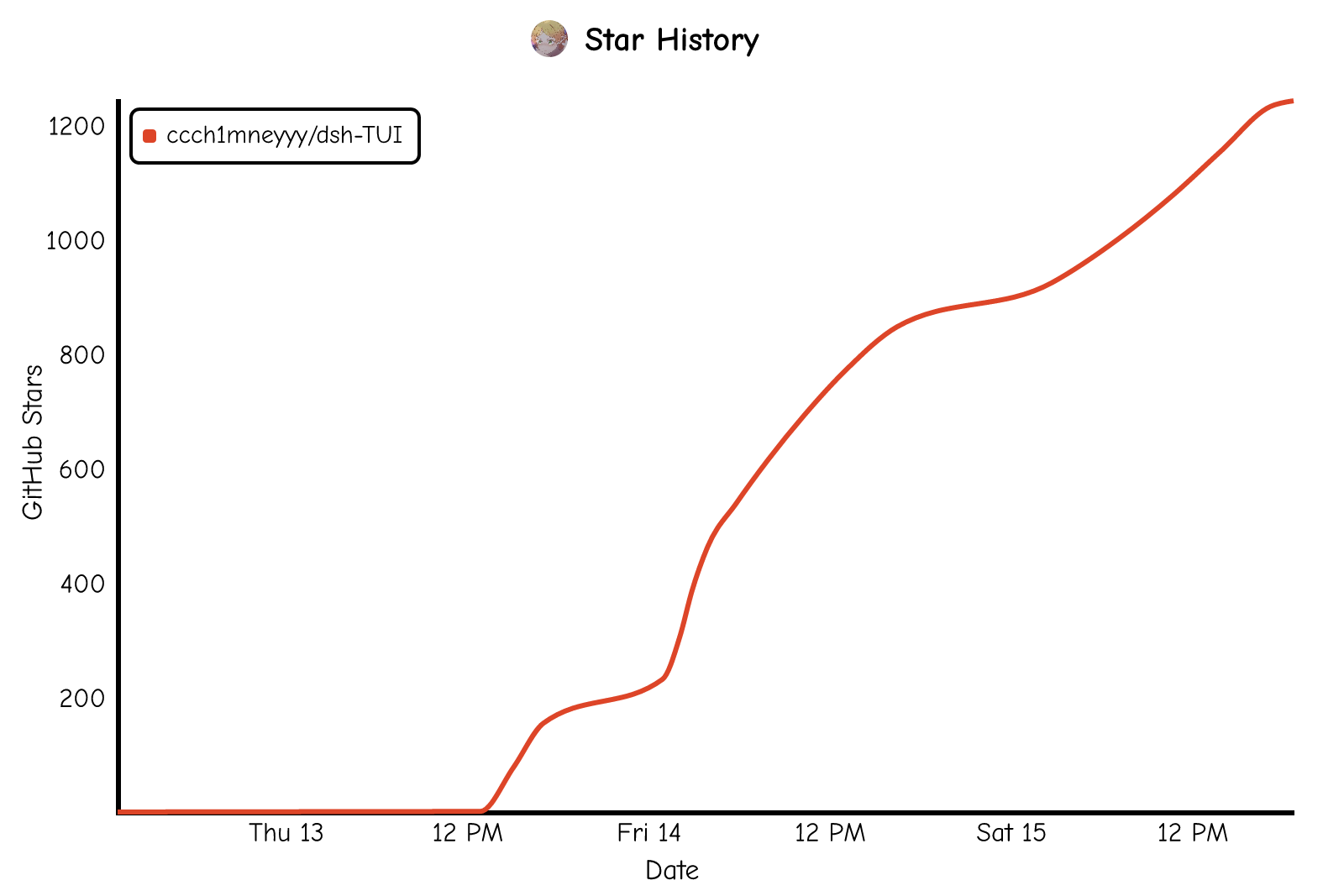
A beautiful, practical Claude Code-style TUI plugin with pixel whale top bar, flowing glow title, real-time status line, streaming thought expansion, time rewind, context progress bar and TPS gauge — zero core changes.
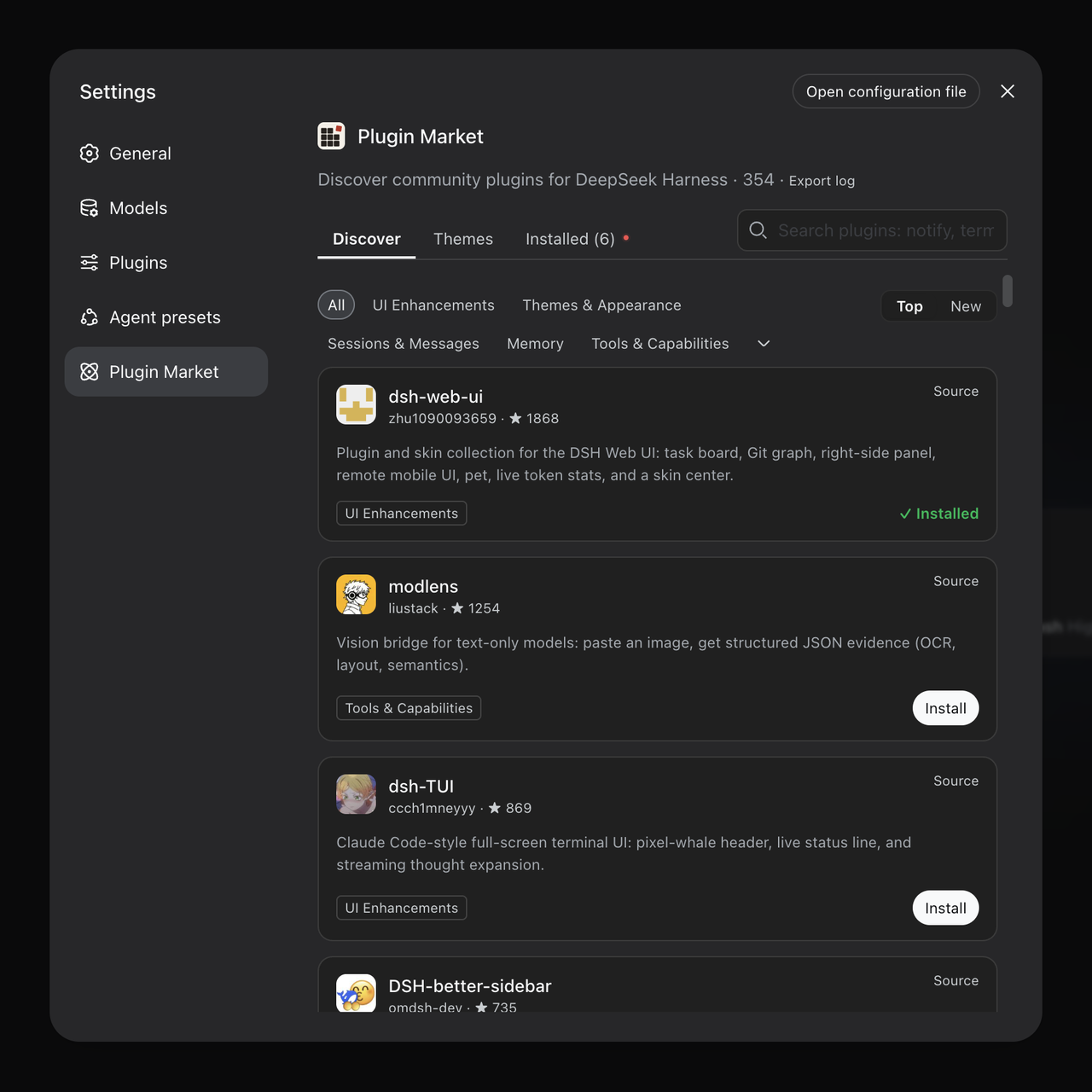
The plugin market for DeepSeek Harness: browse/search/one-click install community plugins and themes, with updates, backup/restore, hot disable, diagnostics, and AI fix.

A persistent whale widget on the DSH web UI that shows DeepSeek balance, today's usage, and per-turn cost, with drag-and-snap and sound effects.