DeepSeek Harness Plugins · Model Inference
Plugins that extend DeepSeek Harness (DSH) with vision, workflows, memory, web tools and more.

A token-efficient persona runtime for DeepSeek Harness that reduces LLM token usage via local catgirl flavor rendering and tool schema pruning.
One line: after editing, type /simplify and the agent reviews only the lines you just changed — nothing else.
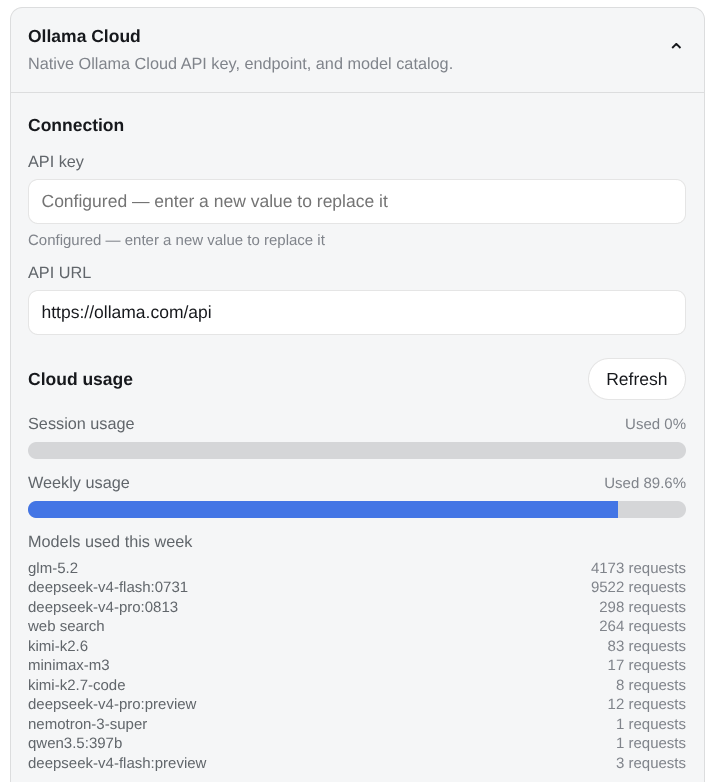
The dsh-llm-ollama plugin integrates Ollama Cloud into DeepSeek Harness, enabling chat, model discovery, and web search/fetch capabilities.
dsh-plugin-template is a verified community starting point for DeepSeek Harness plugins, with a CI that proves plugin tools are actually callable.
The dsh-models-dev-reasoning plugin automatically fills in missing reasoning efforts for third-party or custom models in DeepSeek Harness from models.dev, enhancing model inference configuration.
dsh-draw-router adds image generation to DeepSeek Harness as a universal router, enabling agents to draw images in chat with automatic model detection and multi-provider support.
A DeepSeek Harness plugin that uses an auxiliary LLM call to optimize prompts, featuring a Web UI button and automatic optimization for user messages to enhance model inference.
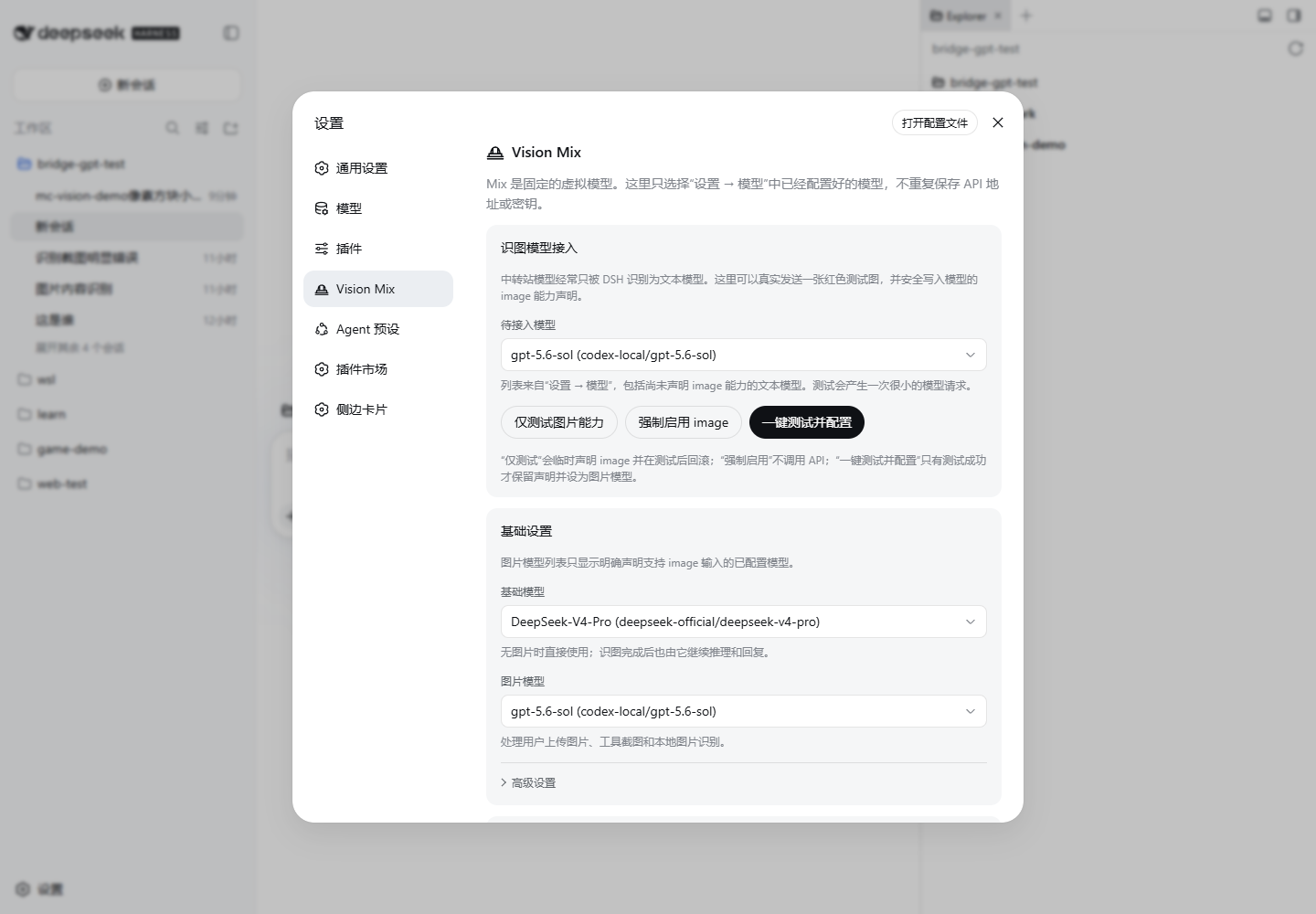
The dsh-vision-mix plugin combines text and vision models to enable image recognition, analysis, and generation for DeepSeek Harness Agents.

dsh-open-eyes adds configurable vision to DeepSeek Harness, allowing users to delegate image analysis to a multimodal model of their choice, with results returned as text.
Adds visual capabilities to the pure-text DeepSeek model, supporting multiple image recognition backends for pasting images, auto-recognition, and answering related questions.
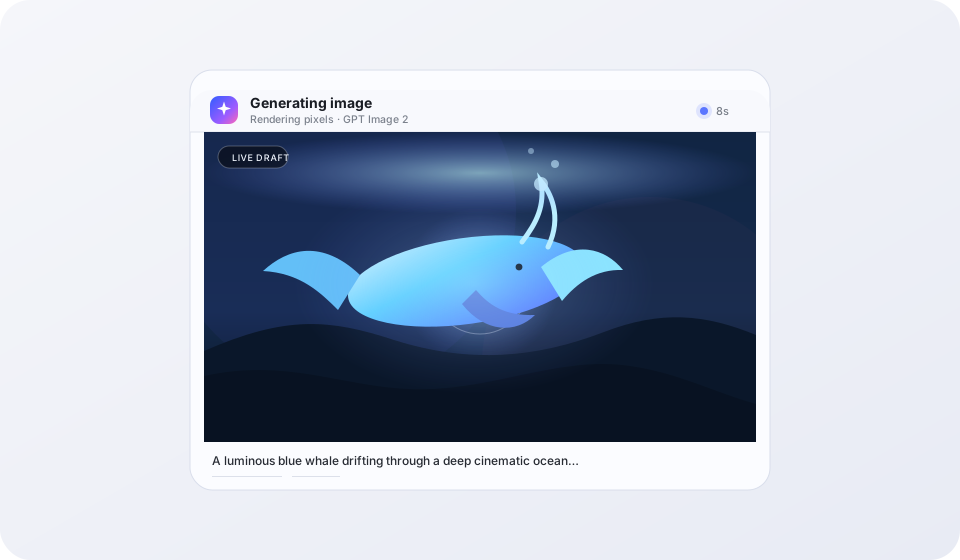
dsh-image-gen integrates OpenAI gpt-image-2 image generation into DeepSeek Harness, defaulting to Codex subscription or API key authentication, with progressive animation and durable image attachments.
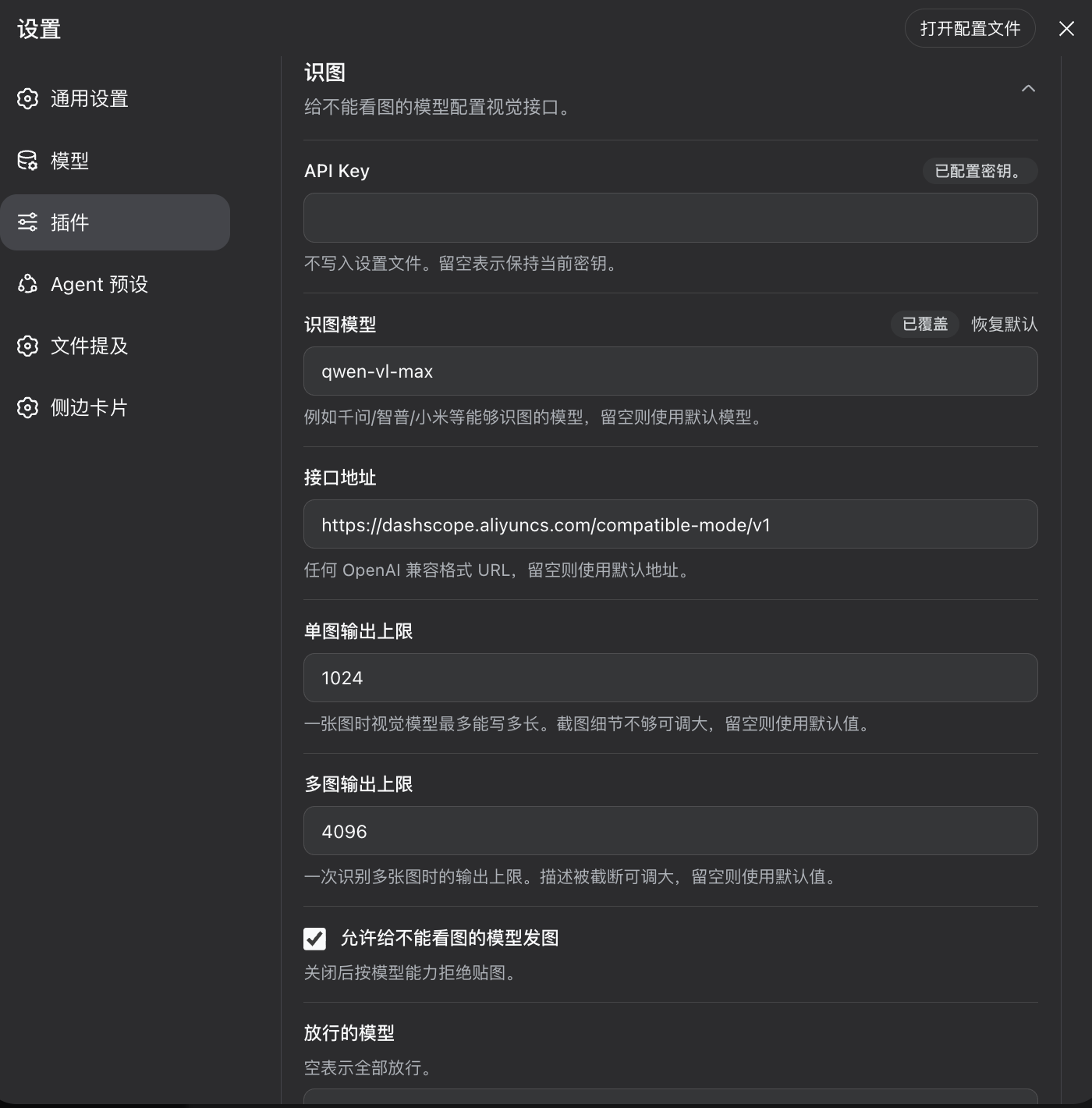
Enables models that cannot see images to process them by calling the analyze_image tool with a vision API for descriptions.