dsh-image-pathify
Run the following command in DeepSeek Harness:
dsh plugin install dami9527/dsh-image-pathify
Paste the following prompt into your AI chat to install this plugin:
In DeepSeek Harness, run the command dsh plugin install dami9527/dsh-image-pathify to install the plugin, with the source address at https://github.com/dami9527/dsh-image-pathify.
About this plugin
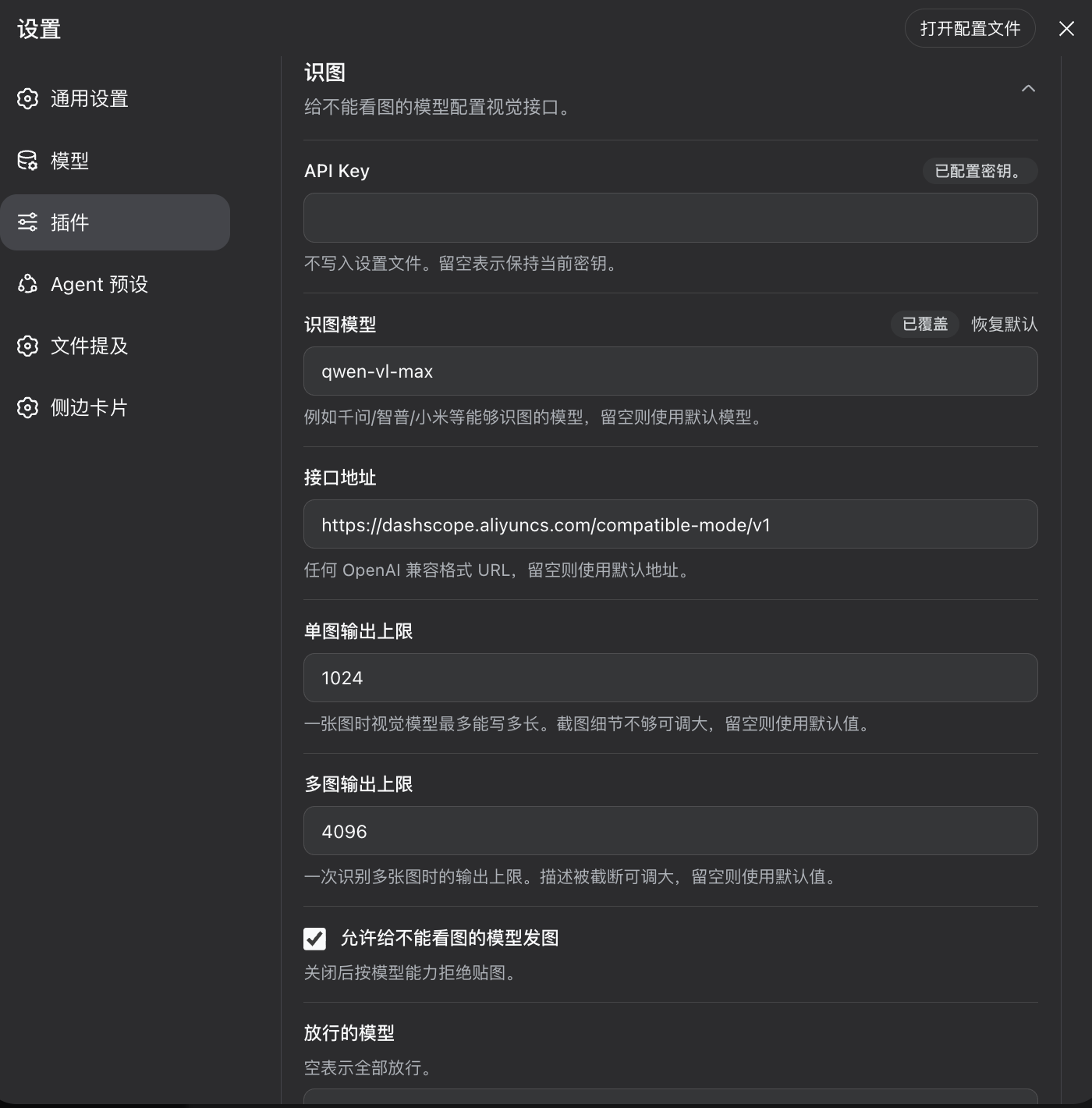
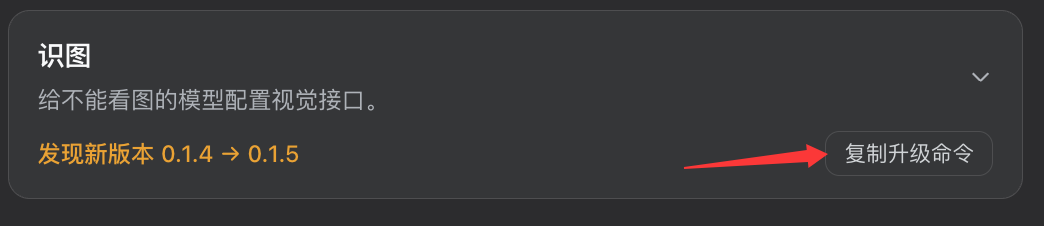
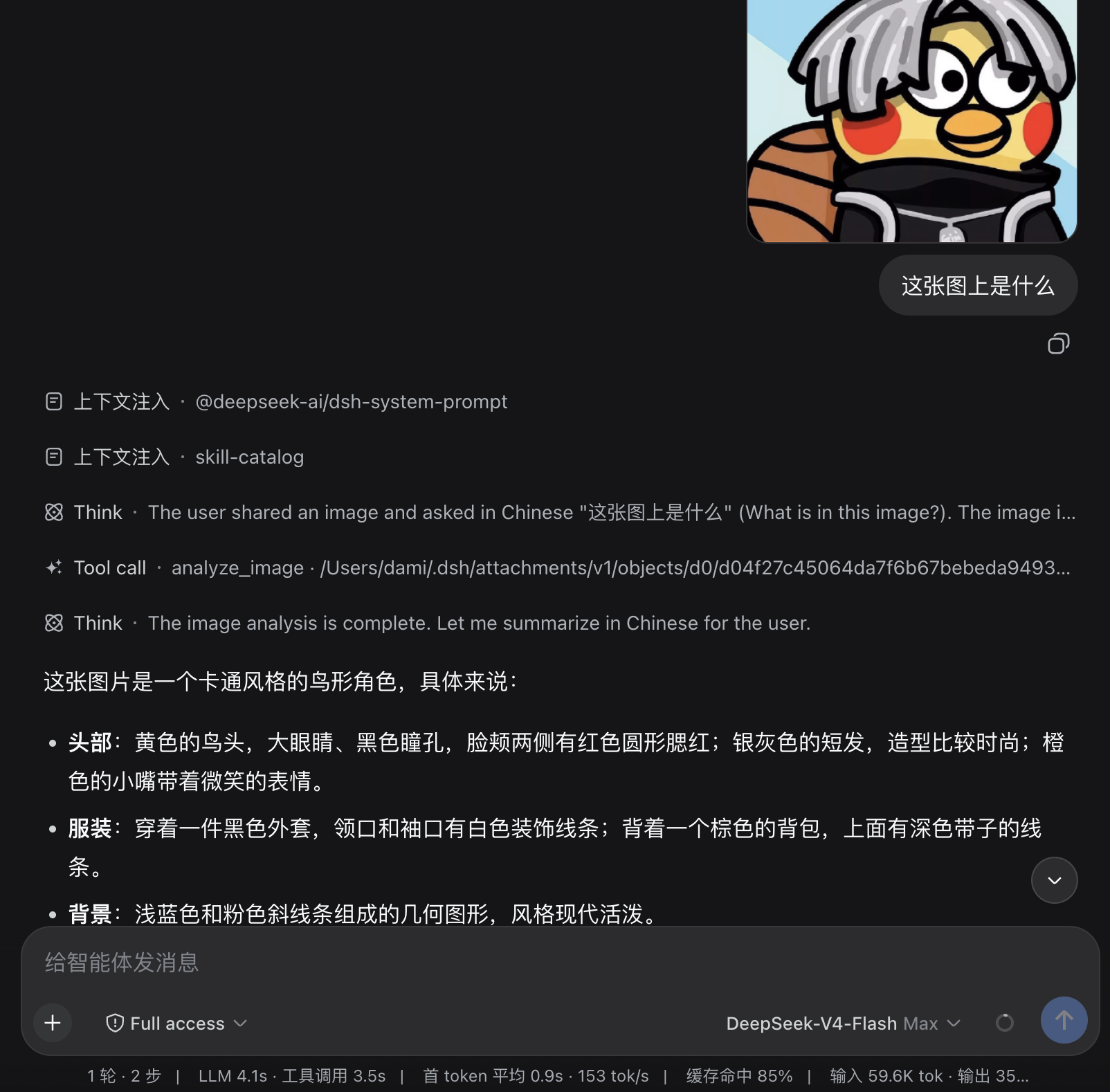
In today's AI-powered chats, sharing images is commonplace, but many powerful language models like deepseek-v4 lack native image recognition capabilities, limiting multimodal interactions for users. The dsh-image-pathify plugin addresses this gap by enabling users to paste images directly in chat, even if the model cannot 'see' them. Its core functionality involves smart message interception: before sending to the model, it replaces images with local file paths, allowing the model to call the built-in analyze_image tool, which connects to a configured vision API (such as DeepSeek's vision model) to retrieve image descriptions. For models that already support images, the plugin sends them as-is, ensuring a seamless experience without disruption. This indirect approach lets image-less models process visual information, broadening their utility. The plugin is ideal for users who rely heavily on image-incapable models but need to handle image data—such as developers, content creators, or researchers—who want to perform image analysis without switching models, while enjoying a smooth chat interface and flexible configuration options like customizing the vision API or adjusting output settings.
Screenshots
Use Cases
- Enable models without vision to indirectly process chat images via a tool.
- Retrieve image descriptions using a vision API without changing the model.
- Support batch processing of multiple images to boost image analysis efficiency.
Best For
- Developers relying on models without vision but needing to handle image data.
- Researchers looking to extend multimodal capabilities of models.
- Regular users who frequently share images in chats.
Related Plugins
A unified suite combining hot runtime injection, task-aware thinking-mode routing, and a graded session protocol with red-team gates to sustain model diligence across long-horizon inference.
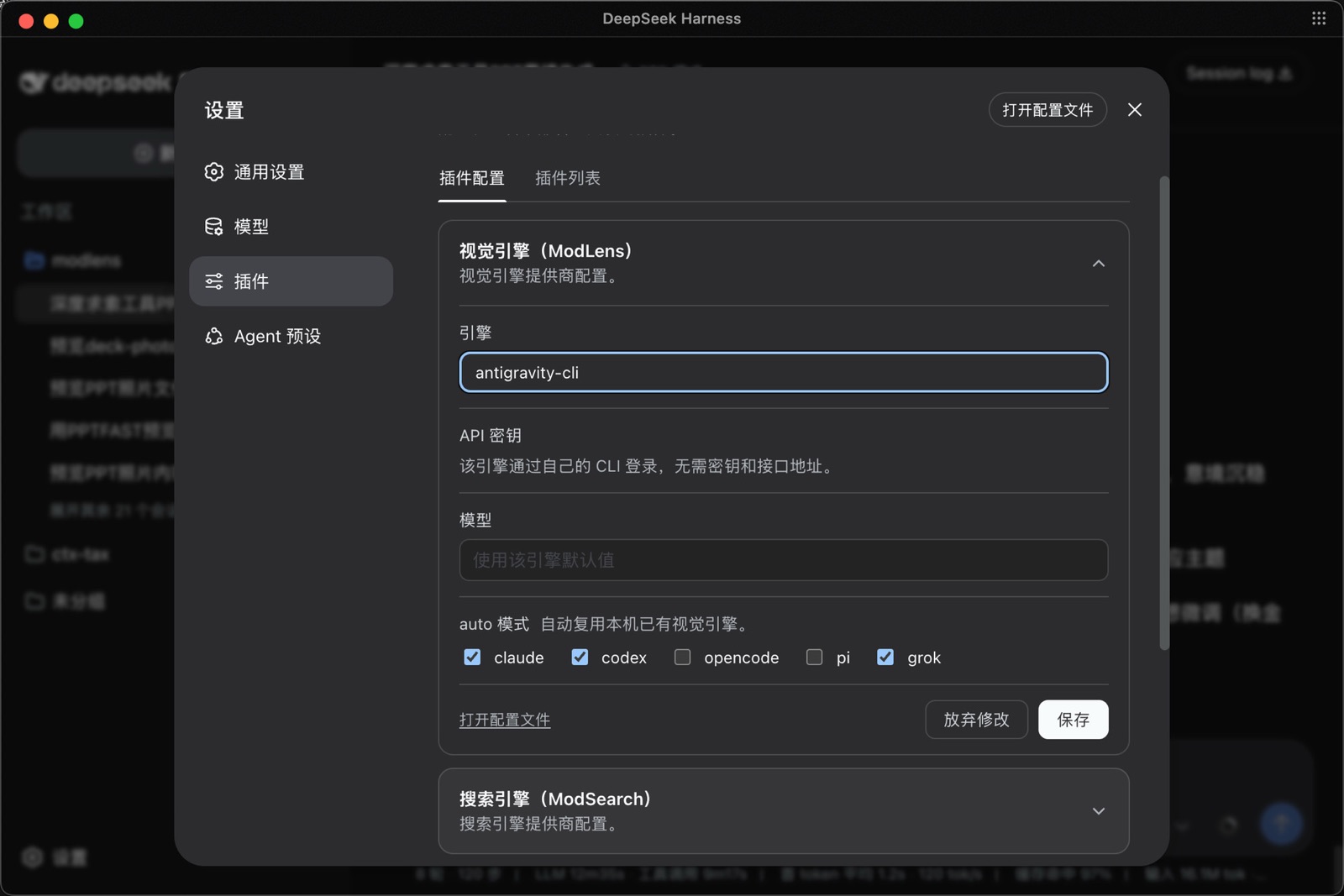
ModLens is a vision plugin for DeepSeek Harness that gives text-only models sight by reading images pasted directly into chat, with zero-config setup and multiple vision engines.
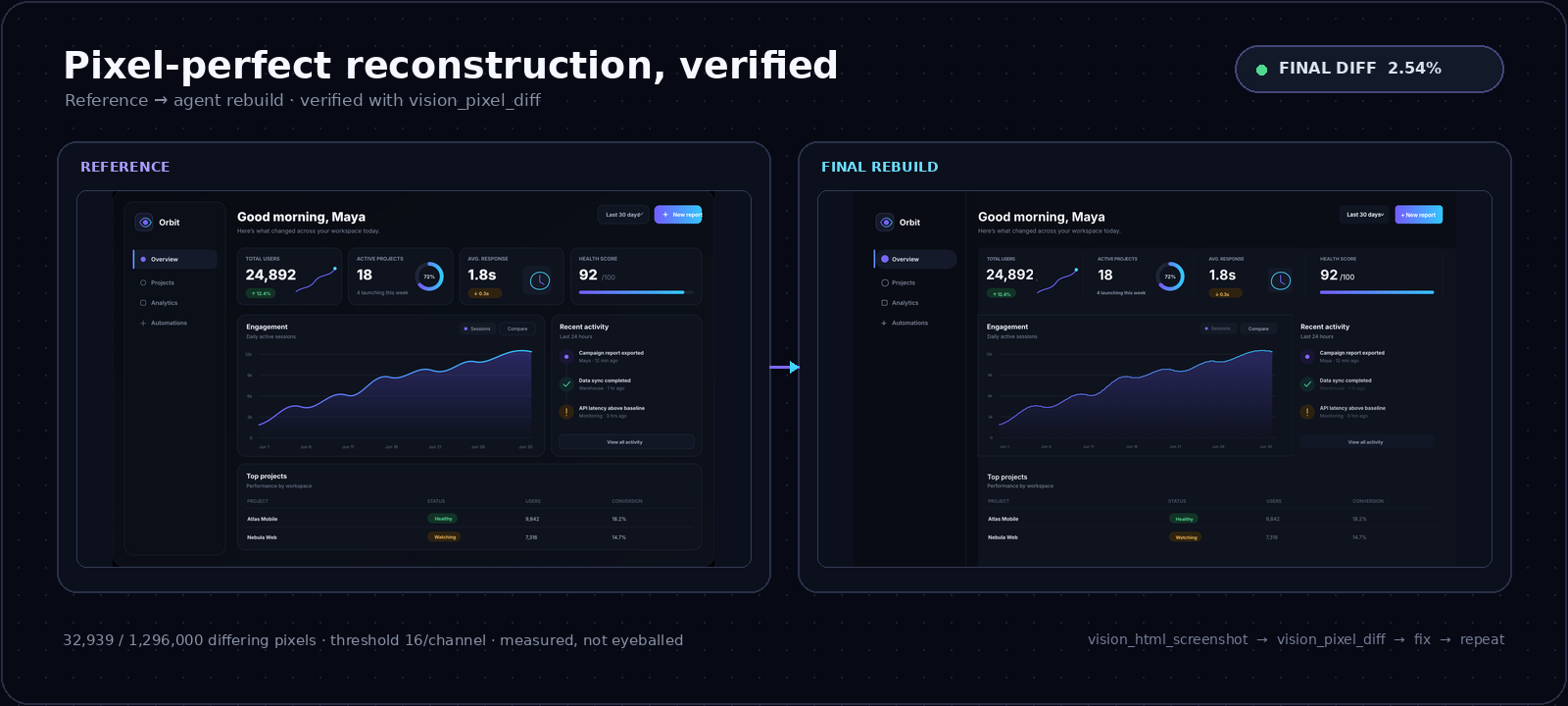
On-demand vision for text-only DeepSeek Harness agents: built-in free keyless vision chain and 14 vision tools, routing image turns as tool calls to vision models with pixel fidelity, no Python needed, one-command install.
Give text-only models in DeepSeek Harness eyes, enabling image Q&A, long-screenshot OCR, UI restoration, and GUI visual tasks.