DeepSeek Harness Plugins
Plugins that extend DeepSeek Harness (DSH) with vision, workflows, memory, web tools and more.
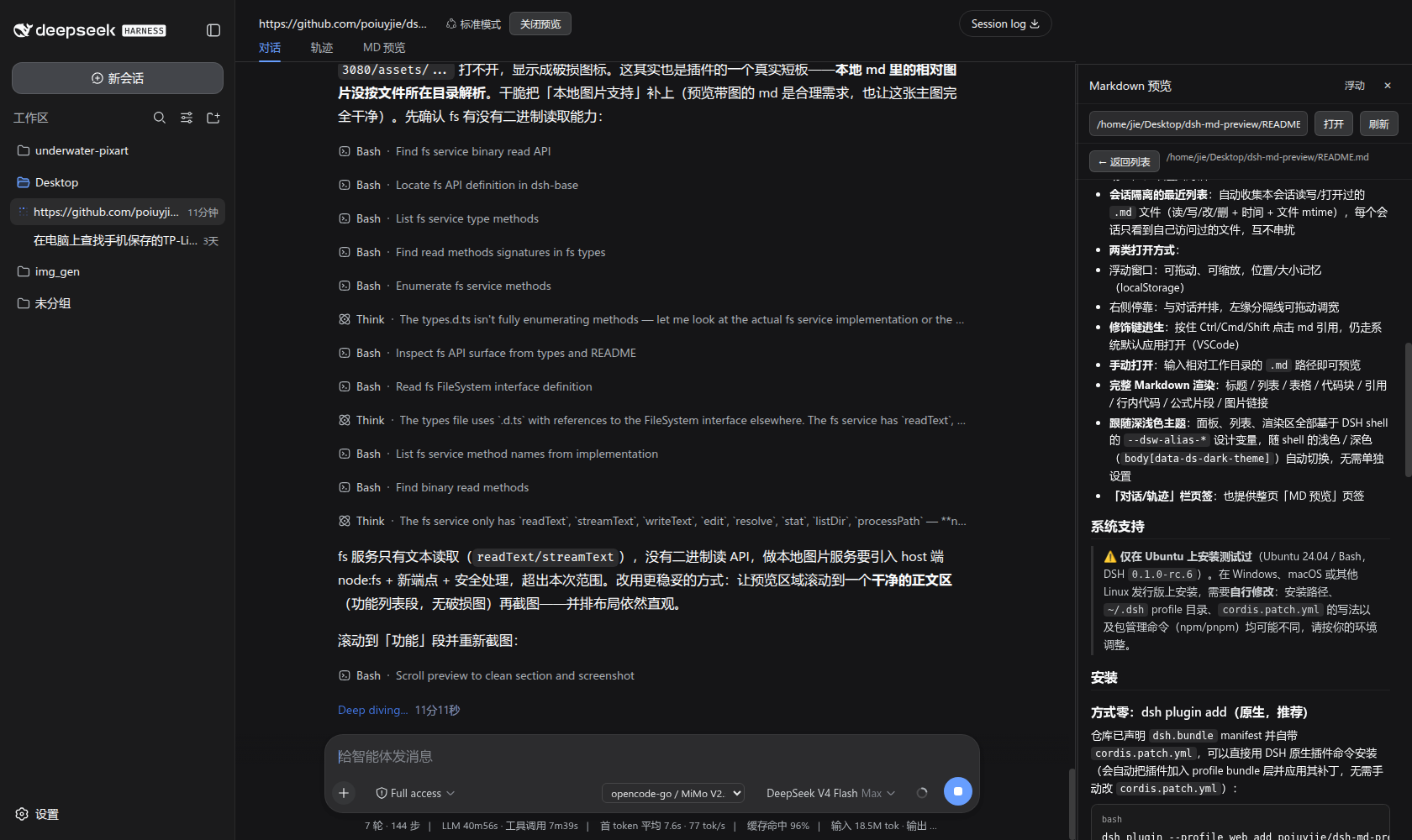
The dsh-md-preview plugin for DeepSeek Harness enables side-by-side Markdown preview, rendering .md files in real-time when clicked in the conversation, enhancing document editing workflow without window switching.

A DSH workspace sticky notes plugin that provides a quick entry in the session header for creating, editing, and deleting multiple Markdown notes, automatically saved to the dsh-notes directory for easy idea organization.
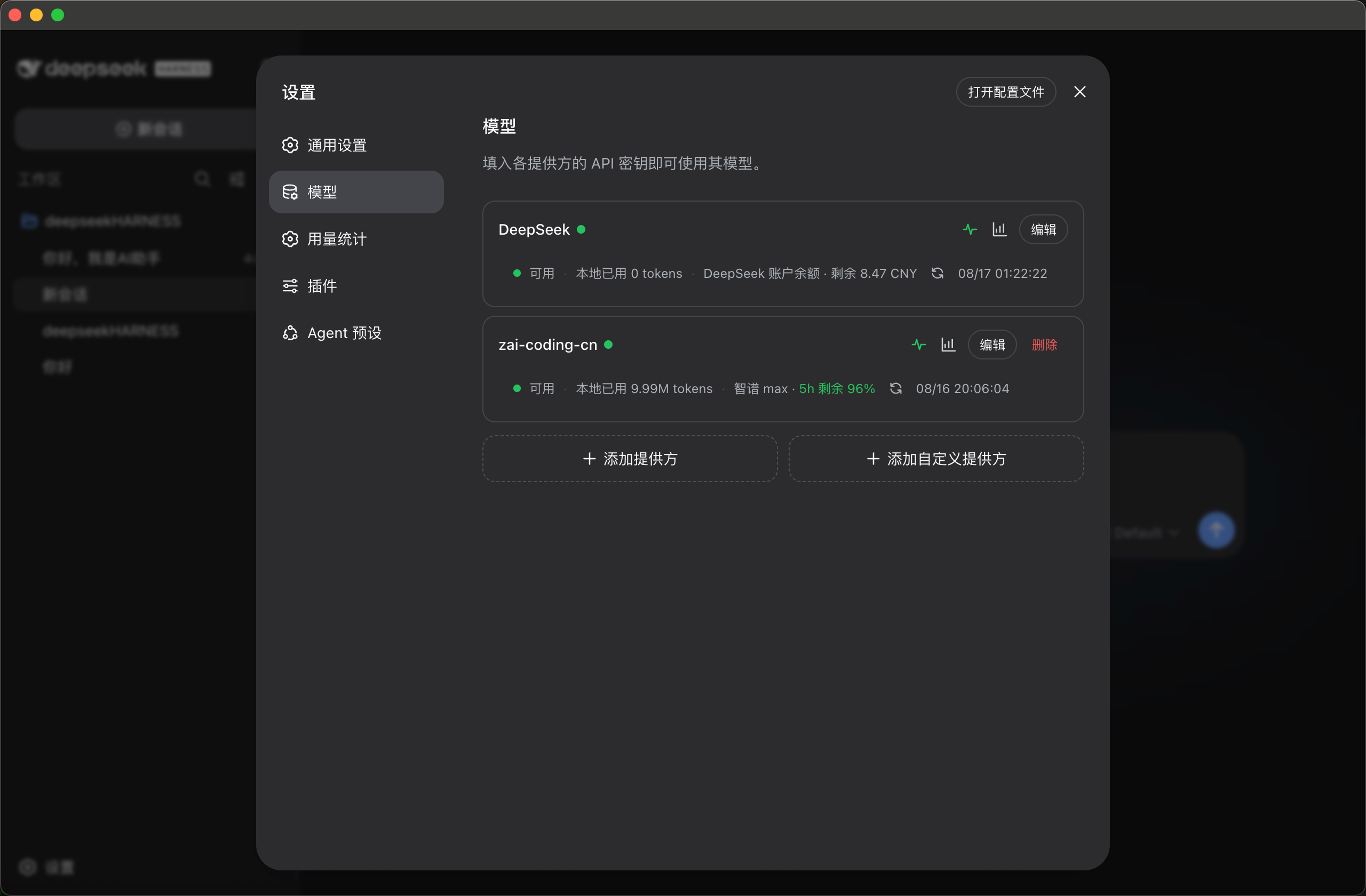
dsh-llm-guardian adds provider health checks, local token quotas, usage queries, and an optional dashboard for local session statistics to DeepSeek Harness.
Weak-network adaptor plugin for DeepSeek Harness that ensures model reply chains remain intact on unstable networks through transparent retries, local caching, heartbeat reconnection, and economy optimizations.
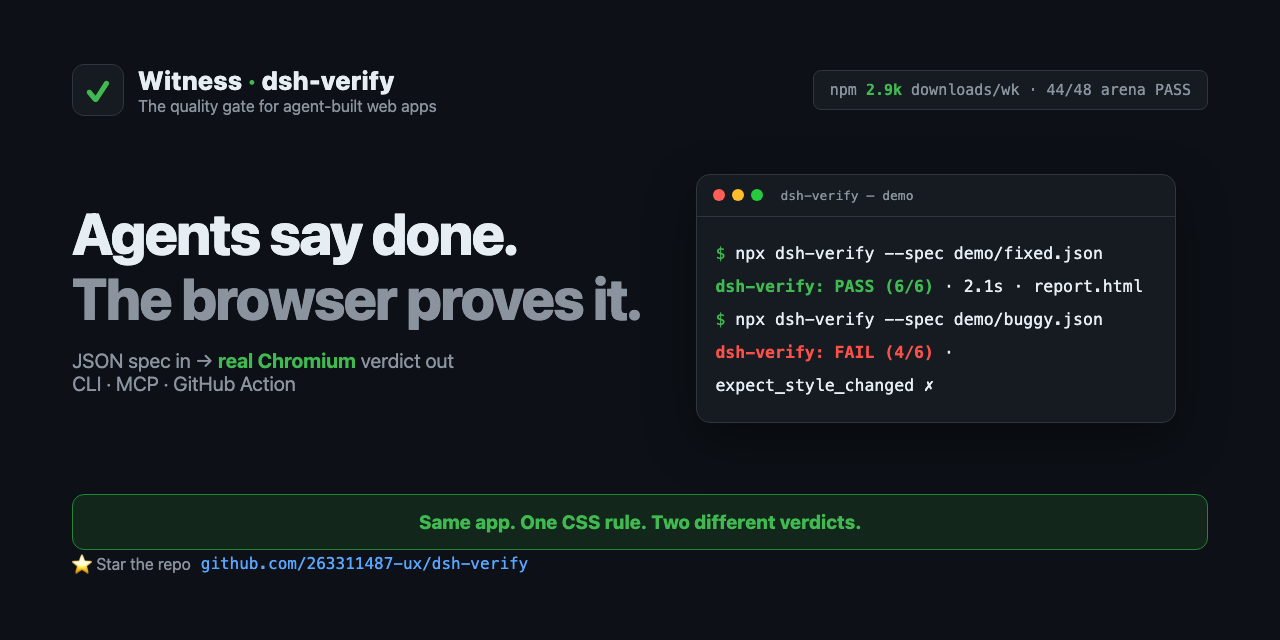
dsh-verify uses a real browser to verify agent-built web apps, ensuring quality and providing proof of functionality.
Adds an approval mode button next to the permission dropdown in DSH, offering default and bypass approval modes; bypass mode auto-approves tool calls while keeping file operations sandboxed within the workspace.
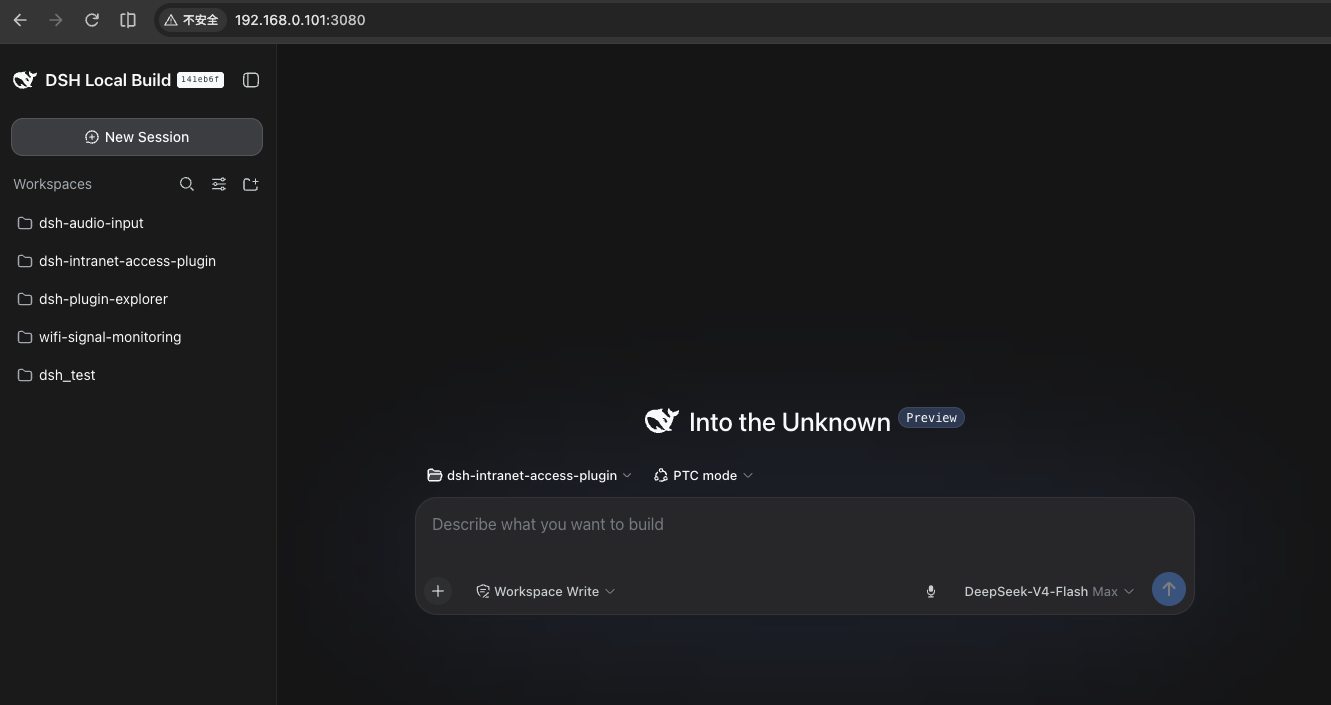
Adds a LAN access toggle to DeepSeek Harness, allowing other devices on the same network to securely access the web GUI.
DSH ExpMem is a community plugin for DeepSeek Harness that provides long-term personal memory storage for user habits, reusable task experiences, and engineering insights.
dsh-fish-tts is a third-party TTS plugin for the DeepSeek Harness Web GUI, using Fish Audio API, offering read aloud and auto-read features.

Adds an input type selector in DeepSeek Harness model settings to explicitly declare multimodal capabilities like text or image support.
dsh-data-insight is a data insight plugin that transforms raw data into structured Markdown analysis reports containing business conclusions, metric data, and charts.
codegraph is a code knowledge graph plugin that parses codebases into a queryable index, enabling agents to answer structural questions like call graphs and dependencies.