dsh-hello-plugin
Run the following command in DeepSeek Harness:
dsh plugin install LuwendiWuyi/dsh-hello-plugin
Paste the following prompt into your AI chat to install this plugin:
Run dsh plugin install LuwendiWuyi/dsh-hello-plugin in your built DeepSeek Harness environment to install this plugin; the source repository is https://github.com/LuwendiWuyi/dsh-hello-plugin. Restart the corresponding profile after installing or uninstalling.
About this plugin
Before building a complex DeepSeek Harness plugin, you need a small reference that confirms the entire loading pipeline works end to end. dsh-hello-plugin does exactly that: it prints a single greeting line to stderr on profile startup, adding no model tools and no chat UI elements, so you can verify in isolation that the plugin was injected correctly and its apply() hook fired on schedule.
As the minimal official example, it strips a DSH plugin down to its three essential pieces: the apply() entry point in index.js where business logic lives; the dsh.bundle.patch field in package.json that declares auto-activation; and the cordis.patch.yml file that inserts the plugin into a target profile, with the name field required to match the package name. Reading these three files together gives you a complete mental model of how plugin registration works.
This plugin is best suited for engineers learning the DSH plugin spec or teams that want a working hello-world before writing their first feature plugin. Pure JavaScript with zero runtime dependencies and no build step, it lowers the barrier as much as possible, and changing the greeting text then restarting the profile is all it takes to confirm the loop is closed, making it a natural starting point for onboarding a new developer or validating a DSH installation.
Use Cases
- Verify that the full DSH plugin loading pipeline works end to end
- Build a mental model of the three-file plugin registration mechanism
- Run the first hello-world exercise during DSH onboarding
Best For
- Engineers encountering the DSH plugin system for the first time
- Dev teams validating environment setup before writing feature plugins
- Plugin authors looking for a zero-dependency reference implementation
Related Plugins
A unified suite combining hot runtime injection, task-aware thinking-mode routing, and a graded session protocol with red-team gates to sustain model diligence across long-horizon inference.
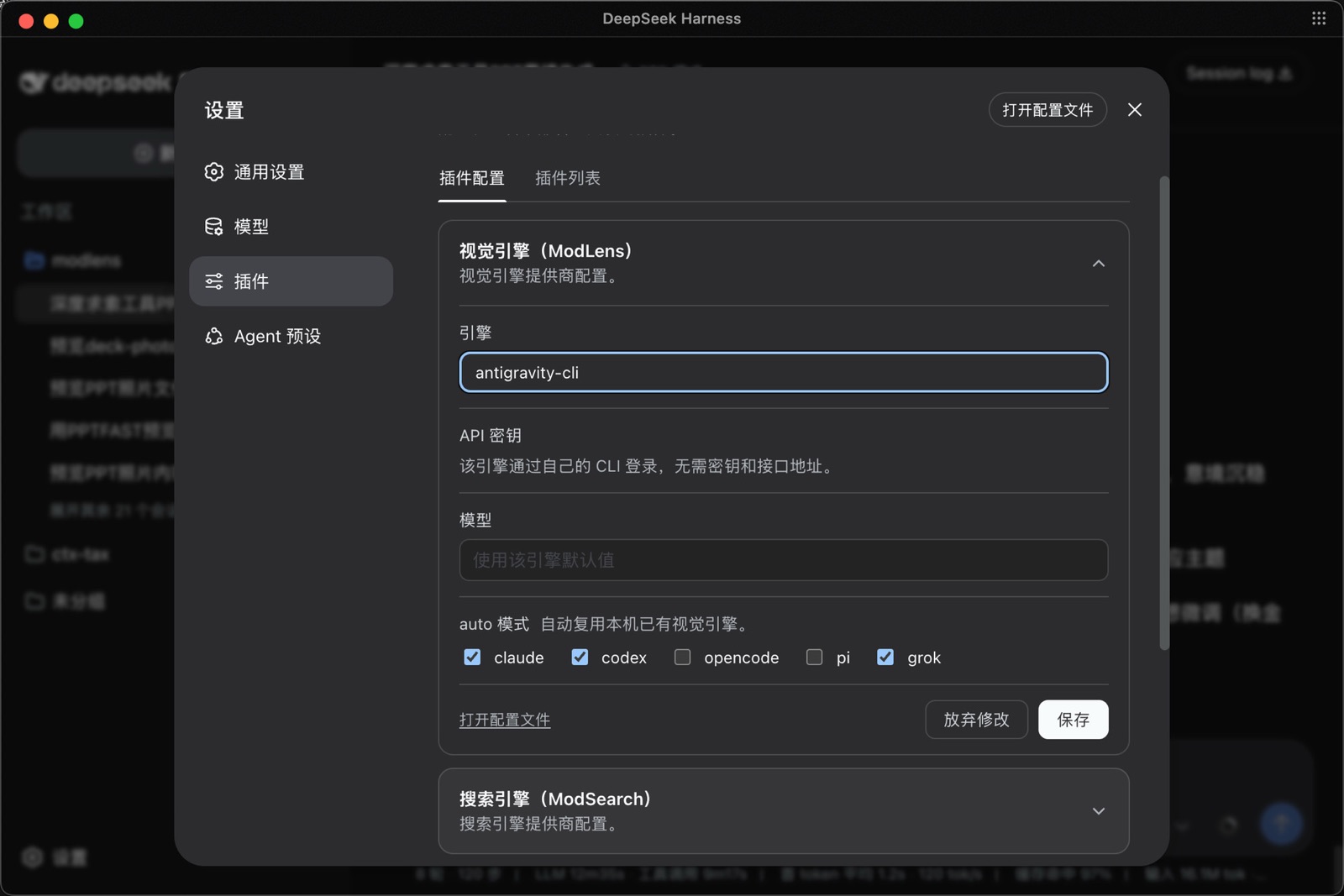
ModLens is a vision plugin for DeepSeek Harness that gives text-only models sight by reading images pasted directly into chat, with zero-config setup and multiple vision engines.
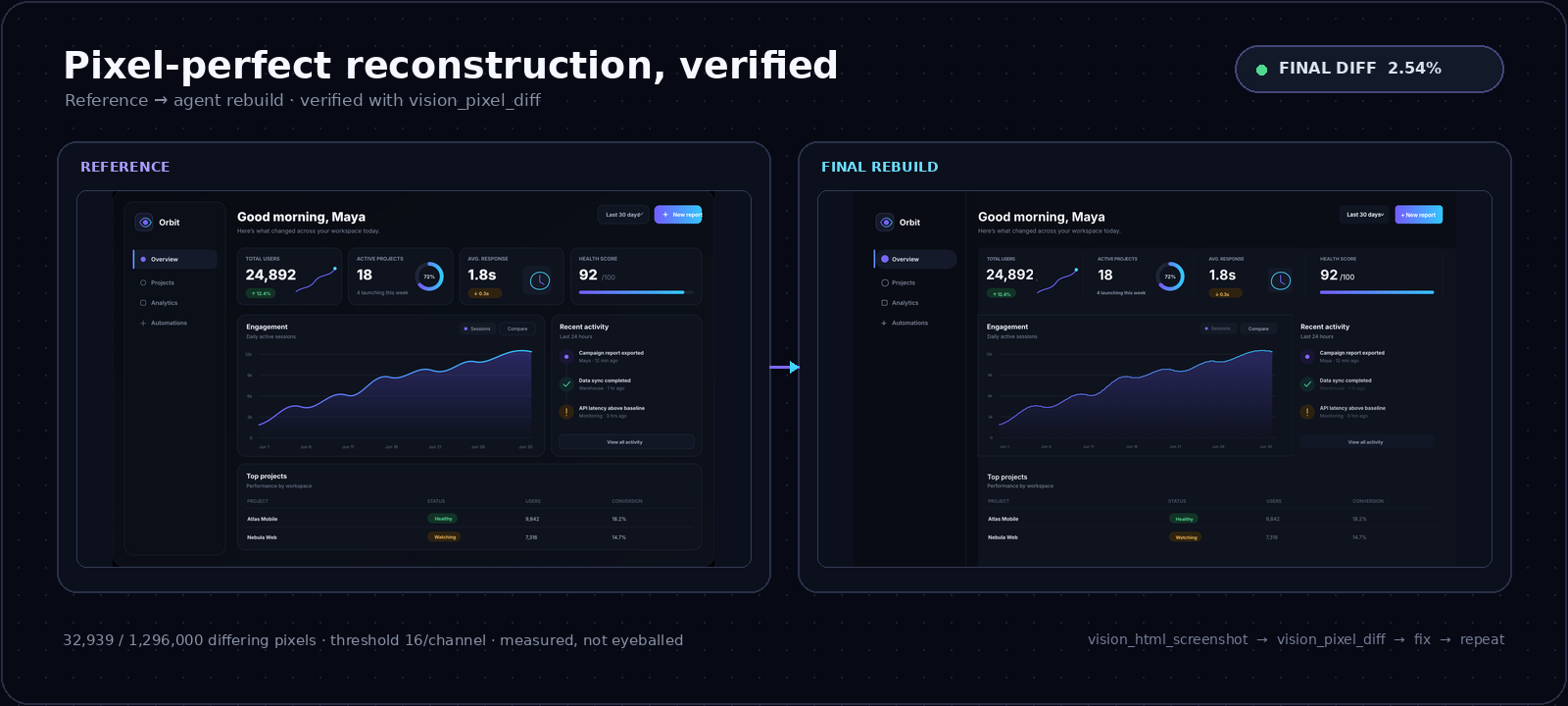
On-demand vision for text-only DeepSeek Harness agents: built-in free keyless vision chain and 14 vision tools, routing image turns as tool calls to vision models with pixel fidelity, no Python needed, one-command install.
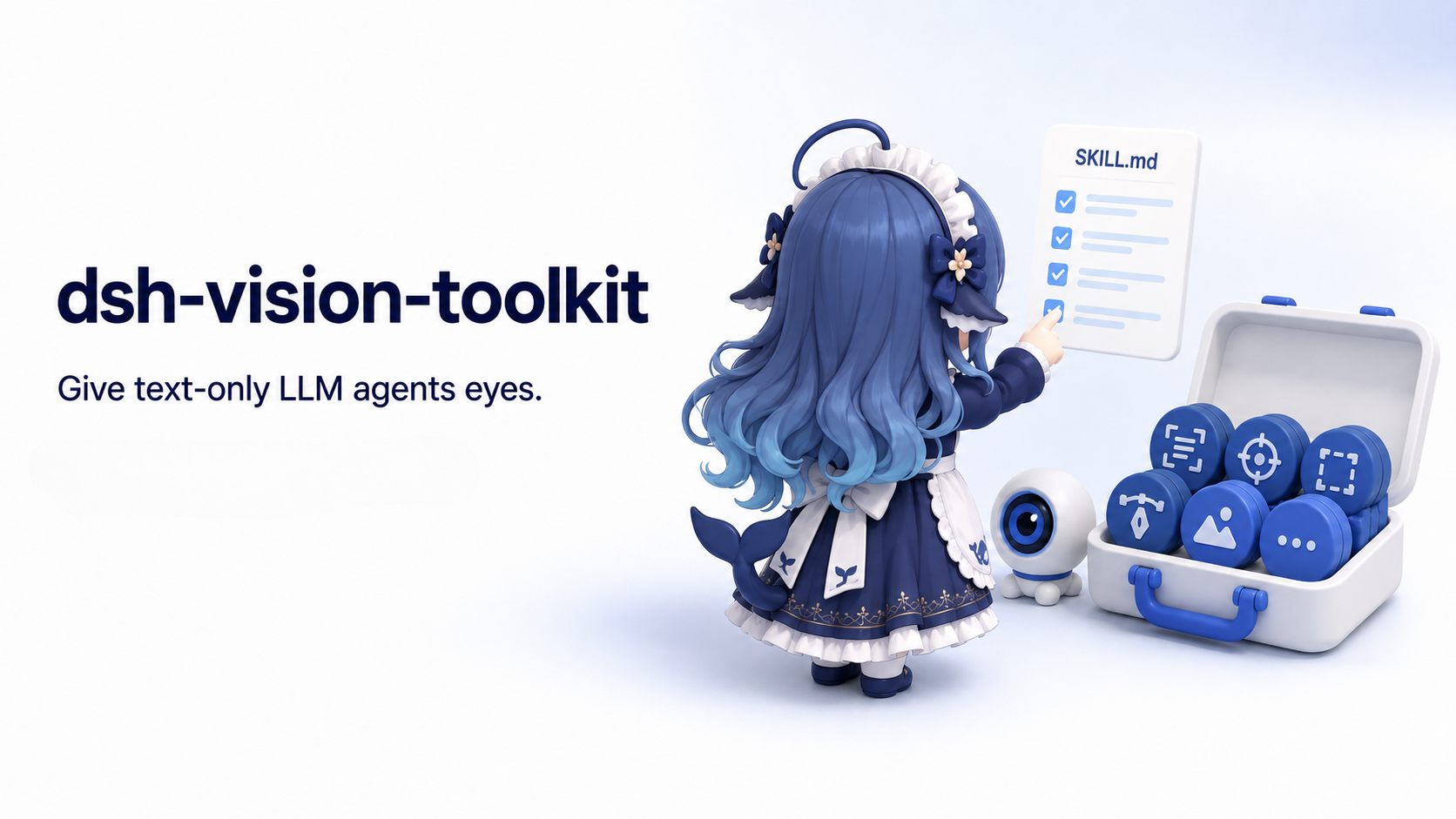
Give text-only models in DeepSeek Harness eyes, enabling image Q&A, long-screenshot OCR, UI restoration, and GUI visual tasks.