code-ownership-audit
Run the following command in DeepSeek Harness:
dsh plugin install ffseika0304/code-ownership-audit
Paste the following prompt into your AI chat to install this plugin:
Run dsh plugin install ffseika0304/code-ownership-audit in DeepSeek Harness to install this plugin; source is available at https://github.com/ffseika0304/code-ownership-audit
About this plugin
When you pull in an open-source snippet and tweak a few lines, legally it may still be bound by its upstream license. AI-assisted coding makes this ambiguity far more common—you may not even realise how closely a generated implementation mirrors existing code. code-ownership-audit compares your code against a reference at every AST node, reports the longest shared expression, and tags each risk with an exemption rationale: a common idiom, a shape dictated by interface conventions, or a genuine copy of expression. The entire engine relies only on the Python standard library; your code never leaves the machine and no model is called.
Two report tiers cover different needs. The free preview is fully offline with no call limit, giving you the total risk count, type distribution, and a one-line summary. The full report adds exact line numbers, per-item fix suggestions, and a server RSA-signed audit certificate (certified.json / certified.md) that can be archived, handed to a client, or verified offline at any later date. The tool states technical facts, not legal opinions; the final call is yours.
It suits developers who want to confirm code ownership after integrating open-source pieces, validate that a clean-room rewrite truly severed the upstream link, run a pre-delivery self-audit to avoid claiming derivative work as proprietary, or verify the provenance of external pull requests before merging.
Screenshots
Use Cases
- After integrating and modifying an open-source snippet, confirm whether it is still a derivative work legally
- After a clean-room rewrite, verify that the implementation has genuinely severed expression-level similarity with upstream
- Run a pre-delivery self-audit to avoid misrepresenting derivative work as proprietary asset
Best For
- Developers who regularly use AI-assisted Python code generation
- Teams that deliver code to clients and need to assert intellectual property clearly
- Security or legal staff concerned with license compliance and code provenance risk
Related Plugins
A unified suite combining hot runtime injection, task-aware thinking-mode routing, and a graded session protocol with red-team gates to sustain model diligence across long-horizon inference.
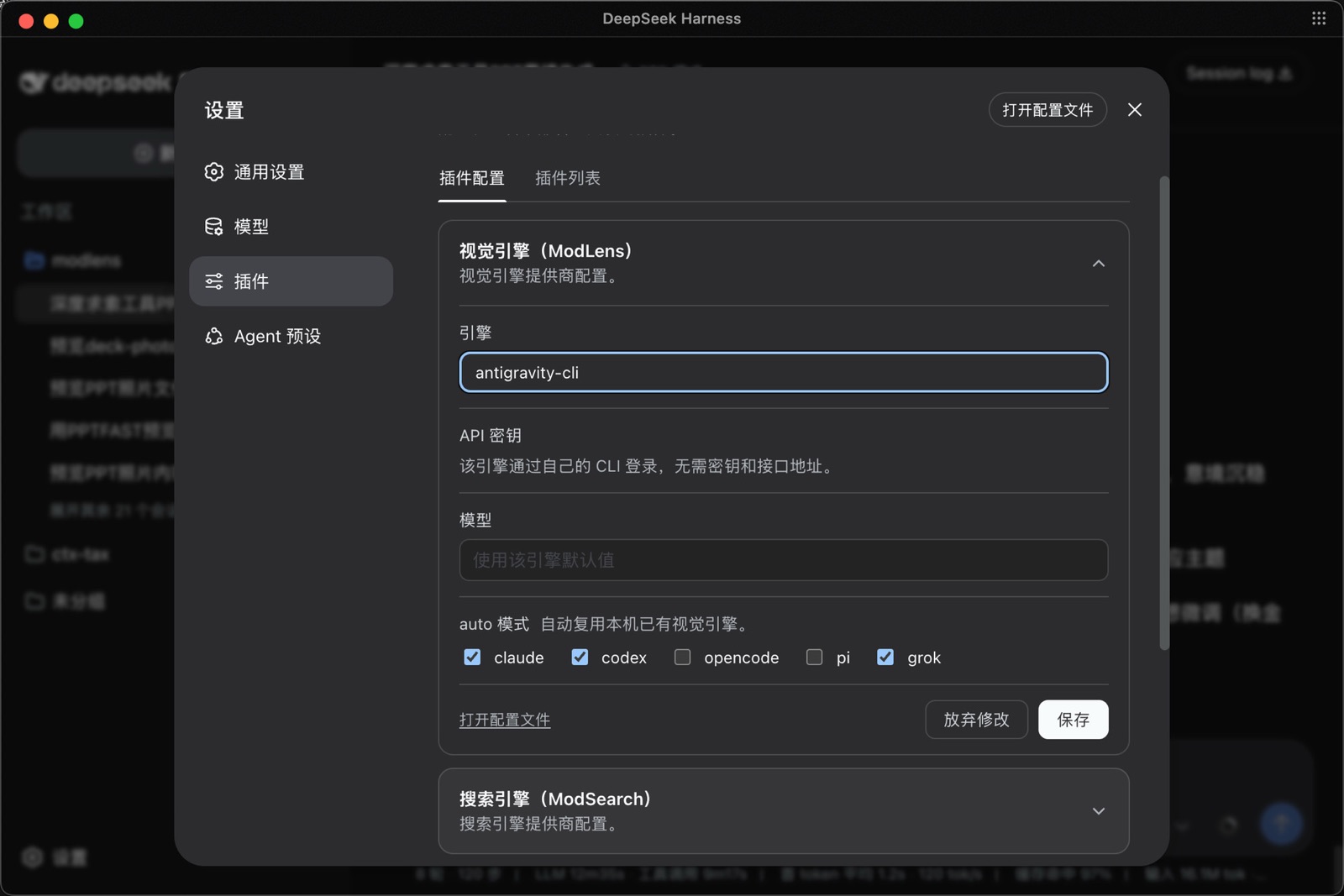
ModLens is a vision plugin for DeepSeek Harness that gives text-only models sight by reading images pasted directly into chat, with zero-config setup and multiple vision engines.
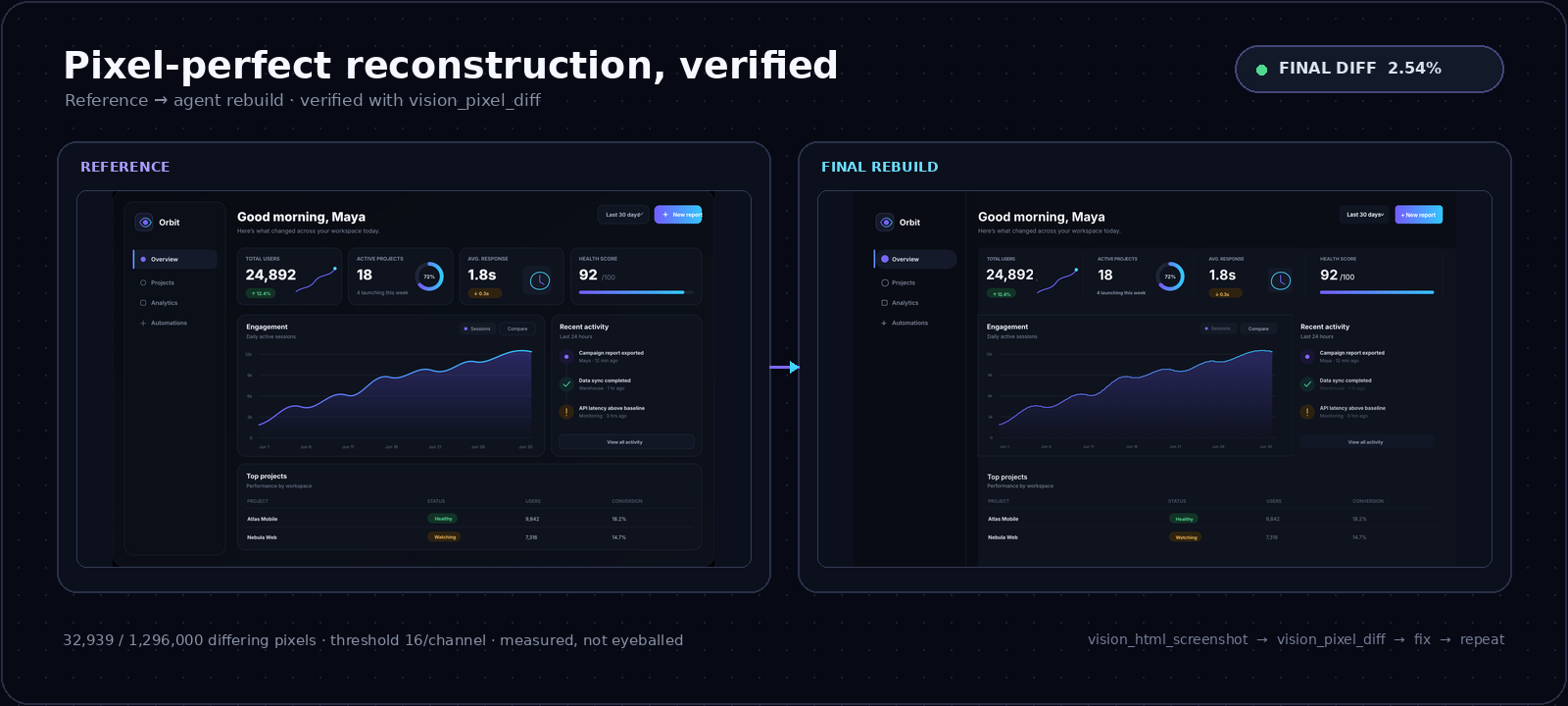
On-demand vision for text-only DeepSeek Harness agents: built-in free keyless vision chain and 14 vision tools, routing image turns as tool calls to vision models with pixel fidelity, no Python needed, one-command install.
Give text-only models in DeepSeek Harness eyes, enabling image Q&A, long-screenshot OCR, UI restoration, and GUI visual tasks.