request-frame-preview
Run the following command in DeepSeek Harness:
dsh plugin install zampie/request-frame-preview
Paste the following prompt into your AI chat to install this plugin:
Run dsh plugin install zampie/request-frame-preview in DeepSeek Harness to install it; the source is available at https://github.com/zampie/request-frame-preview . After installing, restart dsh web and a "Request Preview" button will appear in the session header.
About this plugin
When debugging a DeepSeek Harness agent session, the most common question is simple: what exactly did the model receive? request-frame-preview answers that by reconstructing the full request frame Harness sends upstream—the system prompt, tool declarations, and the ordered message array—so you can inspect every byte the model actually saw.
Click the Request Preview button in the session header to open an overlay with three stacked sections: the (collapsed by default) system prompt, tool declarations with expandable parameter schemas, and the message list with user / assistant / tool-result chips, tool_call_ids, reasoning content, and inline tool_calls. A Download JSON button saves the entire frame to a file for offline diffing or pasting into a ticket.
For live sessions the data comes from the same functions the agent loop reads when building each request; for cold sessions it falls back to the durable log. The HTTP endpoint is strictly read-only (GET/HEAD), stores nothing, and mutates no session state—it is a pure debugging aid.
Built for developers and platform engineers who are tuning prompts, triaging tool-call failures, or need to explain to a teammate why the model made a particular decision. If you have ever grep-d your way through session logs trying to reconstruct message order or manually splice role: tool blocks, this plugin saves you the tedium.
Use Cases
- Diagnose tool-call failures by verifying the model received correct parameter schemas and message ordering
- Compare prompt versions and confirm tool declarations and the message array match expectations
- Share the full request frame with teammates to explain why the model made a particular decision
Best For
- Agent developers tuning prompts, tool schemas, and call sequences
- Platform engineers troubleshooting DeepSeek Harness session behavior
- Team members who need to analyse model inputs offline and write debugging reports
Related Plugins
A unified suite combining hot runtime injection, task-aware thinking-mode routing, and a graded session protocol with red-team gates to sustain model diligence across long-horizon inference.
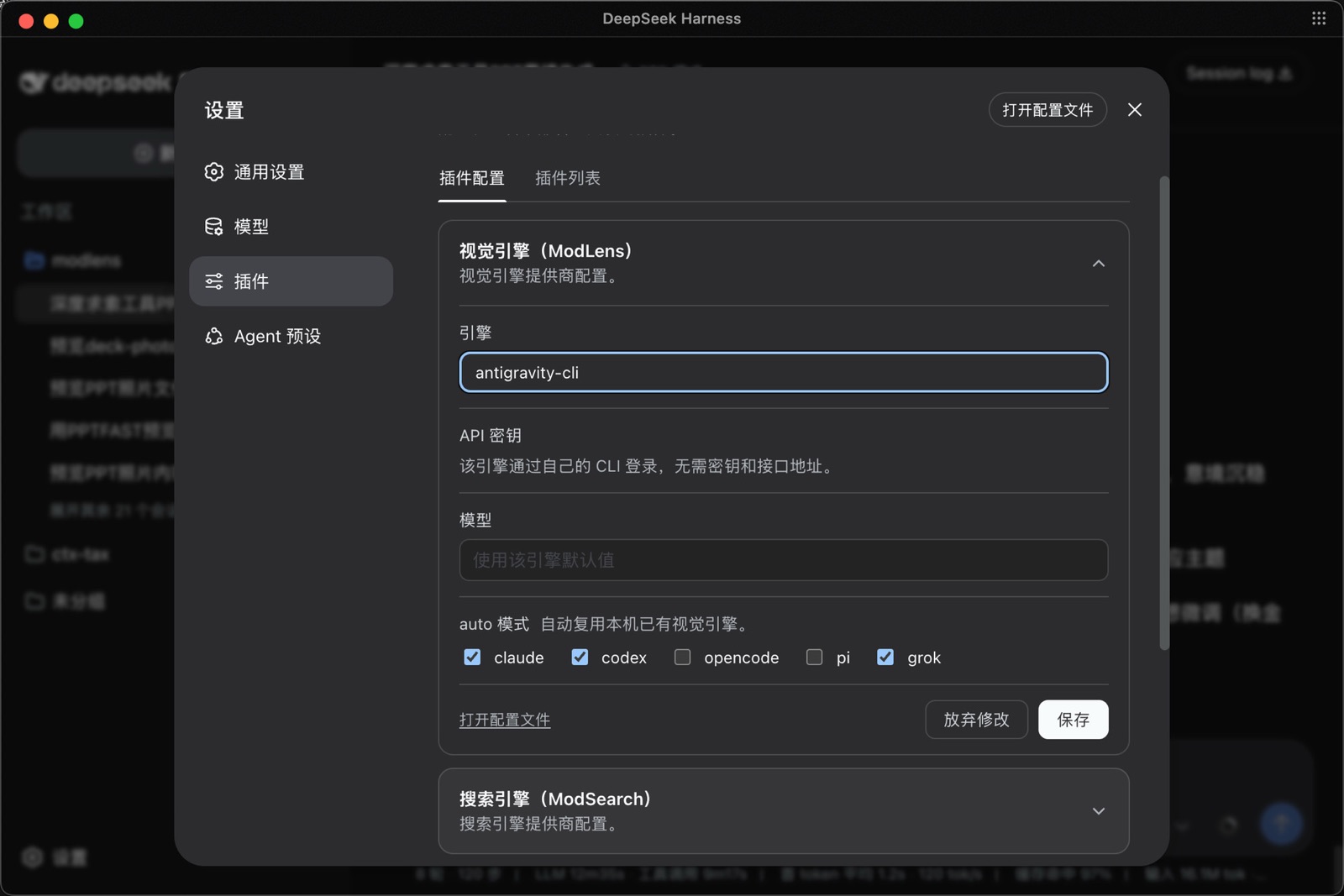
ModLens is a vision plugin for DeepSeek Harness that gives text-only models sight by reading images pasted directly into chat, with zero-config setup and multiple vision engines.
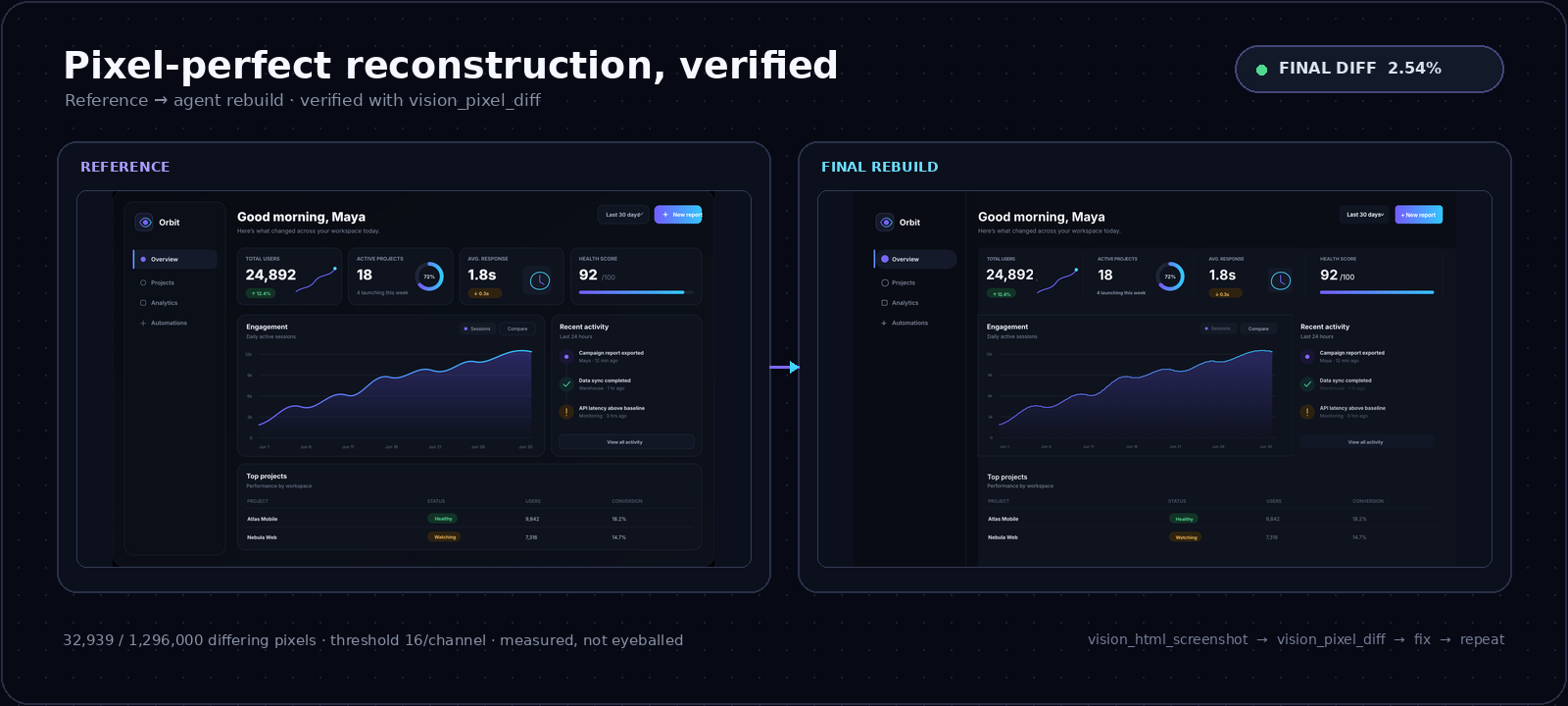
On-demand vision for text-only DeepSeek Harness agents: built-in free keyless vision chain and 14 vision tools, routing image turns as tool calls to vision models with pixel fidelity, no Python needed, one-command install.
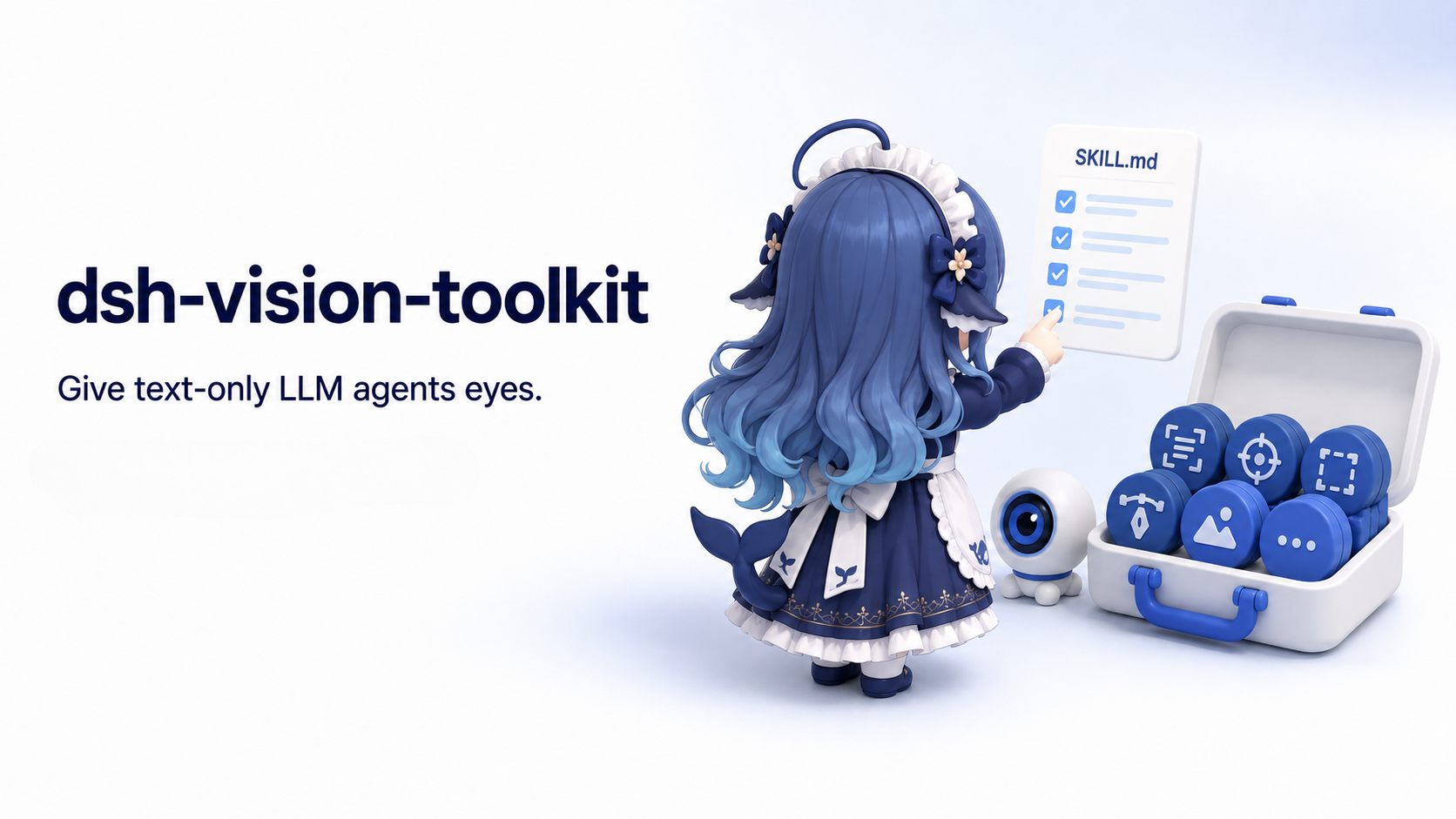
Give text-only models in DeepSeek Harness eyes, enabling image Q&A, long-screenshot OCR, UI restoration, and GUI visual tasks.