dsh-intelhub
Run the following command in DeepSeek Harness:
dsh plugin install IKEASven69/dsh-intelhub
Paste the following prompt into your AI chat to install this plugin:
Run dsh plugin install IKEASven69/dsh-intelhub in DeepSeek Harness to install the plugin. The full source code is available at https://github.com/IKEASven69/dsh-intelhub
About this plugin
Social-media posts, bookmarked pages, and half-formed notes scatter across a dozen places. When you need them back, keyword search misses and the original wording is gone, turning information into noise. dsh-intelhub solves exactly that: it turns the continuous inflow of information into a searchable, filterable, and exportable local knowledge base.
Ingestion is source-agnostic. A watched folder picks up files the moment a collection script writes them, a web page is archived in one command, or you jot down a judgment as plain text. Search combines semantic and keyword matching, then layers scalar filters for author, likes, stage, and tags, so querying how to configure a timeout hits the original post that says abort after 30 seconds of no response. Results carry author, like count, and file-block citations. When a research sprint ends, export to plain Markdown in one step and let Obsidian index it with zero plugins.
Everything runs locally. The first import downloads a roughly 30 MB embedding model once; after that there is no API key, no daemon, and documents never leave your machine. It fits researchers, writers, and content curators who ingest a lot of information daily, prefer a local Markdown or Obsidian workflow, and do not want to maintain a heavyweight database.
Use Cases
- Auto-ingest social media posts from collection scripts and find the original post by semantic query with full attribution
- Log research judgments as notes and recall them instantly by asking what the conclusion was
- Export topic-related notes to plain Markdown and index them in Obsidian with zero plugins
Best For
- Researchers who ingest heavy information streams and need searchable, persistent knowledge
- Curators built around Obsidian or local Markdown workflows
- Local-first enthusiasts who want zero daemons, no API keys, and fully offline operation
Related Plugins

Memory layer for coding agents that indexes local session history and auto-recalls relevant context before edits, commands, and failures, with no manual search needed.
Traceable, searchable cross-session memory for AI agents that turns conversation knowledge into a typed knowledge graph and recalls relevant subgraphs instead of replaying full history, natively integrated with DeepSeek Harness.
Gives DSH AI cross-session long-term memory, to-do and skill management, plus multi-session orchestration, external AI delegation, and an infinite canvas that grows with you.
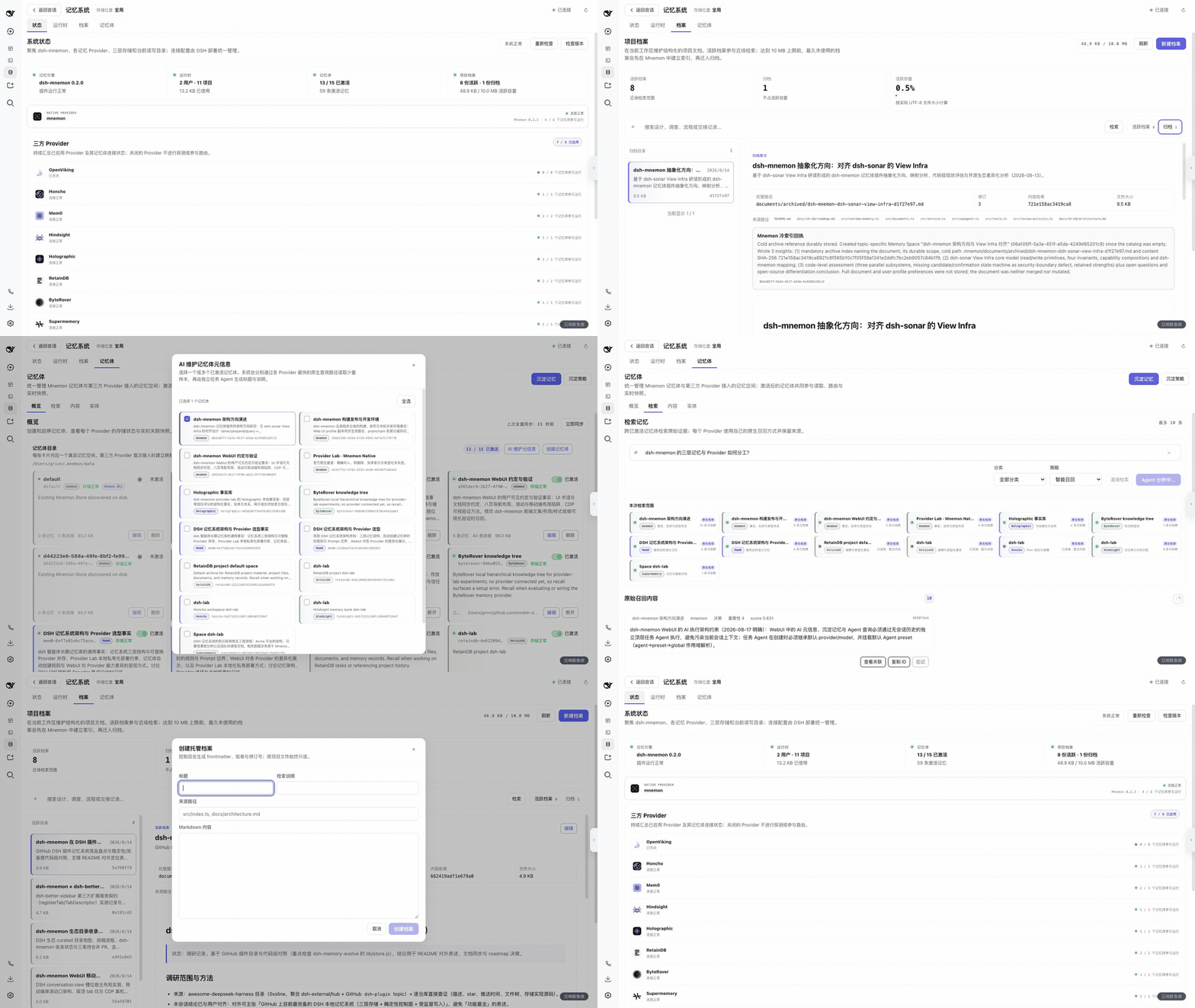
dsh-mnemon is a three-tier, pluggable, Agent-driven memory system for DeepSeek Harness, combining Runtime memory, Project Documents, and replaceable Memory Spaces with nine long-term providers.