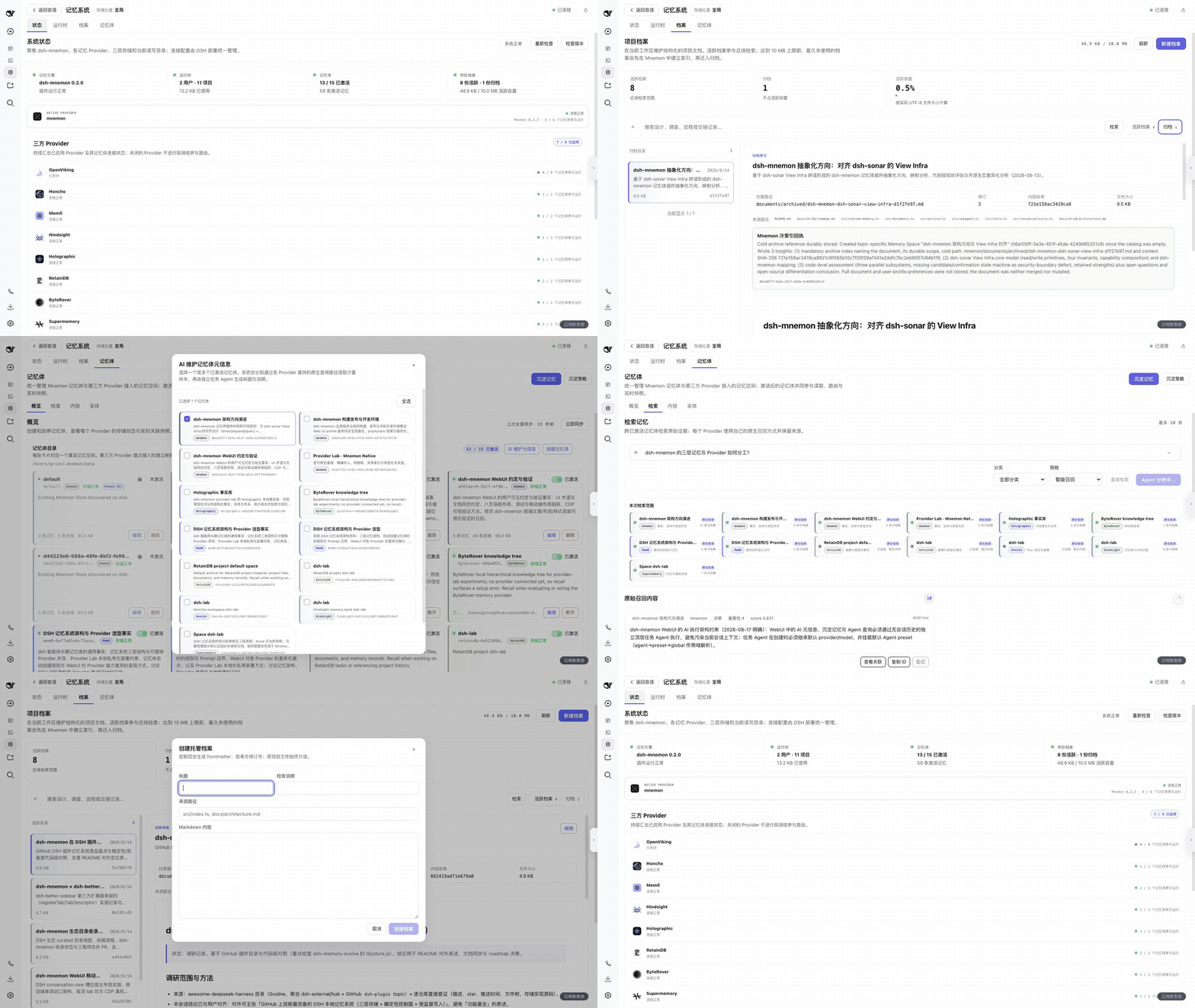
dsh-mnemon
Run the following command in DeepSeek Harness:
dsh plugin install omdsh-dev/dsh-mnemon
Paste the following prompt into your AI chat to install this plugin:
To install dsh-mnemon in DeepSeek Harness, run: dsh plugin install omdsh-dev/dsh-mnemon, or fetch it from https://github.com/omdsh-dev/dsh-mnemon.
About this plugin
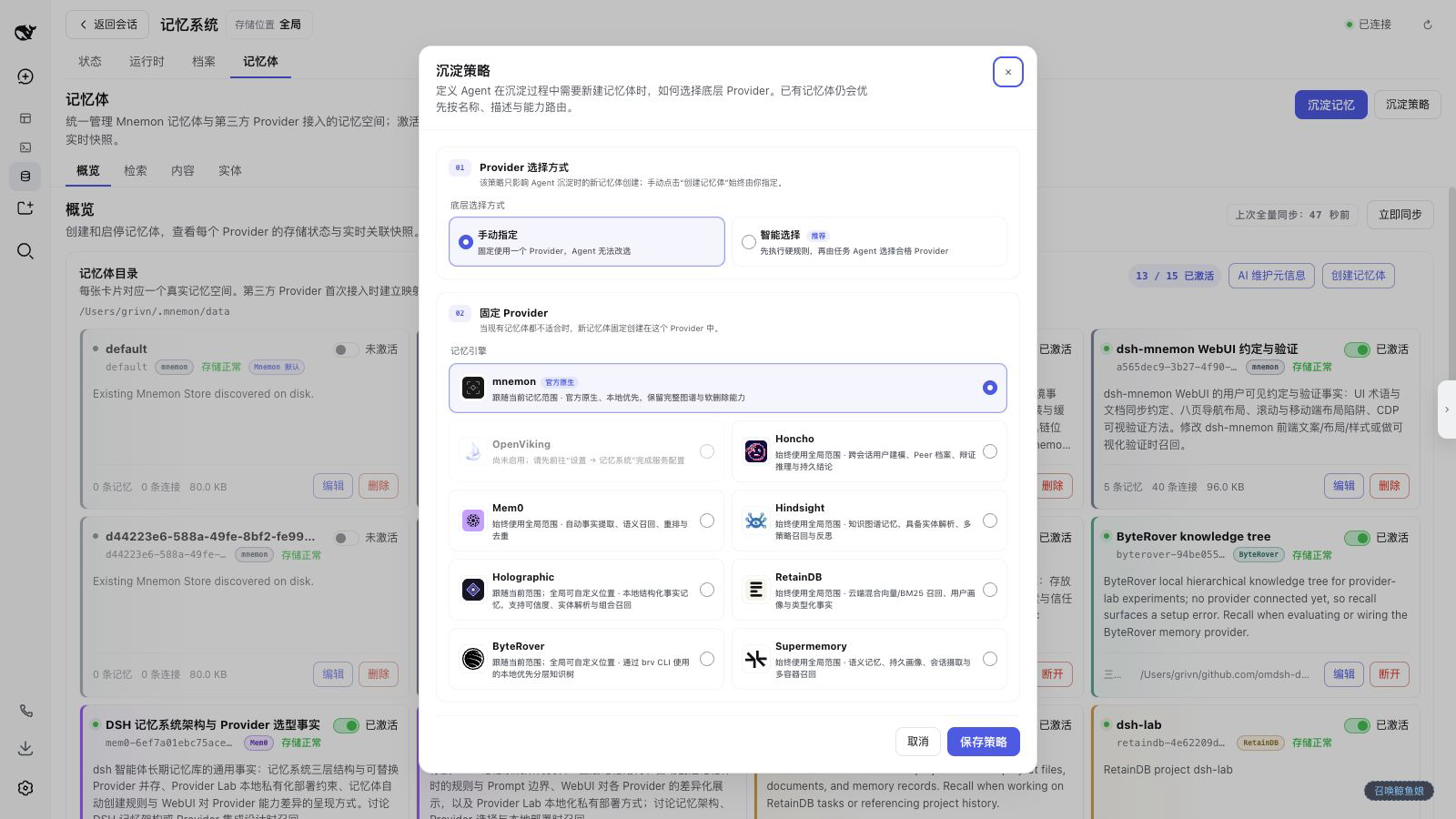
Memory systems often face an awkward trade-off: either cram every kind of knowledge into a single database, or let context balloon out of control on every turn. dsh-mnemon solves this with a three-tier architecture. The Runtime tier projects compact preferences, collaboration rules, and project conventions into every turn. The Documents tier preserves complete narratives like designs, postmortems, and handoffs. The Memory Spaces tier retrieves durable cross-session evidence on demand from nine long-term providers. Each tier has a distinct job, and the first two are run by a deterministic Host that costs no extra model context.
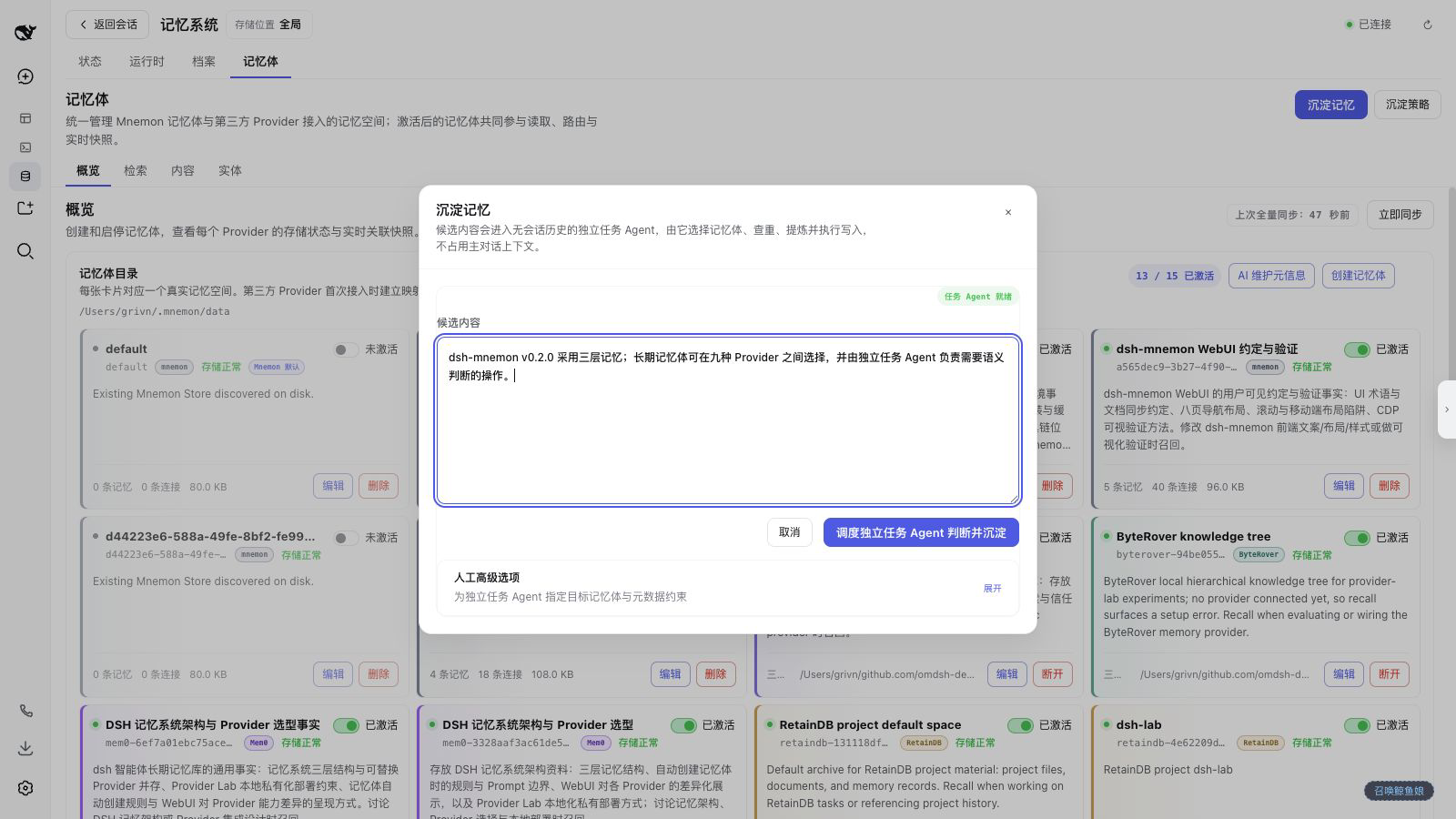
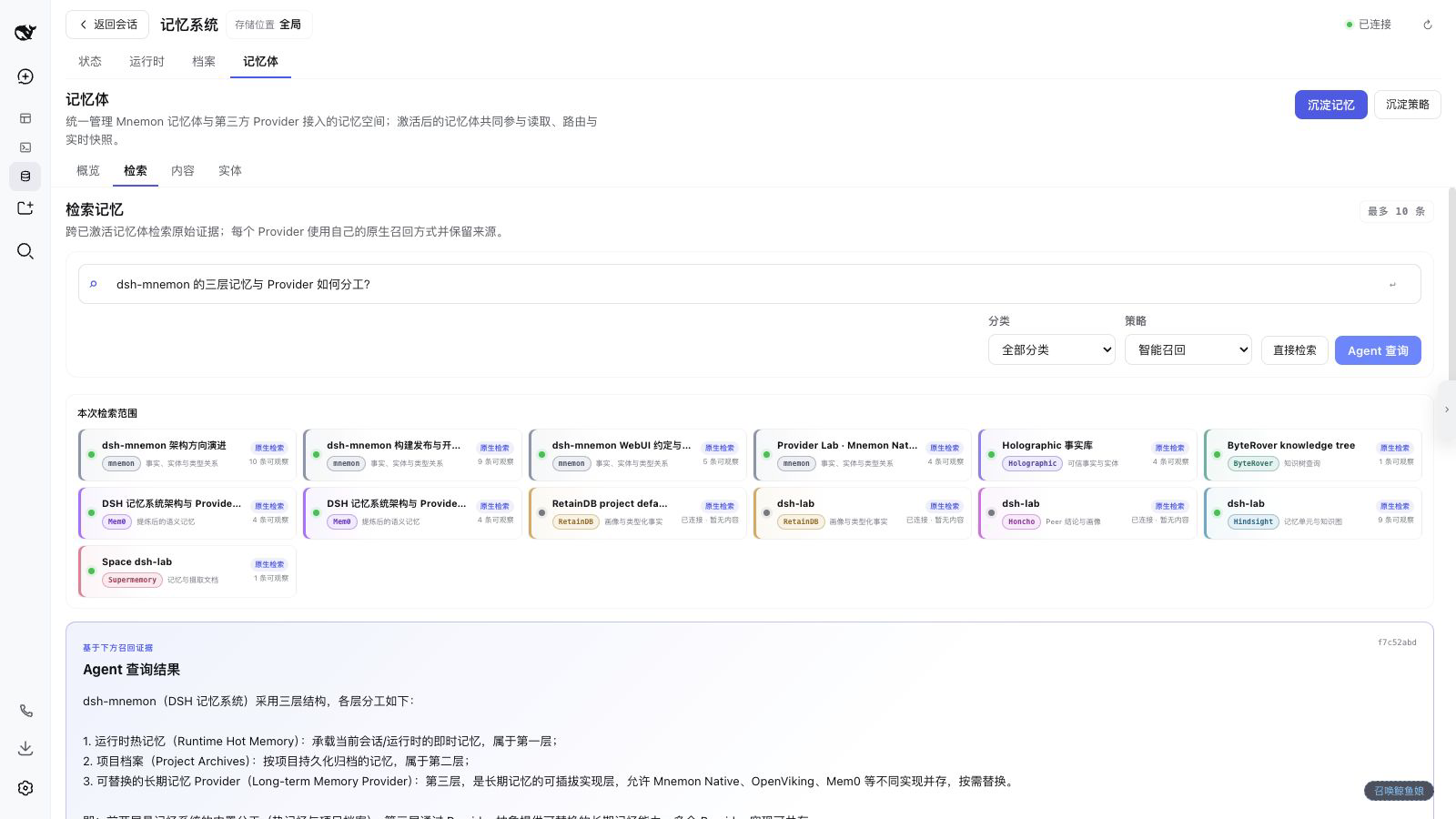
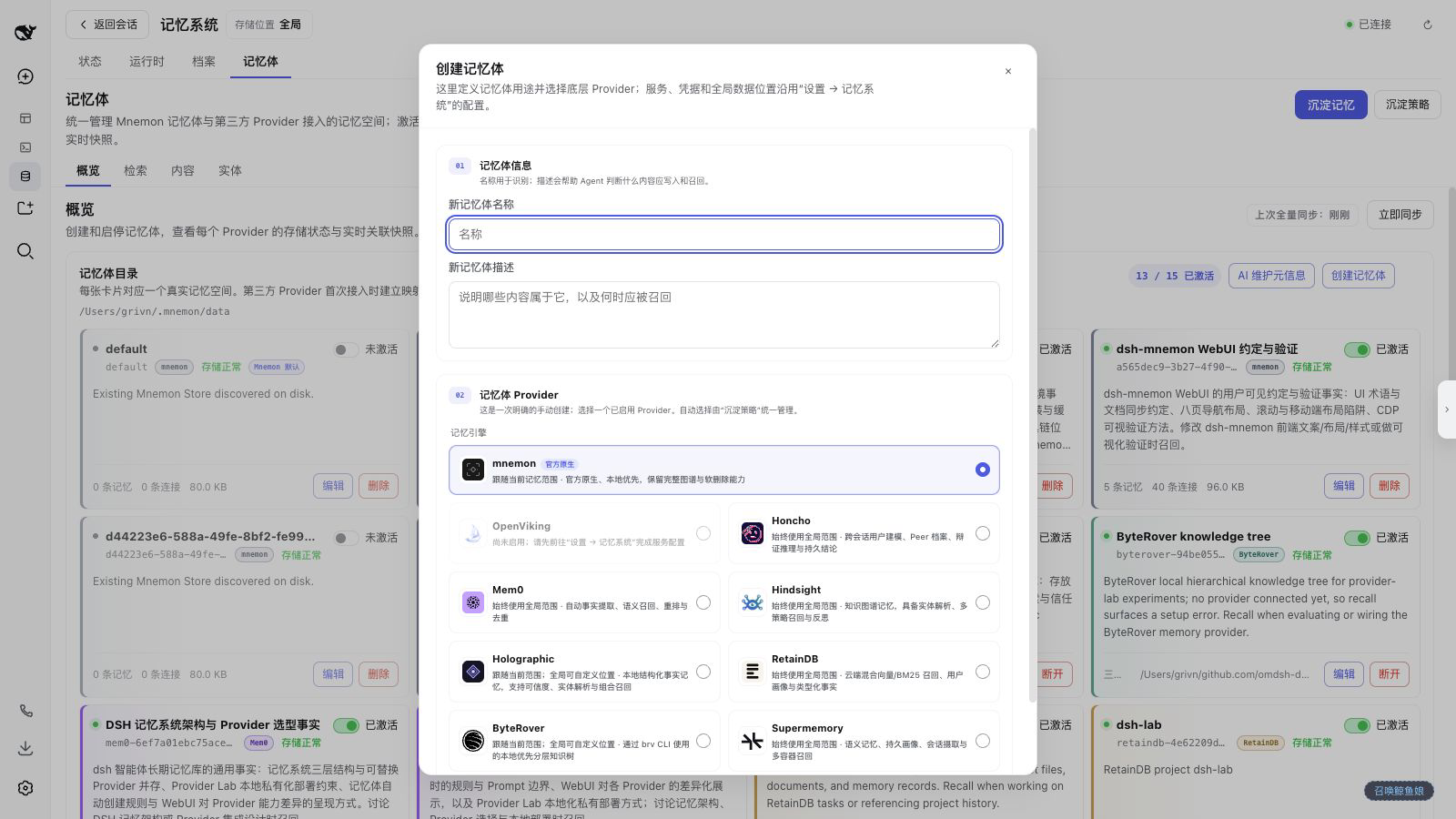
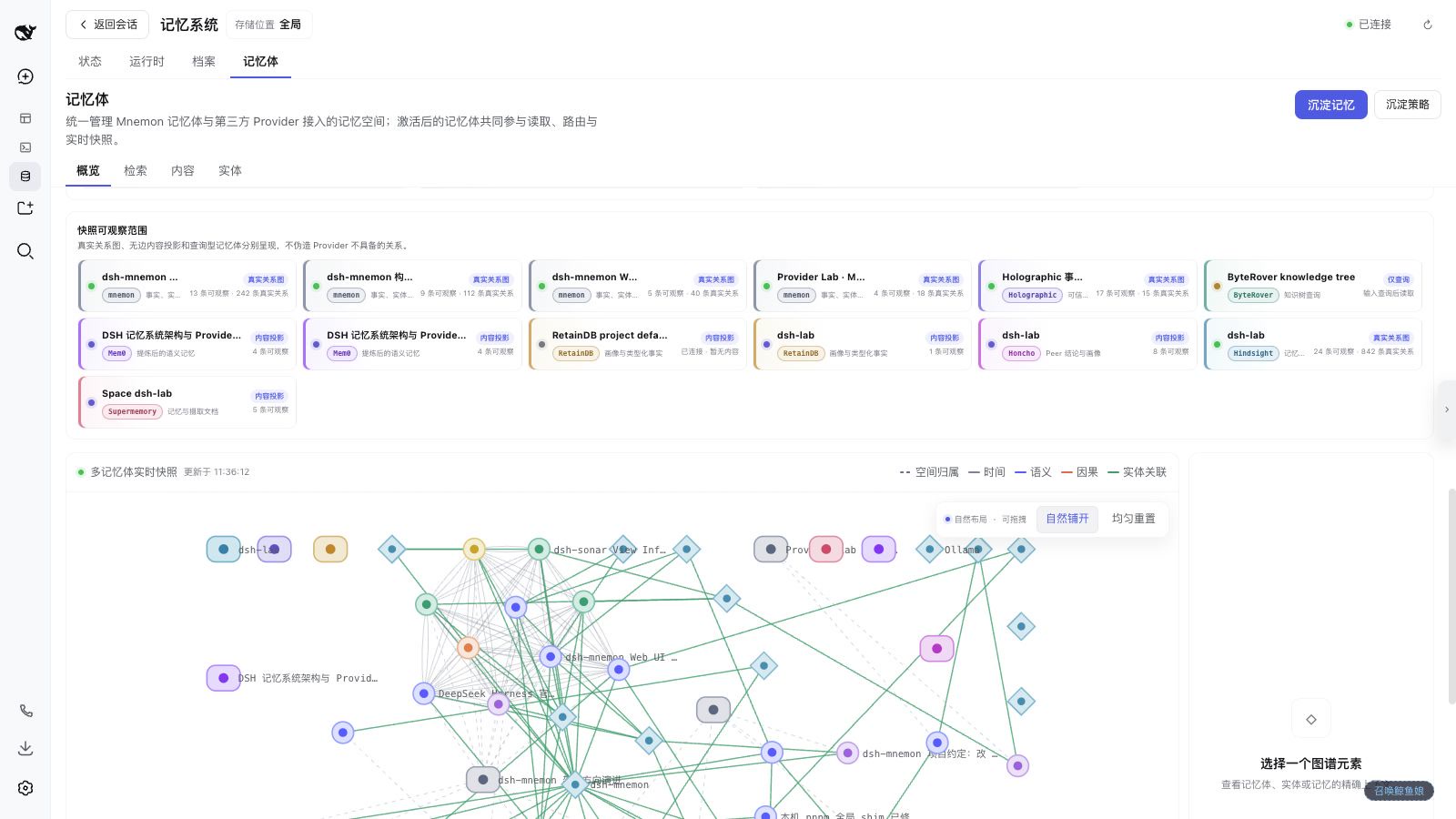
What really sets dsh-mnemon apart is its Agent-driven, supervised workflow. Distilled writes via Remember, bounded evidence retrieval via Agent query, smart routing, and AI metadata generation are all handled by separate background task Agents that never touch your main conversation history. You can assign them a dedicated provider and model, or keep Search and Turn memory as pure deterministic Host reads. The nine providers — from the native local-first Mnemon engine to OpenViking, Honcho, Mem0, and others — keep their capability differences visible; the plugin never invents graph edges, deletion semantics, or enumerable content an engine doesn't actually provide.
It's built for DeepSeek Harness users who want one memory control plane across workspaces and Agents without forcing everything into one database, and for teams who already rely on an external memory service and want to plug it into DSH while keeping their existing workflow. Settings owns reusable provider services, Memory Spaces owns concrete instances and scope, and the WebUI, conversation surface, and Headless mode share the same system. Security boundaries are explicit: provider credentials stay at mode 0600, host calls use argument arrays with shells disabled, and uninstalling the plugin never deletes local or remote memory data.
Screenshots
Use Cases
- Distill important conclusions into a Memory Space via Remember in the WebUI and review the supervised write confirmation.
- Run a direct search and an Agent query against the same question to compare bounded evidence retrieval with deterministic Host reads.
- Manage cross-session long-term memory and routing policies with global scope across multiple workspaces and Agents.
Best For
- Heavy DeepSeek Harness users and developers who want a unified memory control plane.
- Teams already using external memory services like Mnemon, Mem0, or Honcho who want to plug them into DSH.
- AI application builders who need to separate per-turn context, full documents, and long-term evidence while keeping clear data security boundaries.
Related Plugins

Memory layer for coding agents that indexes local session history and auto-recalls relevant context before edits, commands, and failures, with no manual search needed.
Traceable, searchable cross-session memory for AI agents that turns conversation knowledge into a typed knowledge graph and recalls relevant subgraphs instead of replaying full history, natively integrated with DeepSeek Harness.
Gives DSH AI cross-session long-term memory, to-do and skill management, plus multi-session orchestration, external AI delegation, and an infinite canvas that grows with you.
An opinionated, zero-infrastructure file-based memory protocol: human-readable markdown files plus a bounded always-loaded index, curation discipline, and no database or embeddings.