
deja-vu
Run the following command in DeepSeek Harness:
dsh plugin install vshulcz/deja-vu
Paste the following prompt into your AI chat to install this plugin:
Install in DeepSeek Harness by running dsh plugin install vshulcz/deja-vu; the source repository is https://github.com/vshulcz/deja-vu .
About this plugin
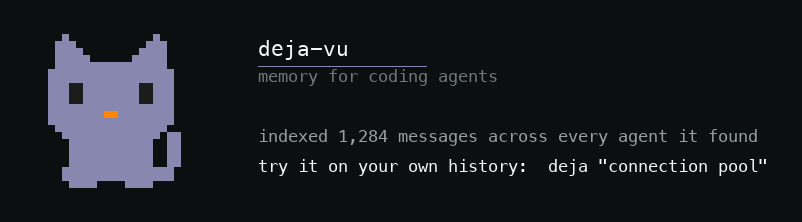
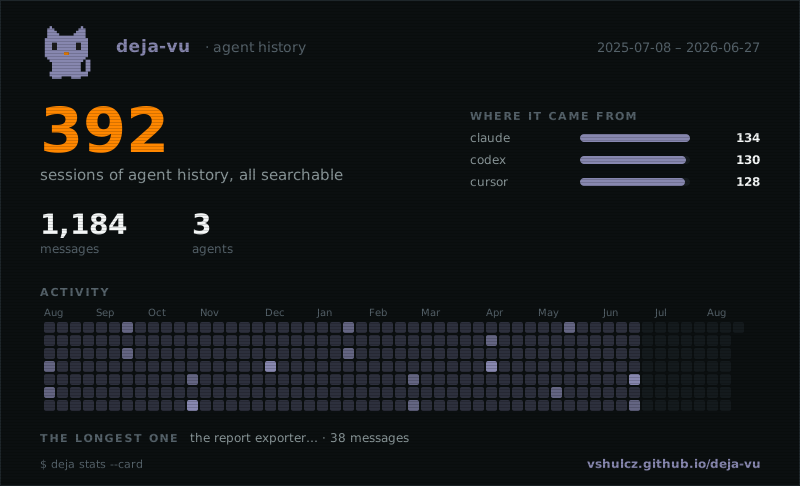
The most frustrating flaw of coding agents is not that they write bad code — it is that they keep re-debugging a bug you fixed in March. Most memory tools start from a blank page and record forward, but the history that actually matters already sits on disk in the session files that Claude Code, Codex, Cursor, and two dozen other agents have written. deja-vu does one thing: it indexes those existing files into a single shared memory layer every agent on the machine can read.
Its standout capability is recall at the point of action. Before an agent edits a file, runs a command, or hits a failure, deja-vu slides the relevant prior decision, the last working invocation, or the post-error fix it recorded before — automatically, with no one to ask. What it indexes goes beyond conversation text: the files each turn opened, real command exit codes, and the exact spans an edit replaced. Those are the details every context compaction discards first. On the privacy side, keys, tokens, JWTs, and private-key blocks are stripped at index time, and everything runs locally.
If you switch between multiple coding agents daily, maintain a project that spans weeks or months, or are tired of the loop of re-solwing a problem you already fixed, deja-vu is worth a look. It does not replace your agent; it gives every agent on the machine a shared, searchable, action-triggered long-term memory.
Screenshots

Use Cases
- Auto-recalling relevant history before an agent re-debugges a bug fixed months ago
- Sharing one project memory layer across Claude Code, Codex, Cursor, and other agents with no manual search
- Matching a failed command to the post-error fix that followed the same failure on this machine before
Best For
- Developers who switch between multiple coding agents daily
- Engineers maintaining long-cycle projects spanning weeks or months
- Teams that want persistent, searchable agent memory without cloud dependency
Related Plugins
Traceable, searchable cross-session memory for AI agents that turns conversation knowledge into a typed knowledge graph and recalls relevant subgraphs instead of replaying full history, natively integrated with DeepSeek Harness.
Gives DSH AI cross-session long-term memory, to-do and skill management, plus multi-session orchestration, external AI delegation, and an infinite canvas that grows with you.
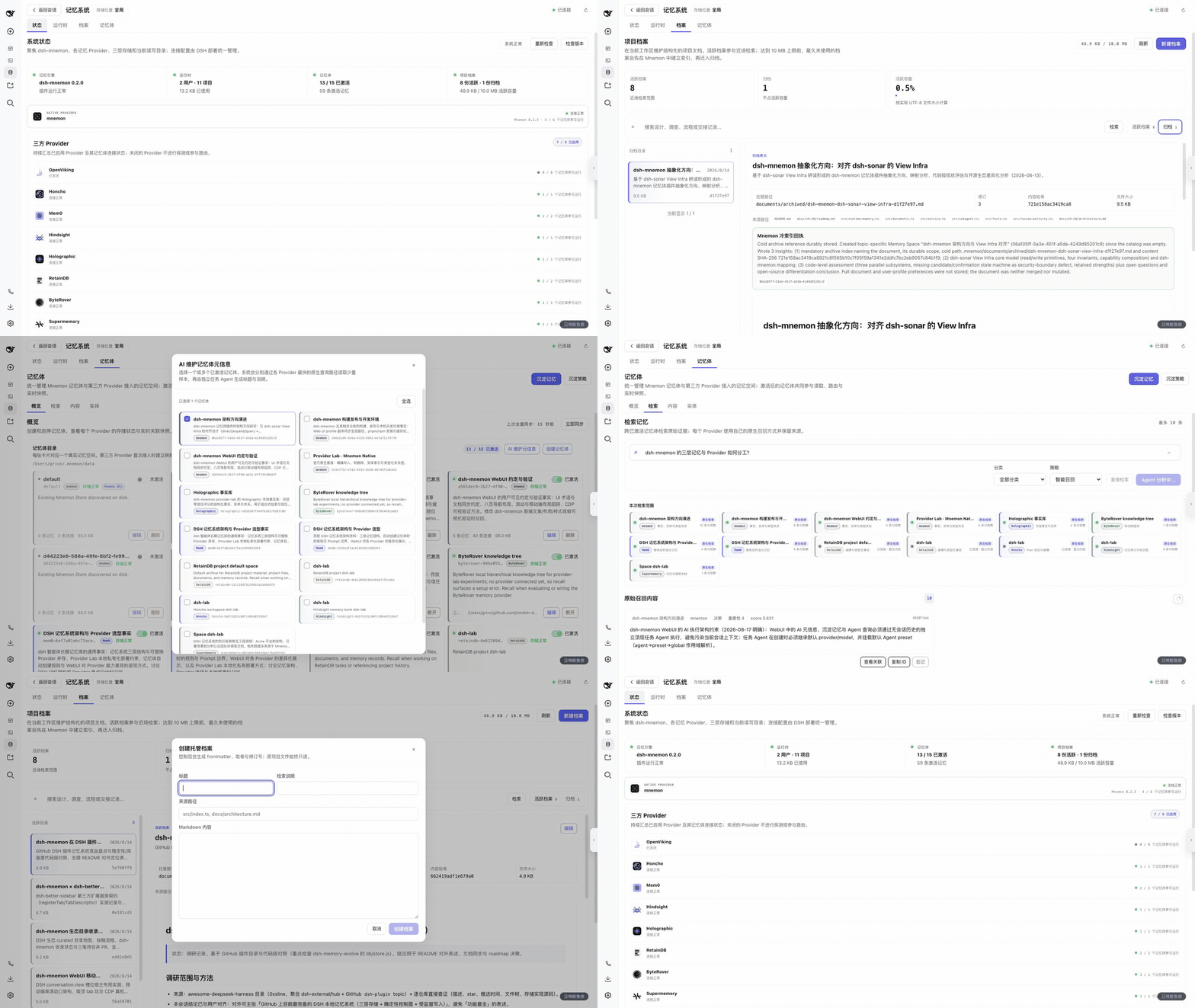
dsh-mnemon is a three-tier, pluggable, Agent-driven memory system for DeepSeek Harness, combining Runtime memory, Project Documents, and replaceable Memory Spaces with nine long-term providers.
An opinionated, zero-infrastructure file-based memory protocol: human-readable markdown files plus a bounded always-loaded index, curation discipline, and no database or embeddings.