engramory
Run the following command in DeepSeek Harness:
dsh plugin install tinqiao-oss/engramory
Paste the following prompt into your AI chat to install this plugin:
To install the engramory plugin in DeepSeek Harness, run: dsh plugin install tinqiao-oss/engramory (source: https://github.com/tinqiao-oss/engramory).
About this plugin
When building memory for AI agents, the two usual traps are: turning memory into a heavyweight database/vector-retrieval system, or letting a memory folder grow without bound until it becomes a pile of junk nobody dares to touch. Engramory takes a third path — zero infrastructure, no embeddings, no server. Just a folder of small, human-readable Markdown files plus an index that loads every session, and that turns out to be enough to keep memory in order.
The core is a strict but practical discipline: dedup before writing, update instead of duplicating, delete when wrong, and never store what the repo already records. Every feedback note must state its Why and How to apply, so procedural memory is actually actionable. The index is deliberately bounded — since the loading window is finite, it warns you to compact before old memories silently fall off the end of context. These rules load as standing rules, so they fire on every task rather than depending on a skill being retrieved by chance.
Who is this for? If you use Claude Code, Codex, or any agent host that supports standing rules and file reads, and you want a lightweight, auditable, hand-editable memory setup — or you are tired of auto-extracted vector fragments you cannot control — Engramory is for you. It does not try to out-search, out-scale, or out-automate the big memory systems. It bets on hand curation, a tiny always-loaded index, and a discipline you can carry to any agent, with everything inspectable in a plain text editor.
Use Cases
- Managing agent long-term memory with plain Markdown files — no database or vector search
- Preventing the memory index from silently growing past the loaded context window
- Applying a consistent memory-curation discipline across hosts like Claude Code and Codex
Best For
- Agent users on hosts like Claude Code or Codex that support standing rules files
- People who prefer readable, hand-editable, diffable text memory over a black-box database
- Individuals and small teams who want disciplined add/update/delete memory behavior rather than auto-extracted fragments
Related Plugins

Memory layer for coding agents that indexes local session history and auto-recalls relevant context before edits, commands, and failures, with no manual search needed.

Traceable, searchable cross-session memory for AI agents that turns conversation knowledge into a typed knowledge graph and recalls relevant subgraphs instead of replaying full history, natively integrated with DeepSeek Harness.
Gives DSH AI cross-session long-term memory, to-do and skill management, plus multi-session orchestration, external AI delegation, and an infinite canvas that grows with you.
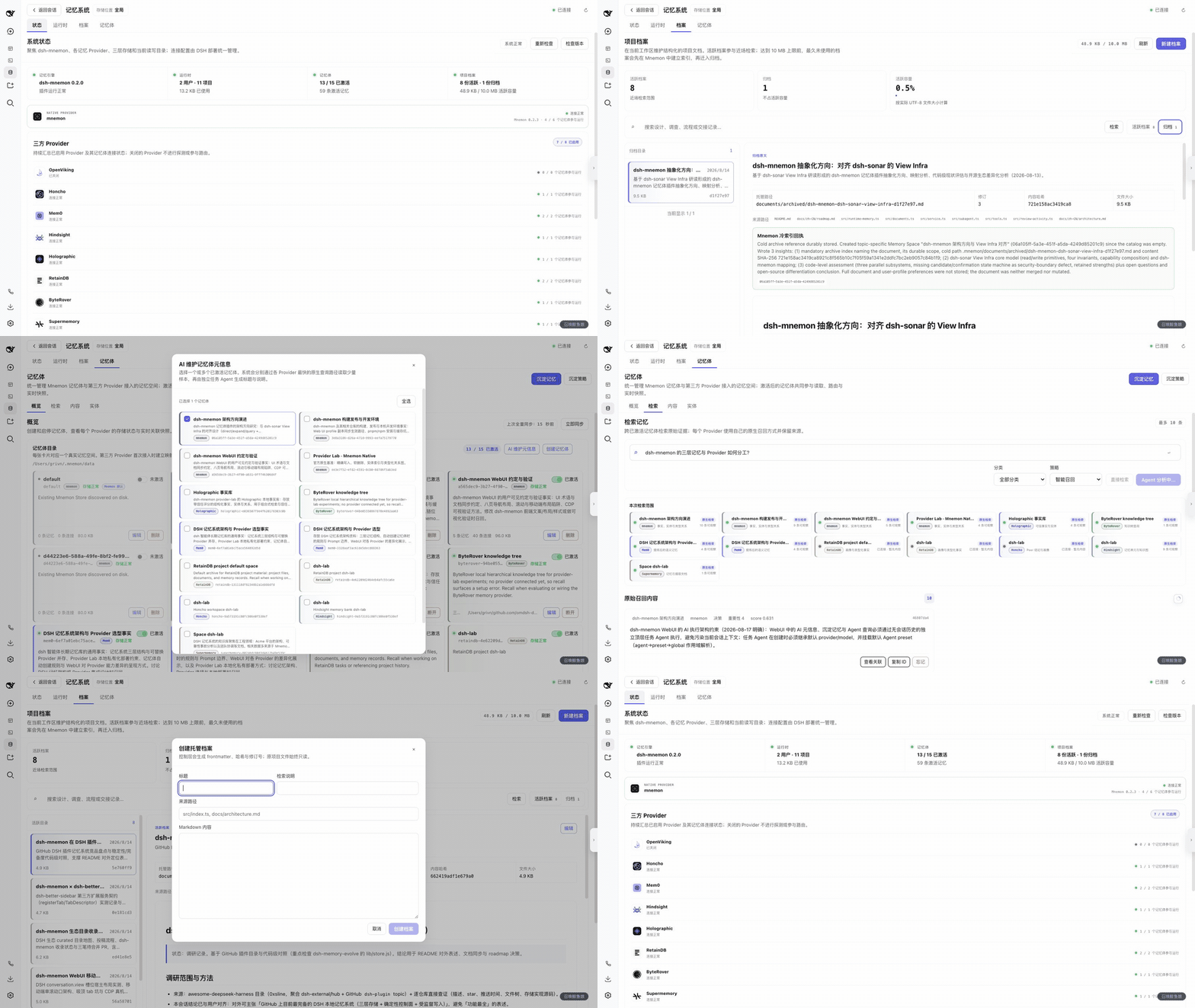
dsh-mnemon is a three-tier, pluggable, Agent-driven memory system for DeepSeek Harness, combining Runtime memory, Project Documents, and replaceable Memory Spaces with nine long-term providers.