dsh-boolean
Run the following command in DeepSeek Harness:
dsh plugin install TYEclipse/dsh-boolean
Paste the following prompt into your AI chat to install this plugin:
Run dsh plugin install TYEclipse/dsh-boolean in your terminal to install this plugin; source code is available at https://github.com/TYEclipse/dsh-boolean .
About this plugin
Small logic chores—expanding ¬(a∧b), listing the satisfying rows of a three-variable expression, checking whether two formulas agree—quietly derail reasoning chains, yet no one wants to hand-draw a sixteen-row truth table or trust a De Morgan slip. dsh-boolean hands that bookkeeping to a deterministic local math engine, one expression at a time, so the model can focus on reasoning rather than arithmetic.
Four tools cover the full workflow. truth_table enumerates every assignment row (up to eight variables, 256 rows) with minterm and maxterm indices, tautology / contradiction / satisfiability flags, and canonical DNF and CNF strings. logic_eval checks a single row and reports any variable missing from the assignment rather than silently defaulting. logic_equiv walks the combined table, counts differing rows, and returns one concrete counterexample when two formulas are not equivalent. logic_convert rewrites an expression into NNF, DNF, CNF, or a pure NAND / NOR gate network. Zero runtime dependencies, pure local math.
Built for developers and agent builders whose pipelines lean on propositional logic—verifying rewrite identities, emitting gate-level circuit descriptions, or confirming that two rule sets are semantically the same. Call a tool, get the exact answer back, skip the table.
Use Cases
- Verifying whether two formulas are semantically equivalent and locating a counterexample row
- Generating structured descriptions of pure NAND or NOR gate networks
- Quickly enumerating multi-variable truth tables and extracting canonical DNF/CNF forms
Best For
- Developers whose reasoning pipelines frequently involve propositional logic
- Agent builders constructing rule engines or knowledge graphs
- Researchers verifying logical rewrite identities or emitting gate-level circuit descriptions
Related Plugins
A unified suite combining hot runtime injection, task-aware thinking-mode routing, and a graded session protocol with red-team gates to sustain model diligence across long-horizon inference.
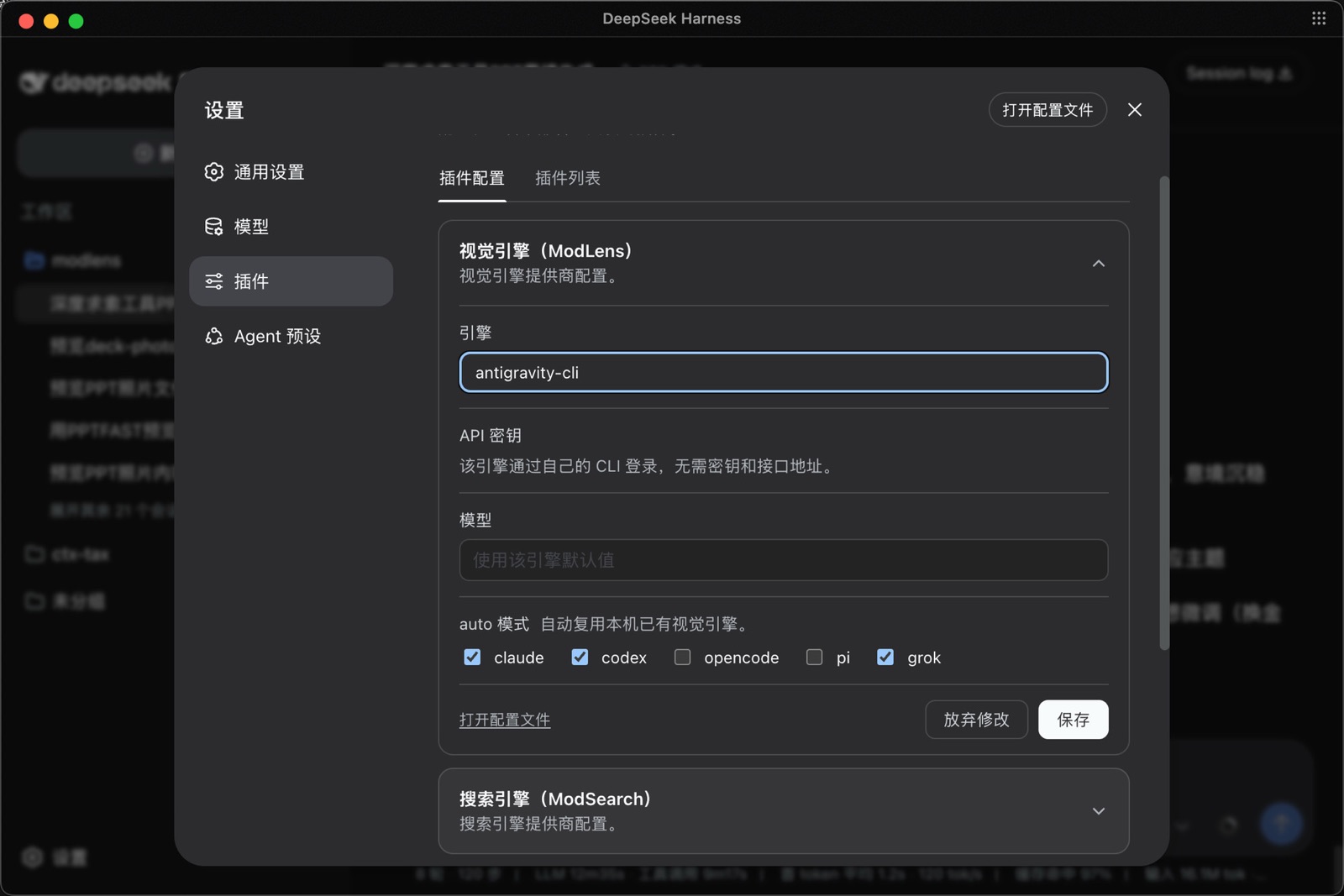
ModLens is a vision plugin for DeepSeek Harness that gives text-only models sight by reading images pasted directly into chat, with zero-config setup and multiple vision engines.
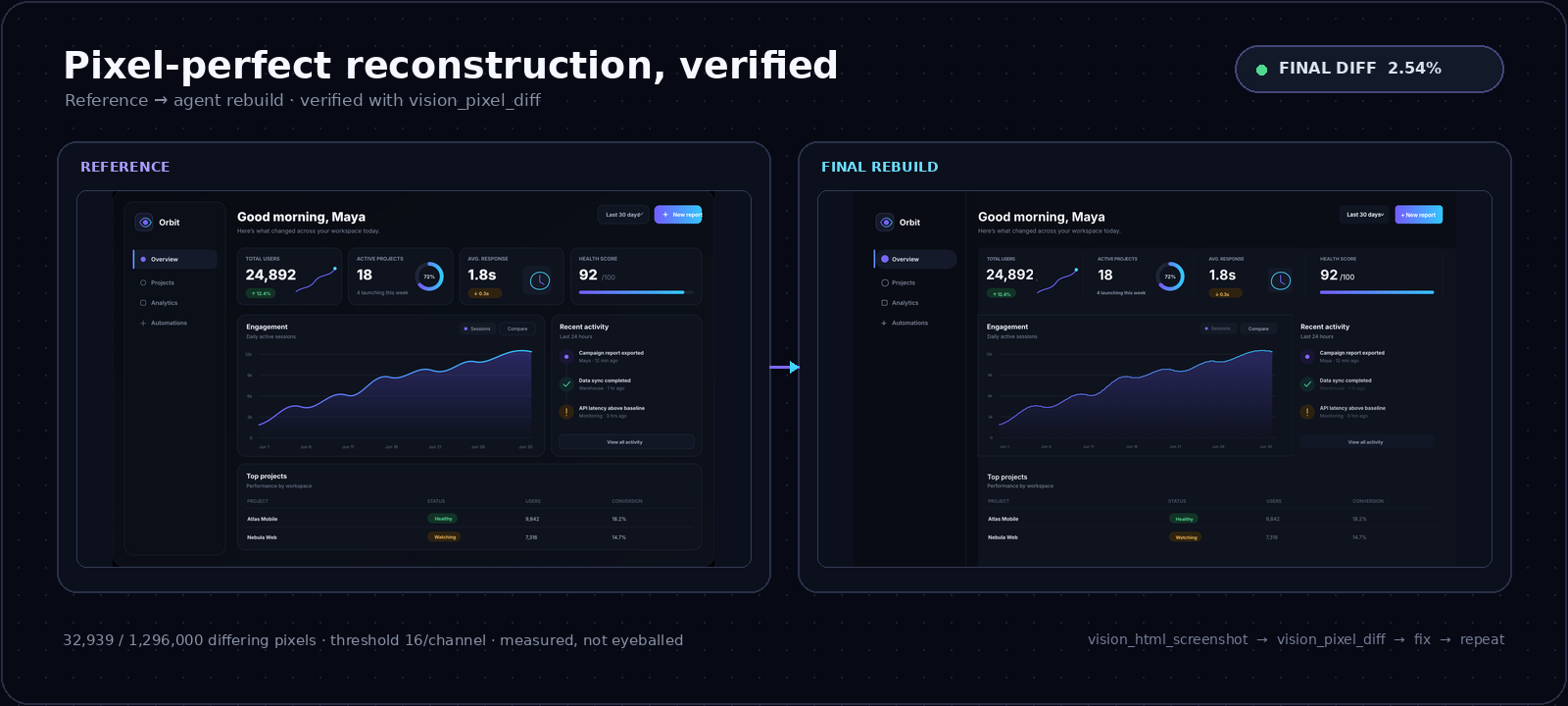
On-demand vision for text-only DeepSeek Harness agents: built-in free keyless vision chain and 14 vision tools, routing image turns as tool calls to vision models with pixel fidelity, no Python needed, one-command install.

Give text-only models in DeepSeek Harness eyes, enabling image Q&A, long-screenshot OCR, UI restoration, and GUI visual tasks.