dsh-notes
Run the following command in DeepSeek Harness:
dsh plugin install suomir1995/dsh-notes
Paste the following prompt into your AI chat to install this plugin:
Run dsh plugin install suomir1995/dsh-notes in the DeepSeek Harness terminal to install this plugin; the full source is hosted at https://github.com/suomir1995/dsh-notes .
About this plugin
dsh-notes solves a very concrete problem: while you work with an AI agent inside DeepSeek Harness, your ideas, to-dos, and fragments are scattered across a dozen apps that the agent cannot read from or write to. Instead of spinning up another note-taking app, this plugin pulls everything back onto your local disk—plain Markdown files grouped by directory, no database, no cloud service, and everything is still there after a restart.
The mental model is simple: a first-level subdirectory under the root is a group, and every .md file inside a group is a note. The sidebar entry opens a full web page where you browse groups, paste-create notes, edit, rename, and delete. Six agent tools (note_root, note_list, note_rules, note_create, note_read, note_delete) let the model read convention files such as AGENTS.md via note_rules before filing a note, creating a shared human-and-agent context. The root directory can be switched in-page and is remembered instantly; writes use atomic rename to prevent concurrent corruption; names are sanitized against path traversal, keeping the security boundary tight.
Who is it for? If you already code and run agents daily in DeepSeek Harness and want a lightweight, version-controllable local note space that the AI can participate in directly, dsh-notes is that just-enough solution.
Use Cases
- Capture ideas, to-dos, and code snippets on the fly while working with an AI agent in Harness
- Have the agent file and retrieve notes according to team convention files such as AGENTS.md
- Organize document fragments across multiple projects into tidy directory groups
Best For
- Developers who code and run agents daily in DeepSeek Harness
- Engineers who want their AI agent to read and write local notes directly
- Users who prefer a lightweight, dependency-free, file-based workflow
Related Plugins

Memory layer for coding agents that indexes local session history and auto-recalls relevant context before edits, commands, and failures, with no manual search needed.
Traceable, searchable cross-session memory for AI agents that turns conversation knowledge into a typed knowledge graph and recalls relevant subgraphs instead of replaying full history, natively integrated with DeepSeek Harness.
Gives DSH AI cross-session long-term memory, to-do and skill management, plus multi-session orchestration, external AI delegation, and an infinite canvas that grows with you.
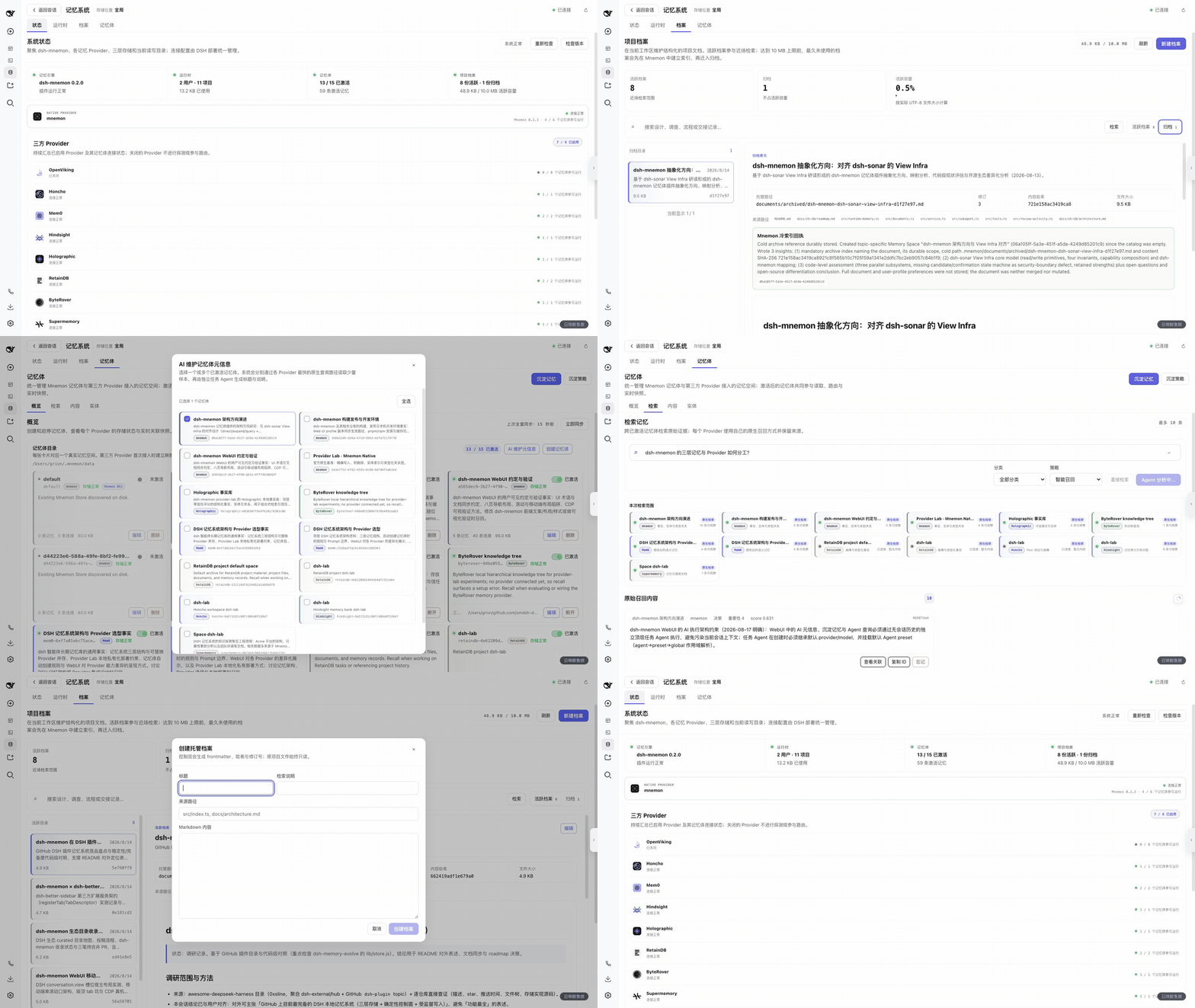
dsh-mnemon is a three-tier, pluggable, Agent-driven memory system for DeepSeek Harness, combining Runtime memory, Project Documents, and replaceable Memory Spaces with nine long-term providers.