dsh-tool-failure-journal
Run the following command in DeepSeek Harness:
dsh plugin install catsenior507/dsh-tool-failure-journal
Paste the following prompt into your AI chat to install this plugin:
Run dsh plugin install catsenior507/dsh-tool-failure-journal in the DeepSeek Harness terminal to install the plugin; the source repository is at https://github.com/catsenior507/dsh-tool-failure-journal
About this plugin
The hardest thing about a coding agent is not a single failure but the same failure repeating over and over, with each piece of evidence folded, compacted, and buried by the next attempt before anyone can spot the pattern. The session log is the model's own context—it is rewritten, pruned, and rewritten again, so it can never be the place a failure history lives.
dsh-tool-failure-journal keeps a second record outside the context window. Every abnormal tool call—thrown exceptions, schema violations, unknown tool names, pre-dispatch denials, caller cancellations—is synchronously appended as one line to a durable JSONL file on disk, surviving even a process crash mid-turn. Near-identical failures are normalized (paths, timestamps, UUIDs replaced by placeholders) and hashed into stable signatures, so forty repeated errors become a single row with a count and a recurring flag. A tool that succeeded earlier and then fails is tagged as a regression; caller-initured cancellations are kept separate so they never poison the recurrence numbers. For high-frequency failure classes like EDIT_NO_MATCH, COMMAND_NOT_FOUND, and TIMEOUT, each record carries the root cause and a next action that is genuinely different from the one that just failed.
All of this is exposed to the agent through a single failure_journal tool: one stats call turns five identical stack traces into one actionable signal. It is built for any developer running coding agents on DeepSeek Harness who wants failure patterns to become trackable, countable evidence instead of noise lost in the context window.
Use Cases
- A coding agent keeps failing the same tool call; one stats command surfaces the recurring pattern and its count
- Debugging cross-session regressions to pinpoint exactly when a previously working tool started breaking
- Triage high-frequency tool errors like timeouts, permission denials, and bad args with an actionable next step that differs from the failed one
Best For
- Developers running coding sessions on DeepSeek Harness
- Agent engineers who want their agent to self-diagnose recurring failure patterns
- Automation teams that need auditable, traceable tool-call history across sessions
Related Plugins

Memory layer for coding agents that indexes local session history and auto-recalls relevant context before edits, commands, and failures, with no manual search needed.
Traceable, searchable cross-session memory for AI agents that turns conversation knowledge into a typed knowledge graph and recalls relevant subgraphs instead of replaying full history, natively integrated with DeepSeek Harness.
Gives DSH AI cross-session long-term memory, to-do and skill management, plus multi-session orchestration, external AI delegation, and an infinite canvas that grows with you.
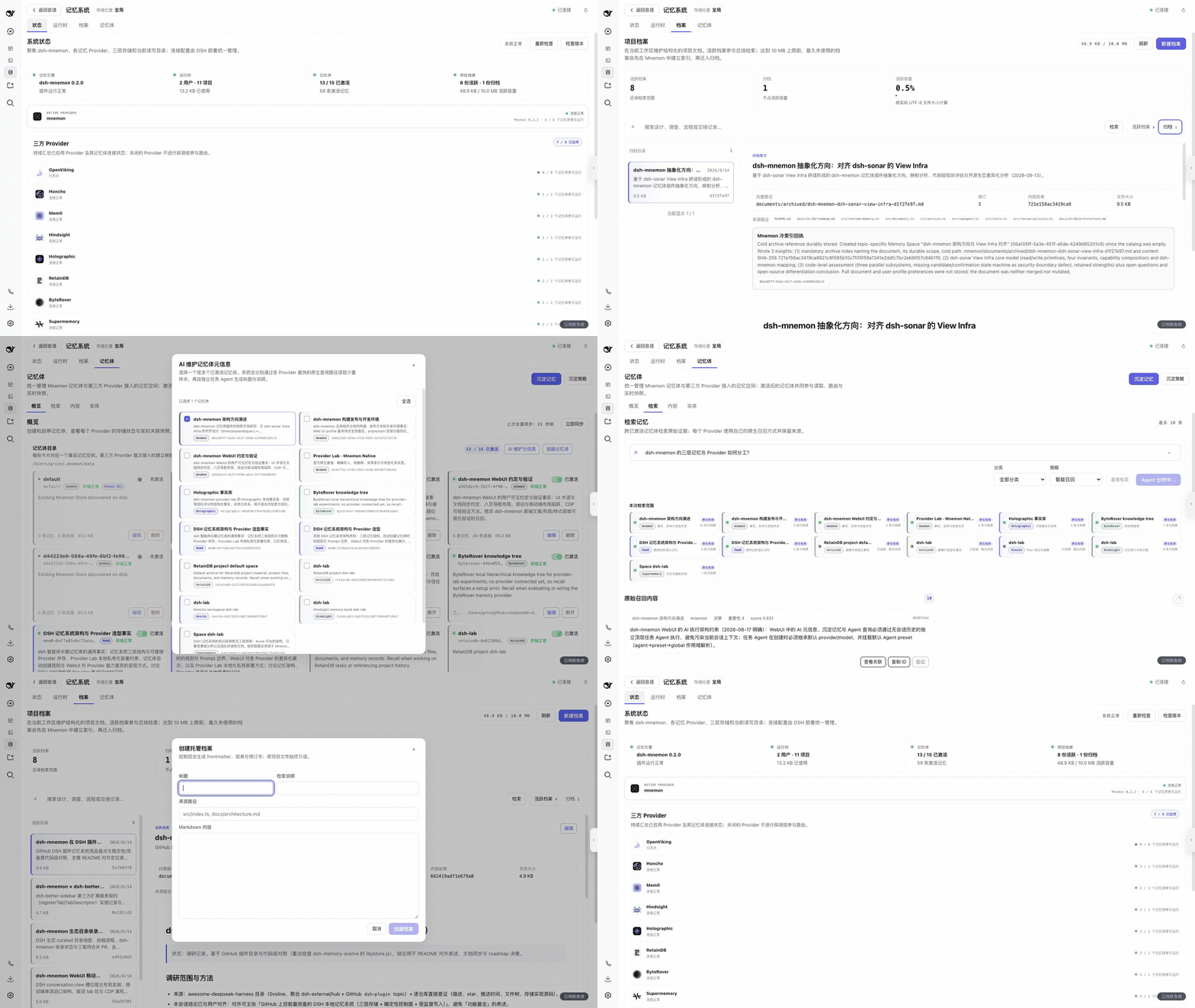
dsh-mnemon is a three-tier, pluggable, Agent-driven memory system for DeepSeek Harness, combining Runtime memory, Project Documents, and replaceable Memory Spaces with nine long-term providers.