dsh-loomy-connect
Run the following command in DeepSeek Harness:
dsh plugin install gdrpzym/dsh-loomy-connect
Paste the following prompt into your AI chat to install this plugin:
Run dsh plugin install gdrpzym/dsh-loomy-connect in DeepSeek Harness to install the plugin; source code is at https://github.com/gdrpzym/dsh-loomy-connect
About this plugin
Loomy ships with a built-in set of text models, but reaching them from DeepSeek Harness usually means juggling yet another API key. dsh-loomy-connect removes that friction entirely: once installed, Loomy's models appear directly in DSH's model selector—zero configuration, no extra credentials required.
The plugin reads Loomy's on-disk auth state, model manifest, and credits cache in read-only fashion. It never copies, uploads, or mutates any file. On startup it pulls the models available to the current account and keeps only text-output types. A settings card offers an Account tab (masked phone number, permanent credits, daily bonus credits) and a Model tab (a three-column table listing name, context window, and credit multiplier, with image models listed after text models). All copy follows the DSH UI language automatically.
Security boundaries are tightly scoped: the gateway binds to 127.0.0.1 only, in-process random keys are verified with timingSafeEqual, and Loomy's session token is read from disk on demand inside the gateway—DSH itself never holds it. This plugin is for users who already have the Loomy desktop app installed and logged in, and who want a unified local text-model experience inside their DSH workflow without depending on any cloud API.
Use Cases
- Use Loomy built-in text models directly inside DSH conversations
- Browse model list, credit multipliers, and balance for the current Loomy account
- Switch Loomy models in the DSH workflow without any API key
Best For
- Individual users who have Loomy desktop installed and logged in
- Developers wanting a unified local-model entry without juggling multiple API keys
- Privacy-sensitive users who prefer read-only, local-file access patterns
Related Plugins
A unified suite combining hot runtime injection, task-aware thinking-mode routing, and a graded session protocol with red-team gates to sustain model diligence across long-horizon inference.
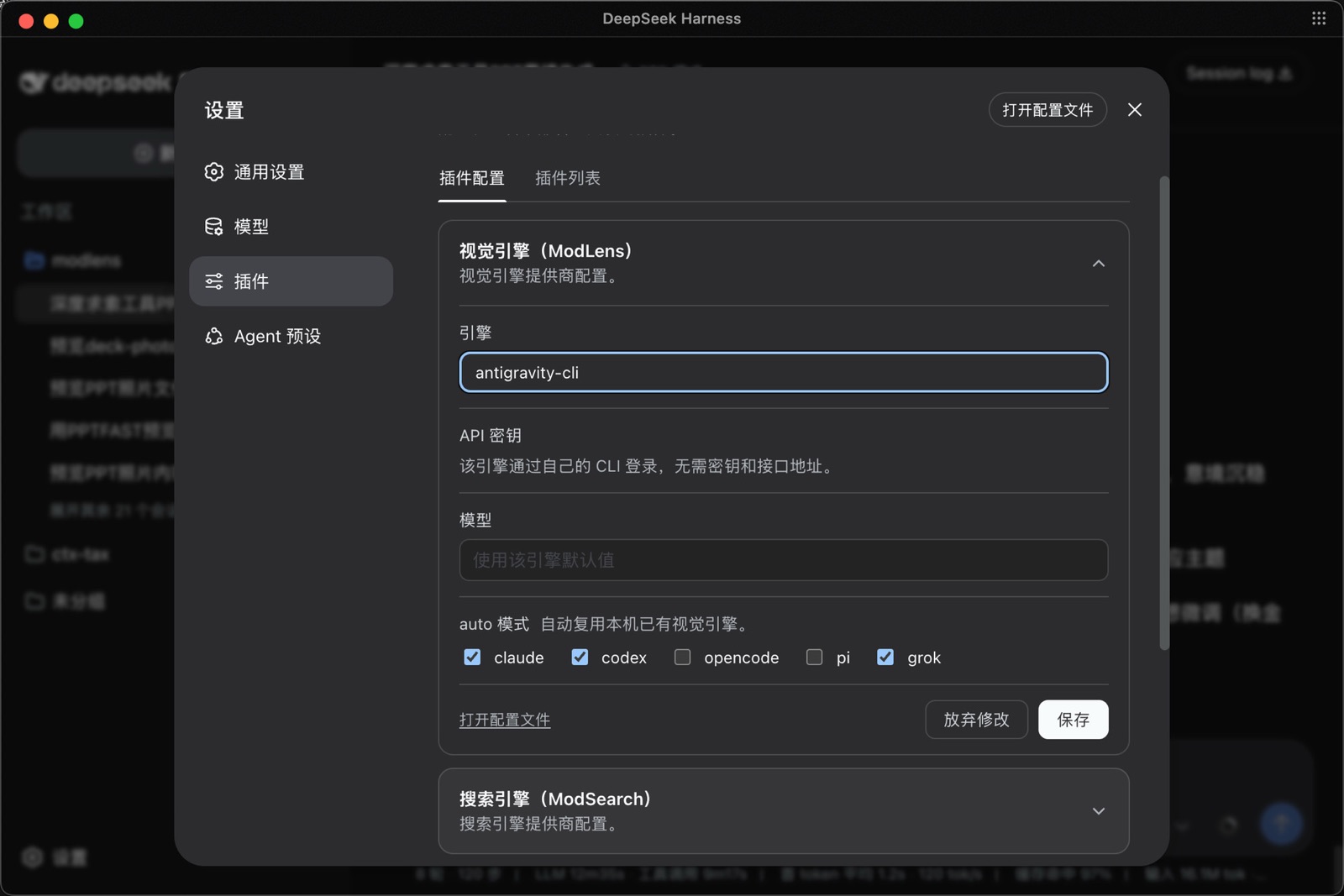
ModLens is a vision plugin for DeepSeek Harness that gives text-only models sight by reading images pasted directly into chat, with zero-config setup and multiple vision engines.
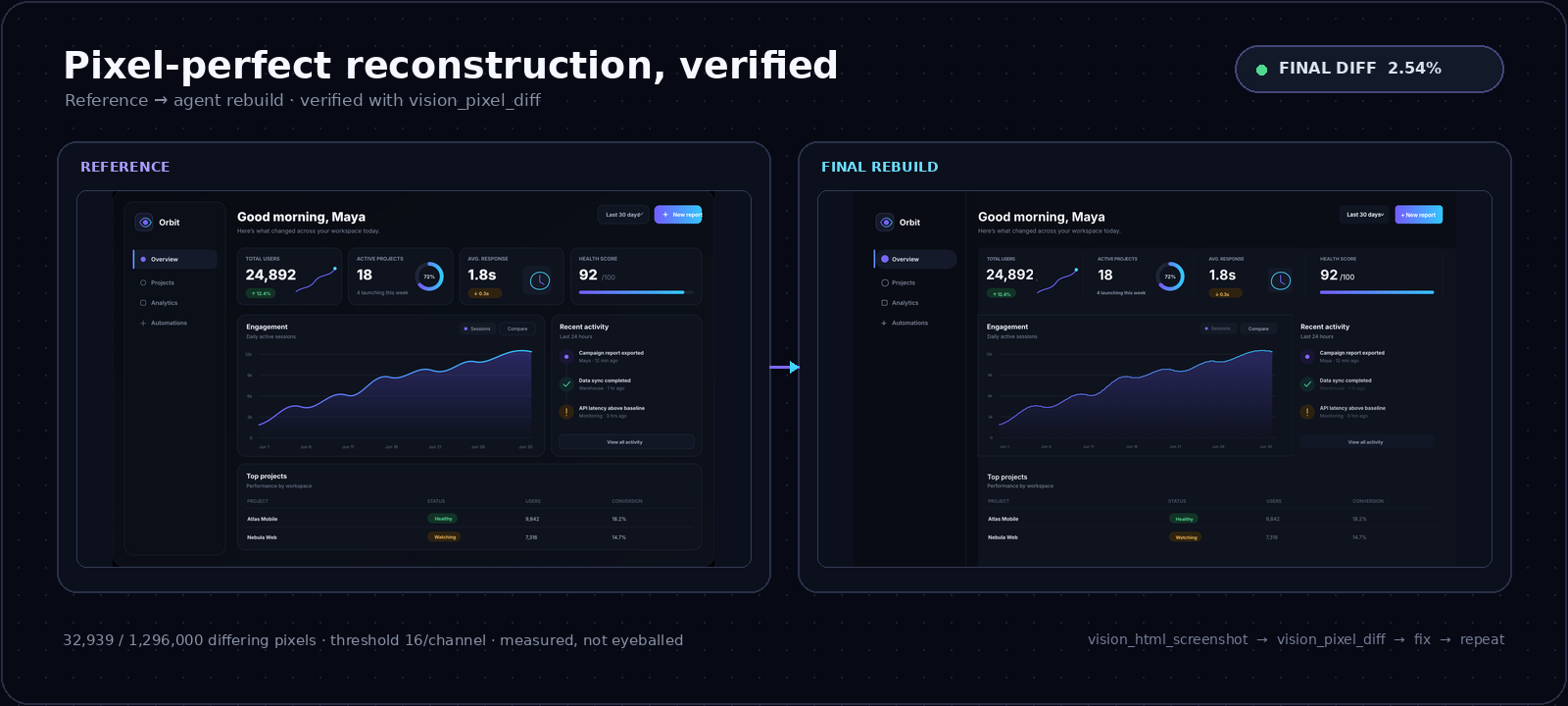
On-demand vision for text-only DeepSeek Harness agents: built-in free keyless vision chain and 14 vision tools, routing image turns as tool calls to vision models with pixel fidelity, no Python needed, one-command install.
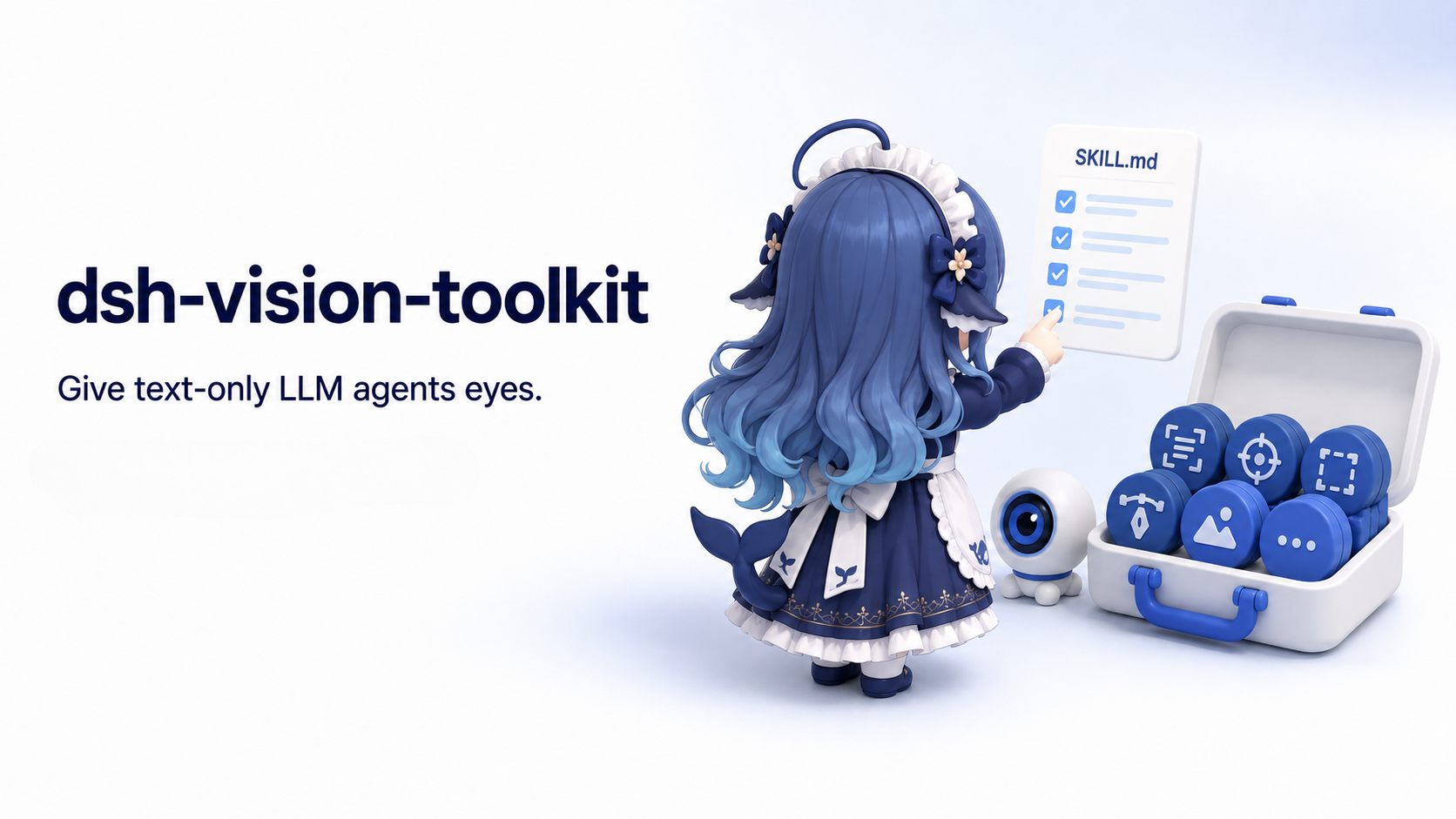
Give text-only models in DeepSeek Harness eyes, enabling image Q&A, long-screenshot OCR, UI restoration, and GUI visual tasks.