dsh-model-sync-plugin
Run the following command in DeepSeek Harness:
dsh plugin install chen1pengvincent/dsh-model-sync-plugin
Paste the following prompt into your AI chat to install this plugin:
Run dsh plugin install chen1pengvincent/dsh-model-sync-plugin in the DeepSeek Harness terminal to install this plugin; the full source is hosted at https://github.com/chen1pengvincent/dsh-model-sync-plugin. Restart DSH after installation to load the plugin.
About this plugin
When you connect multiple model providers in DSH, newly released models tend to scatter across each vendor's /models endpoint. Manually pulling, diffing, copying configs, and determining protocol routing for every provider is time-consuming and risks overwriting existing settings. dsh-model-sync-plugin collapses this fragmented workflow into a single panel: on startup it performs a read-only sweep of each provider's upstream catalog, groups new entries by vendor, lets you search and select, then writes the chosen models into DSH settings with one click. Nothing is ever deleted, rewritten, or overwritten in the native model module.
Key capabilities include multi-protocol auto-routing, where mixed-protocol providers such as OpenCode Go are automatically split into a primary route plus protocol-specific synthetic routes (Anthropic / Responses), with undecidable entries parked in a skip zone rather than mis-added; pre-write backup, which snapshots settings.yaml before every write and retains the last 20 copies; per-provider on-off switches for monitoring scope; and in-conversation commands such as /model-sync check (read-only, prints new-model counts per provider) and /model-sync status (shows the last run's result).
This plugin suits individual developers or small teams running three or more model providers inside DSH who want a controlled, auditable way to adopt new models without hunting through every vendor's API docs and pasting entries by hand. Released under the MIT license, it relies only on DSH kernel public seams and requires no modification to DSH itself.
Use Cases
- Tracking new model releases across multiple providers without manual API checks
- Auto-splitting mixed-protocol provider models into primary and synthetic routes
- Backing up settings before every write to prevent accidental config overwrites
Best For
- Individual developers running three or more model providers inside DSH
- Small teams that need auditable, controlled model configuration
- Users who prefer one-click adoption over manually pasting new model entries
Related Plugins
A unified suite combining hot runtime injection, task-aware thinking-mode routing, and a graded session protocol with red-team gates to sustain model diligence across long-horizon inference.
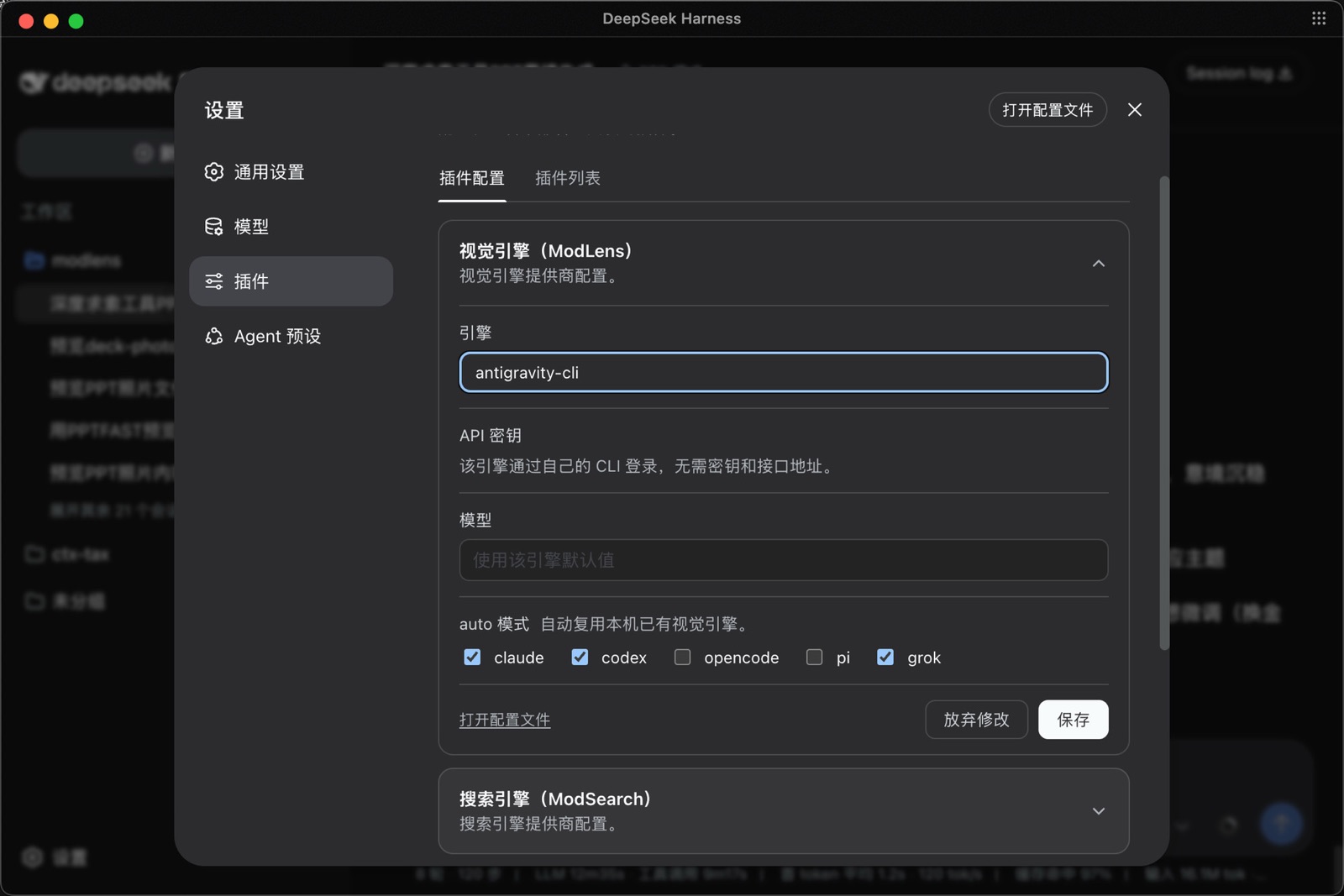
ModLens is a vision plugin for DeepSeek Harness that gives text-only models sight by reading images pasted directly into chat, with zero-config setup and multiple vision engines.
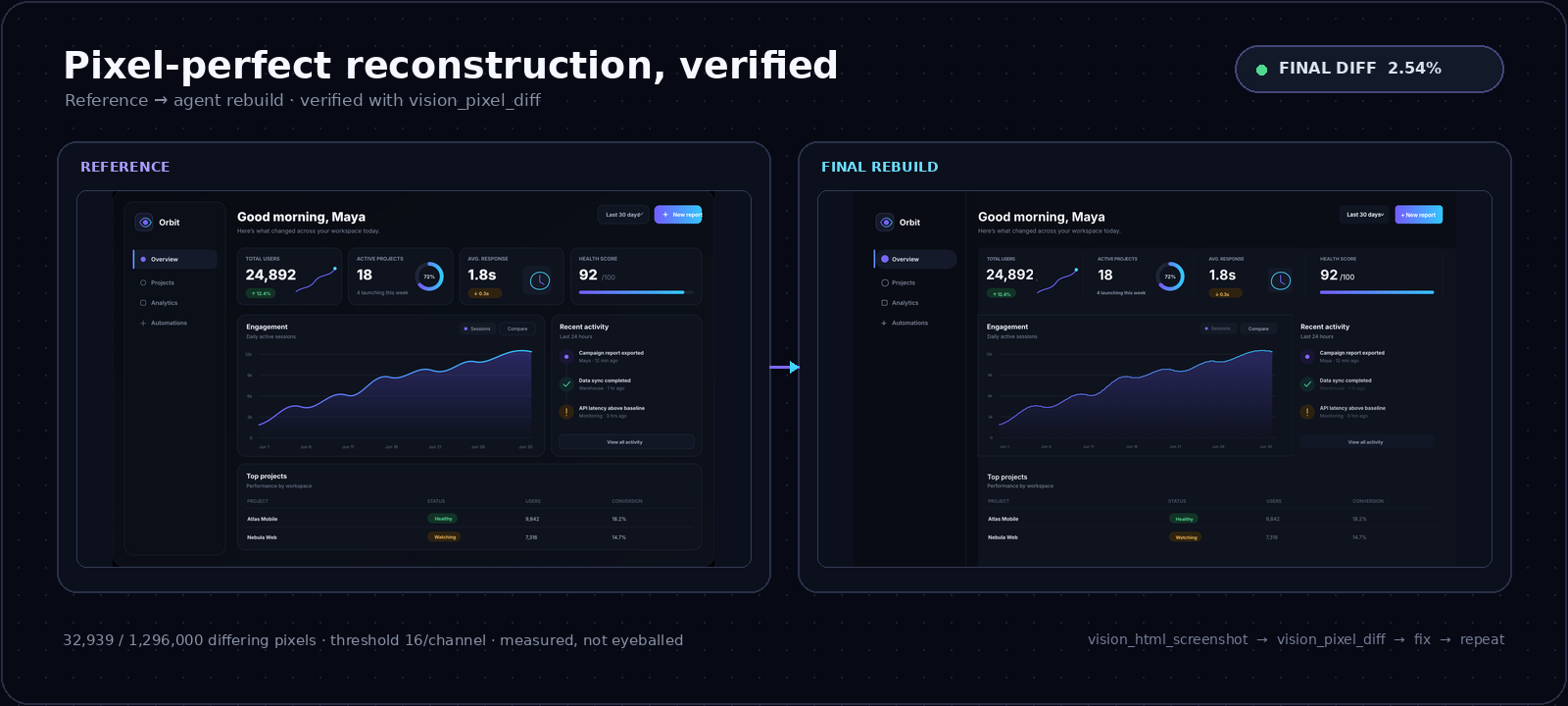
On-demand vision for text-only DeepSeek Harness agents: built-in free keyless vision chain and 14 vision tools, routing image turns as tool calls to vision models with pixel fidelity, no Python needed, one-command install.
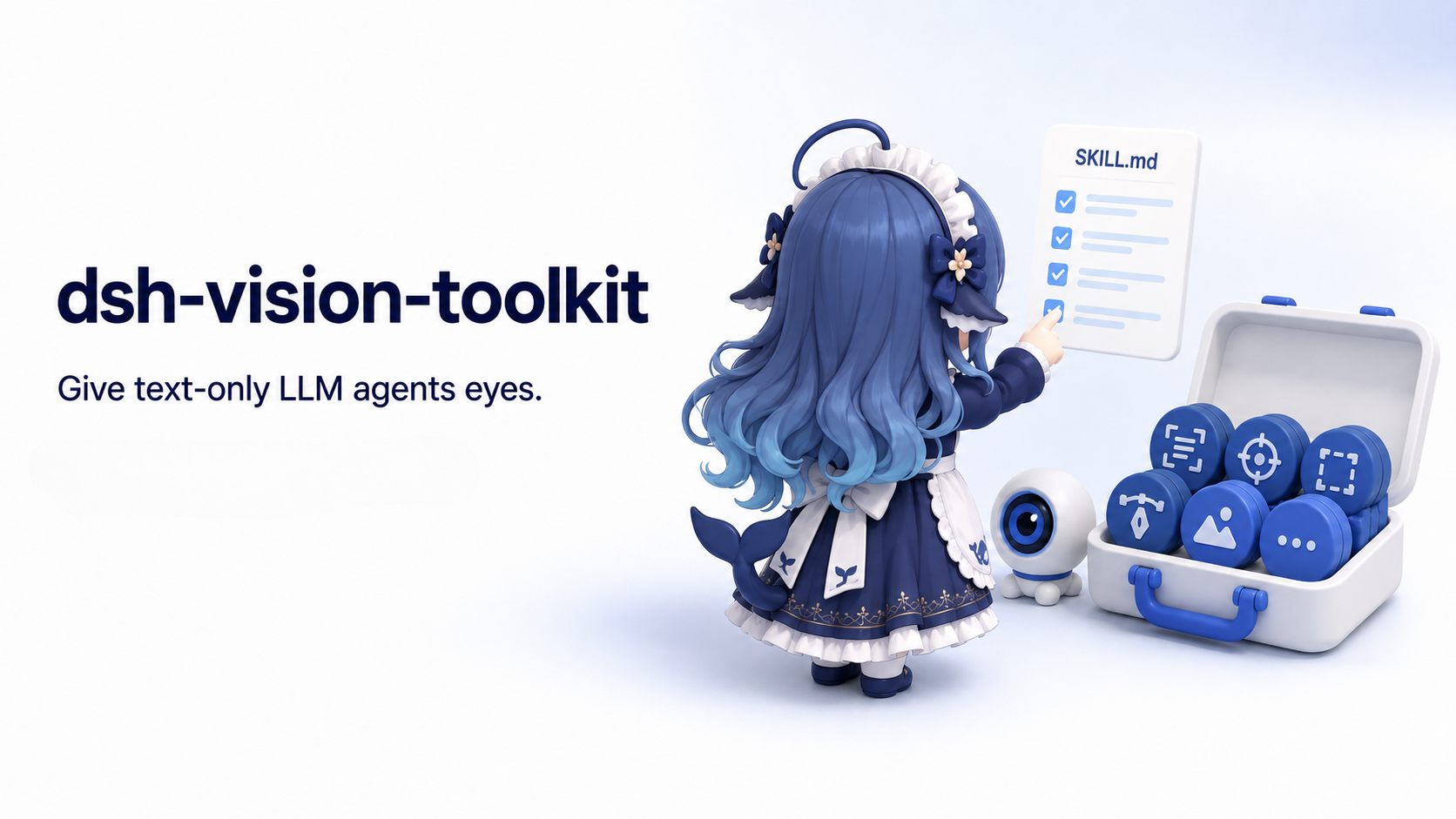
Give text-only models in DeepSeek Harness eyes, enabling image Q&A, long-screenshot OCR, UI restoration, and GUI visual tasks.