dsh-plugin-model-config
Run the following command in DeepSeek Harness:
dsh plugin install liutian11451-png/dsh-plugin-model-config
Paste the following prompt into your AI chat to install this plugin:
Run dsh plugin install liutian11451-png/dsh-plugin-model-config (source: https://github.com/liutian11451-png/dsh-plugin-model-config) in your terminal, then restart dsh web and reload the page to activate the plugin.
About this plugin
The Settings → Models page in DeepSeek Harness already displays a provider's route, credential, and model catalog, but the remaining configuration — thinking mode, reasoning effort, context-window and token defaults, image budgets, file and quota limits, timeouts — has no editable UI. You end up hand-editing the raw settings document.
This plugin renders those settings as inline rows inside each provider's own card: the setting name on the left, a schema-mapped control on the right (number box with min/max/step, Yes/No switch, select for literal unions, or a text box). Nothing is hardcoded. The namespace list comes from the deployment's llm.listConfigurableProviders() and each setting from its serialized schema, so a brand-new adapter or an added field appears as a row with zero code changes.
Writes target only the user layer via settings.mutate with revision tracking; a reset is an unset, not a write-back of the default; a lost revision race is reported rather than silently overwriting. The plugin registers one keyed entry per configurable namespace into the settings.models.provider-card slot and modifies no file in the DeepSeek Harness repository.
Best for: developers running DeepSeek Harness in a web profile who want form-style editing of advanced provider parameters (especially the DeepSeek adapter's thinking mode and context window), and operators integrating third-party adapters who need to verify new configuration fields quickly without diving into JSON.
Use Cases
- Tune the DeepSeek adapter thinking mode and context window from the Models page without opening raw JSON
- Onboard a new provider adapter and see its fresh config fields rendered as editable rows instantly
- Sanity-check image budgets, file limits, and timeout values across providers at a glance
Best For
- Developers running DeepSeek Harness in a web profile who prefer form-style editing over raw JSON
- Ops engineers integrating third-party LLM adapters who need to verify new config fields quickly
- Teams comparing context-window, token-default, and timeout parameters across multiple providers
Related Plugins
A unified suite combining hot runtime injection, task-aware thinking-mode routing, and a graded session protocol with red-team gates to sustain model diligence across long-horizon inference.
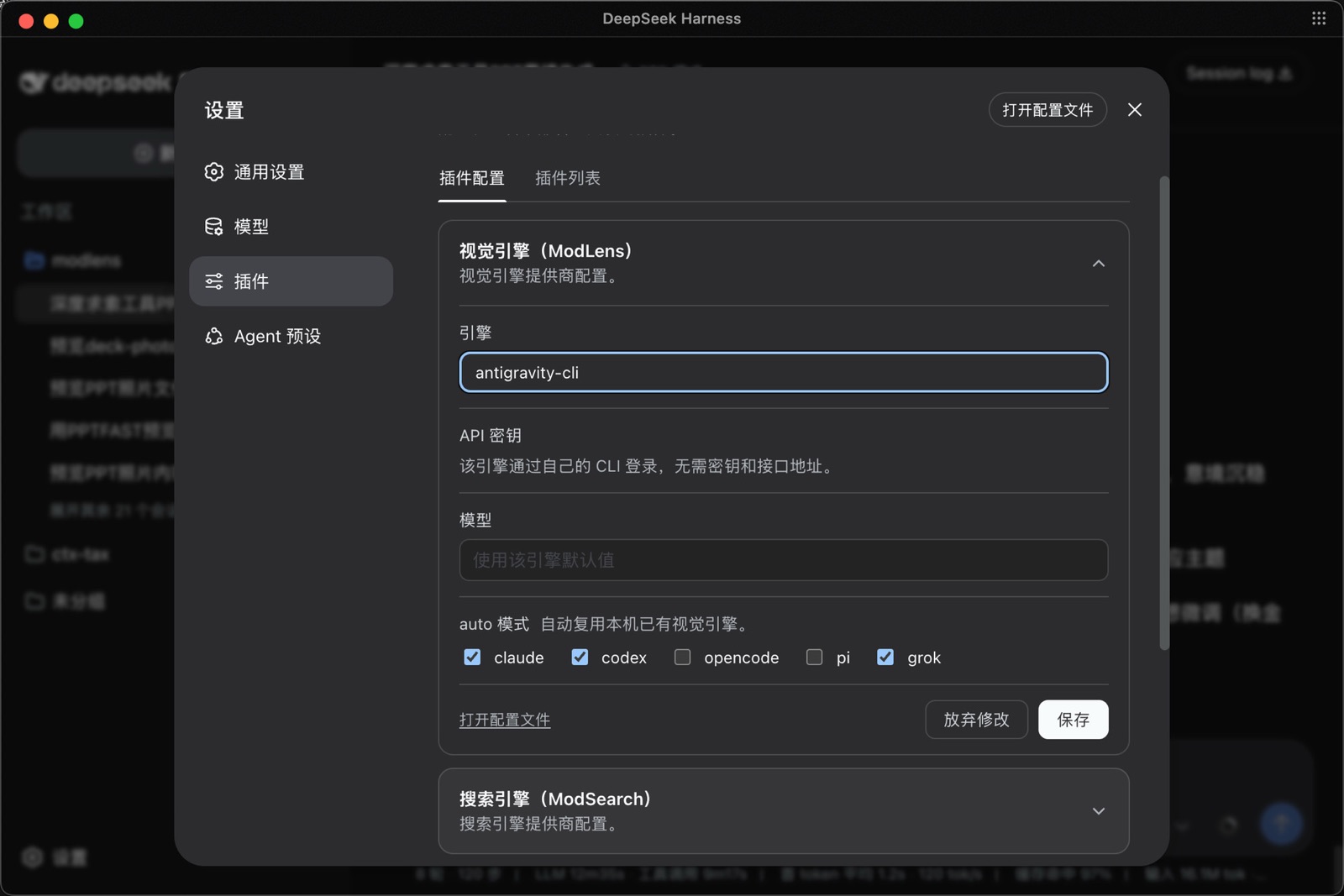
ModLens is a vision plugin for DeepSeek Harness that gives text-only models sight by reading images pasted directly into chat, with zero-config setup and multiple vision engines.
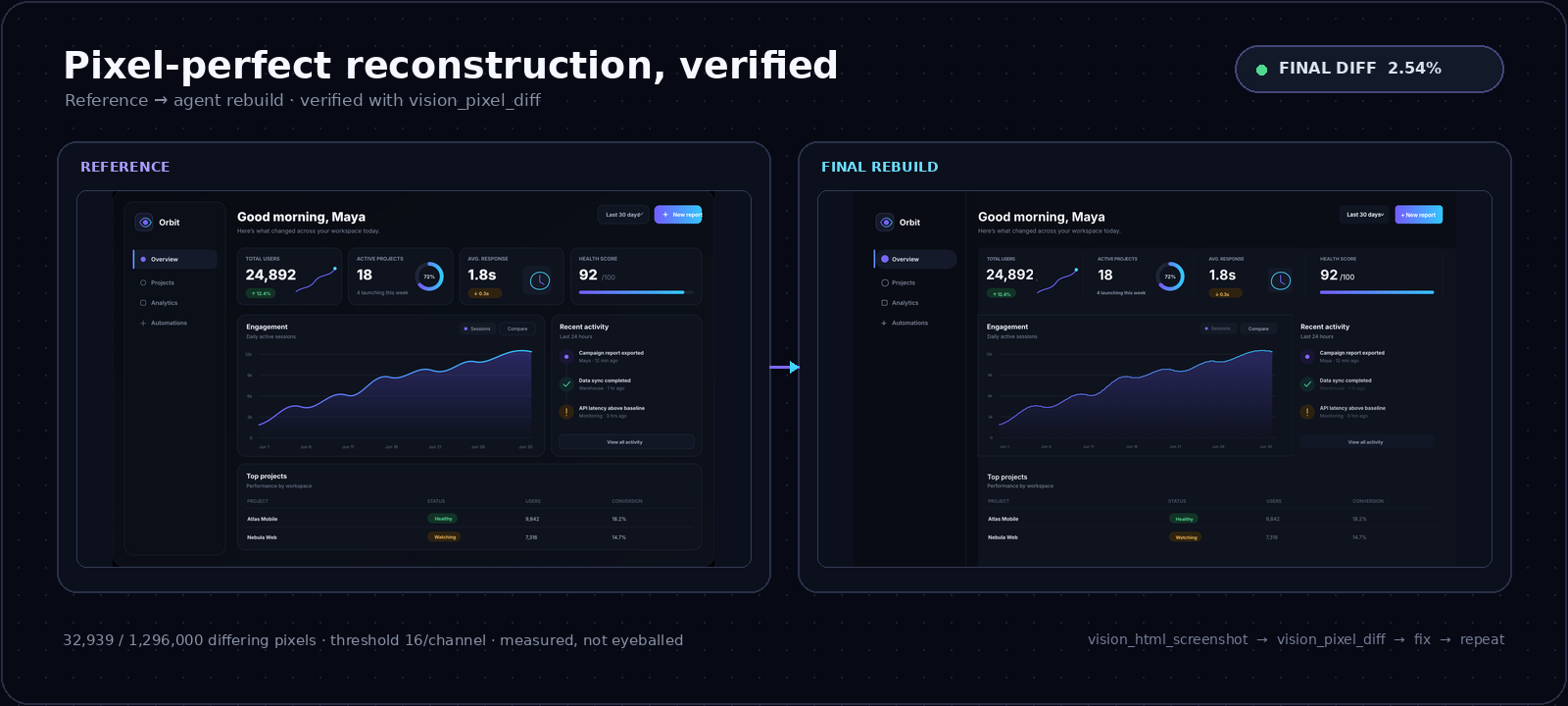
On-demand vision for text-only DeepSeek Harness agents: built-in free keyless vision chain and 14 vision tools, routing image turns as tool calls to vision models with pixel fidelity, no Python needed, one-command install.
Give text-only models in DeepSeek Harness eyes, enabling image Q&A, long-screenshot OCR, UI restoration, and GUI visual tasks.