dsh-image-router
Run the following command in DeepSeek Harness:
dsh plugin install zhiwuli0228/dsh-image-router
Paste the following prompt into your AI chat to install this plugin:
Run dsh plugin install zhiwuli0228/dsh-image-router in the DeepSeek Harness terminal to install the plugin; the source repository is at https://github.com/zhiwuli0228/dsh-image-router
About this plugin
Text-only models in DSH hit a dead end the moment an image enters the conversation. The usual workaround is to swap to a multimodal model mid-session, which means a jumpy model selector, a [model changed] banner, and a session history that looks like two different models are taking turns. dsh-image-router sidesteps all of that: before you hit send, a vision model you designate quietly turns the image into a paragraph of text and substitutes it into the prompt. Your conversation model never changes, the selector stays put, and the log records a text analysis instead of an image block. From the model's point of view it simply received a longer piece of text.
Feeding the vision model is flexible. If you already have a multimodal model configured, pick it from a dropdown that only lists image-capable entries. If you have a separate vision API, fill in base URL, model name, and API Key, and the plugin translates that into a single upstream route without touching any of your existing provider definitions. Beyond inline images, any model can call the describe_image tool to analyze an on-disk image file on demand, because the image never enters the session and thus never hits the route-must-declare-image gate. API Keys are written to a credential store once and stripped from every parsed result, config section, and card draft; a failed vision call simply lets the original request proceed so the host surfaces the real error rather than masking it.
Who is it for? DSH users whose primary model is text-only but who regularly deal with screenshots, annotated diagrams, or document images. Developers who want a single, consistent model context across a session and refuse to be interrupted by mid-conversation model swaps. And anyone with a self-hosted or third-party vision endpoint who wants to plug it into their DSH workflow without reconfiguring existing providers. Everything is set through a GUI card, takes effect on the very next prompt, and requires neither hand-written YAML nor a restart.
Use Cases
- A text-only model needs to handle screenshots or diagrams; a vision model is called in-bypass to produce a text substitute for the image block
- Plug a standalone vision API endpoint into DSH sessions without modifying existing provider configurations
- A model reads on-disk image files on demand via a tool call, bypassing the route-must-declare-image gate
Best For
- DSH users whose primary model is text-only but who regularly handle screenshots or document images
- Developers who insist on a single consistent model context and refuse mid-session model swaps
- Users with self-hosted or third-party vision endpoints looking for a lightweight DSH integration
Related Plugins
A unified suite combining hot runtime injection, task-aware thinking-mode routing, and a graded session protocol with red-team gates to sustain model diligence across long-horizon inference.
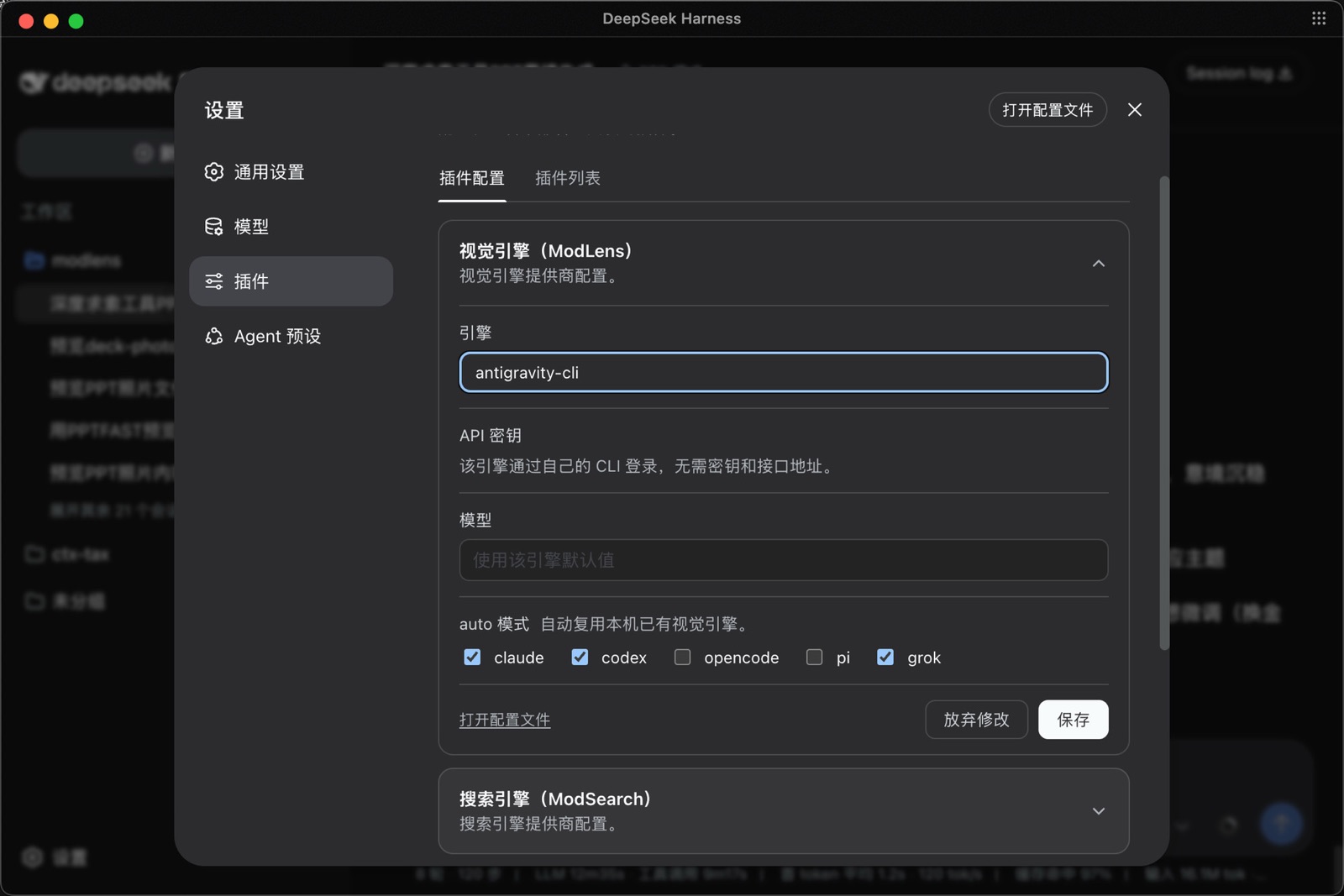
ModLens is a vision plugin for DeepSeek Harness that gives text-only models sight by reading images pasted directly into chat, with zero-config setup and multiple vision engines.
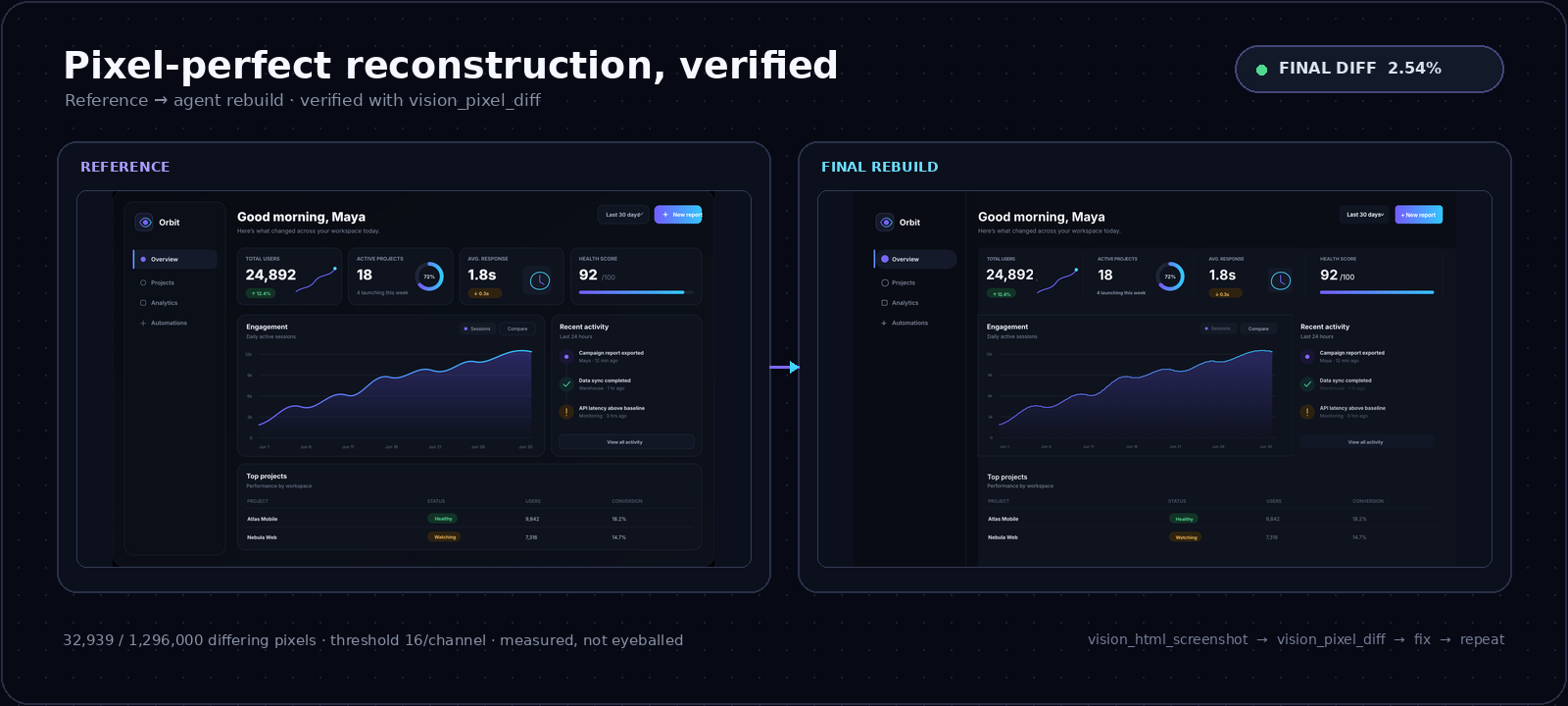
On-demand vision for text-only DeepSeek Harness agents: built-in free keyless vision chain and 14 vision tools, routing image turns as tool calls to vision models with pixel fidelity, no Python needed, one-command install.
Give text-only models in DeepSeek Harness eyes, enabling image Q&A, long-screenshot OCR, UI restoration, and GUI visual tasks.