dsh-prompt-library
Run the following command in DeepSeek Harness:
dsh plugin install ManoloRemiddi/dsh-prompt-library
Paste the following prompt into your AI chat to install this plugin:
Run dsh plugin install ManoloRemiddi/dsh-prompt-library in your terminal to install; browse the source and release notes at https://github.com/ManoloRemiddi/dsh-prompt-library .
About this plugin
Retyping the same prompt or scrolling through chat history to find a template you wrote last week is a small but constant drag in daily DeepSeek Harness use. dsh-prompt-library adds a dedicated prompt library to DSH Settings where you can save, search, preview, edit, and delete reusable prompts by shortcut name, removing the need for external notes or copy-paste rituals.
Two storage modes are available. The default standalone mode uses a short-lived Python process to read or write a local SQLite file; there is no daemon, no polling timer, and no model call; your data never leaves your disk. If a compatible Augmentor prompt service is already running, simply point the plugin at its Unix socket to share the same library; the plugin connects without spawning, replacing, or upgrading the existing service. Concurrent saves are coordinated through per-prompt revision numbers, and a conflicting stale draft stays visible so you can merge deliberately; the plugin never auto-retries an uncertain write.
This plugin is aimed at DSH users who regularly craft structured prompts, maintain multiple role or system templates, or collaborate on shared instruction sets. It is not a chat client, a file-system tool, or a background service; it is a lightweight editor paired with a local storage backend that works out of the box, and whose data files remain intact after uninstall for easy auditing or migration.
Use Cases
- Stop re-pasting system prompts you use repeatedly
- Share a single template library across a team
- Quickly search and preview previously saved instruction snippets
Best For
- DSH users who regularly craft structured prompts
- Developers maintaining multiple role or system templates
- Users who prefer local data over cloud-dependent services
Related Plugins

Memory layer for coding agents that indexes local session history and auto-recalls relevant context before edits, commands, and failures, with no manual search needed.
Traceable, searchable cross-session memory for AI agents that turns conversation knowledge into a typed knowledge graph and recalls relevant subgraphs instead of replaying full history, natively integrated with DeepSeek Harness.
Gives DSH AI cross-session long-term memory, to-do and skill management, plus multi-session orchestration, external AI delegation, and an infinite canvas that grows with you.
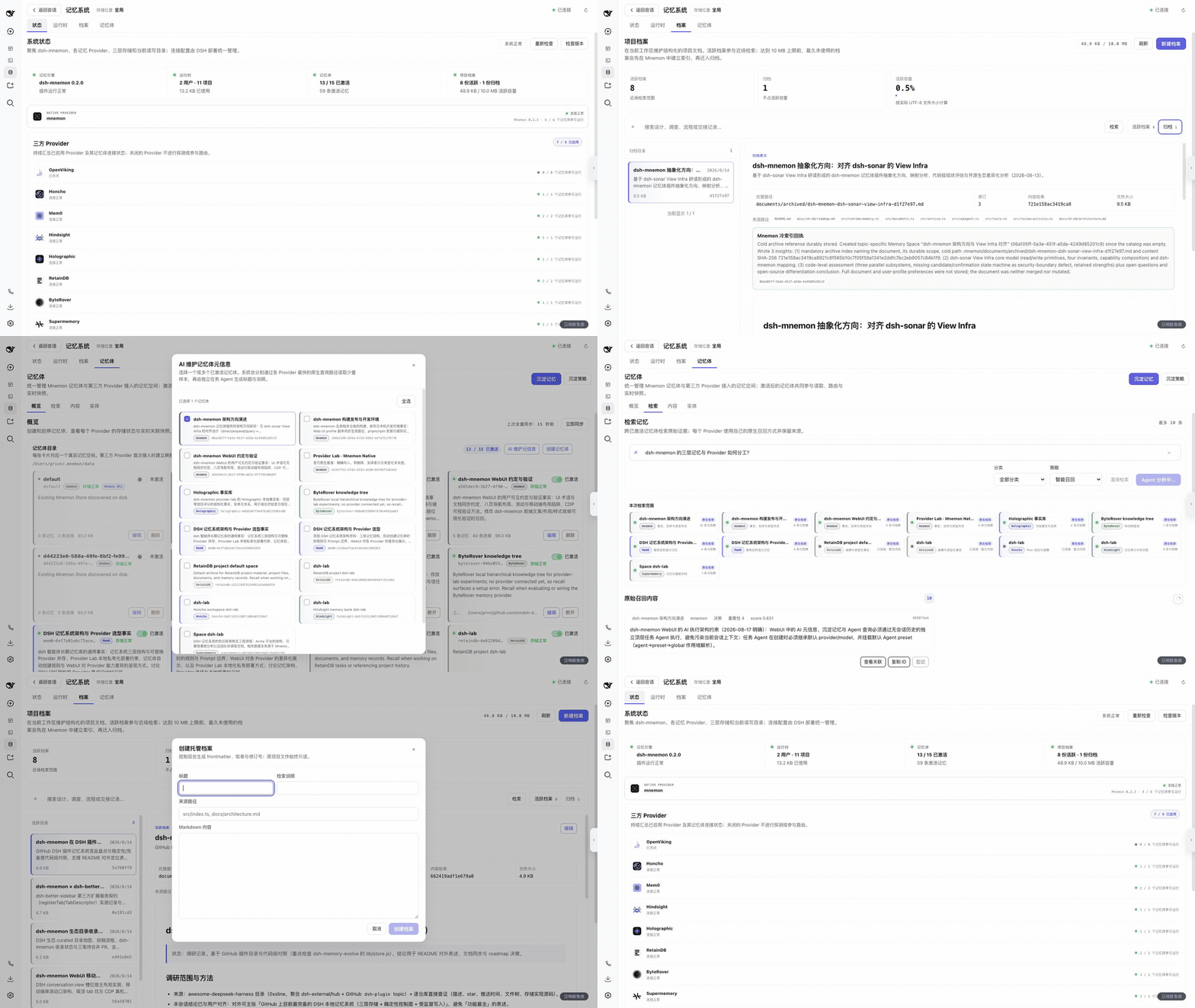
dsh-mnemon is a three-tier, pluggable, Agent-driven memory system for DeepSeek Harness, combining Runtime memory, Project Documents, and replaceable Memory Spaces with nine long-term providers.