onboarding-pack
Run the following command in DeepSeek Harness:
dsh plugin install ChenneyZhuang/onboarding-pack
Paste the following prompt into your AI chat to install this plugin:
Run dsh plugin install ChenneyZhuang/onboarding-pack in DeepSeek Harness to install this plugin; the full source code is available at https://github.com/ChenneyZhuang/onboarding-pack .
About this plugin
Every project hides two sets of knowledge: the one on the page and the one locked in the heads of veterans that takes a month of asking around to piece together. onboarding-pack writes the second set down — which file is actually authoritative, which script must never touch prod, why that odd architectural choice was made, who signs off on what — so the discovery tax is prepaid once and no one joining later pays it again.
The structure is deliberately short: five sections, ten minutes to read. What it is and who it serves, the exact run commands in order, a map naming the authoritative source among competing ones, roughly five unwritten rules that are obvious to insiders and invisible to newcomers, and the owners with their decision forums. The maintenance rule is strict: the pack updates when what it describes changes, the way a failing test demands a fix. A change that invalidates the pack without updating it is an incomplete change. Staleness is the known failure mode the authors call out honestly.
It fits any scenario where an agent, a new hire, or your future self three months from now needs to get productive fast. The first draft will miss things — convergence happens through the loop of newcomer questions feeding new entries over time.
Use Cases
- An agent joins an unfamiliar repo and needs full context in one pass
- A new team member onboards without weeks of trial-and-error questions
- Post-refactor or post-handoff, critical rules survive the transition
Best For
- Engineering teams that rely on AI agents for daily development
- Developers and architects who switch between projects frequently
- Open-source maintainers who want to reduce reliance on tribal knowledge
Related Plugins

Memory layer for coding agents that indexes local session history and auto-recalls relevant context before edits, commands, and failures, with no manual search needed.
Traceable, searchable cross-session memory for AI agents that turns conversation knowledge into a typed knowledge graph and recalls relevant subgraphs instead of replaying full history, natively integrated with DeepSeek Harness.
Gives DSH AI cross-session long-term memory, to-do and skill management, plus multi-session orchestration, external AI delegation, and an infinite canvas that grows with you.
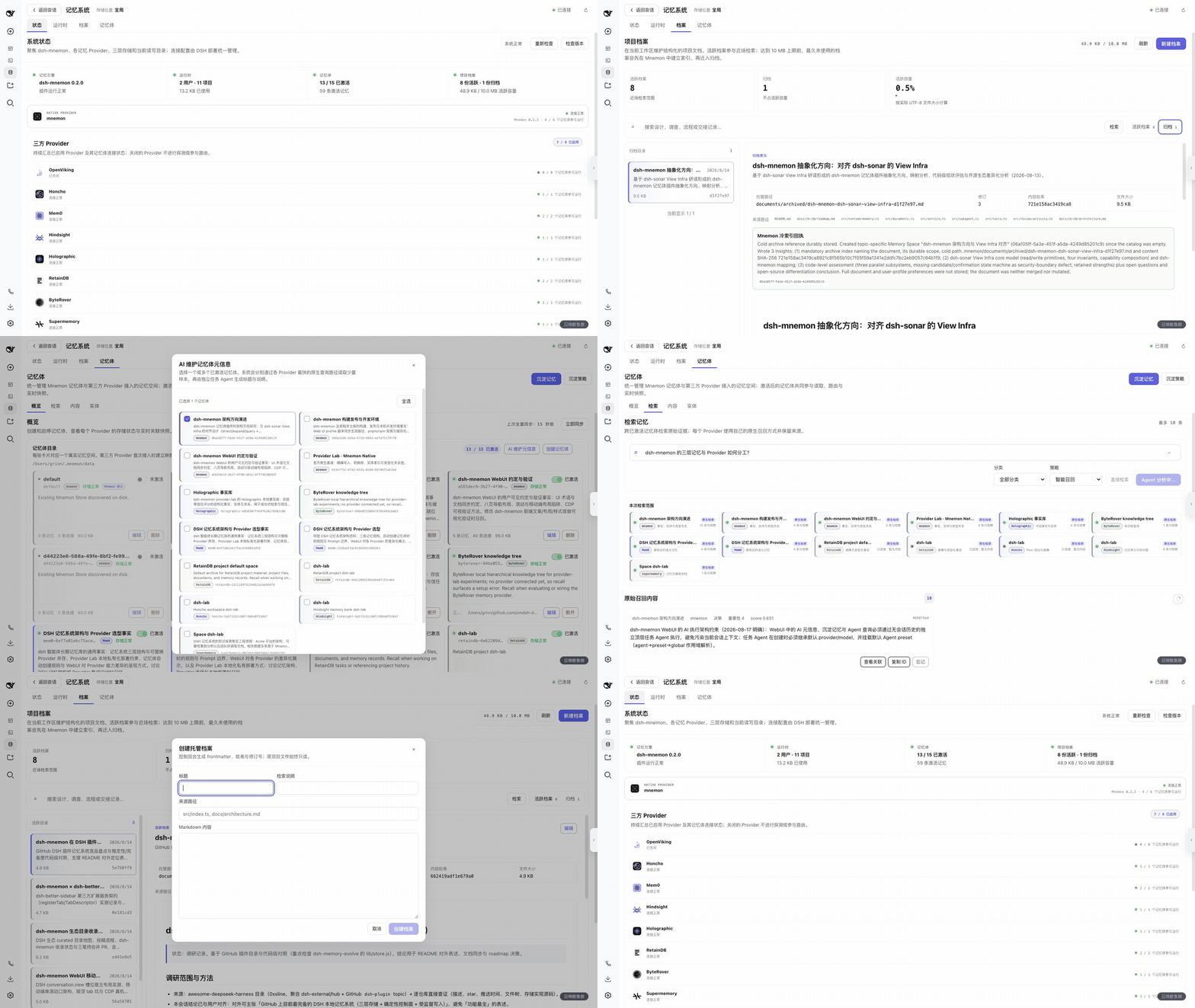
dsh-mnemon is a three-tier, pluggable, Agent-driven memory system for DeepSeek Harness, combining Runtime memory, Project Documents, and replaceable Memory Spaces with nine long-term providers.