dsh-custom-headers
Run the following command in DeepSeek Harness:
dsh plugin install EPCN-fla/dsh-custom-headers
Paste the following prompt into your AI chat to install this plugin:
Run dsh plugin install EPCN-fla/dsh-custom-headers in your terminal to install; the source code lives at https://github.com/EPCN-fla/dsh-custom-headers
About this plugin
In real-world deployments, model requests rarely go straight to the provider. They pass through enterprise gateways, custom proxies, or OpenAI-compatible endpoints that demand extra headers—tenant IDs, billing tags, custom auth schemes—often different per model. DSH's provider profile supports a headers field, but it applies to the entire route, making it impossible to target individual models without affecting every one under that route.
dsh-custom-headers fills that gap at model granularity. Define any number of named header profiles in the plugin settings panel, each a set of key-value pairs; then pick one per model from a dropdown in the model directory. On every call the plugin resolves the selected profile into request headers and injects them before the pi-ai adapter dispatches. Change a profile or switch the selection and the next request picks it up immediately—no restart required. All data lives in the DSH user-settings document; deselecting or deleting a profile restores the original state with no residue.
Who benefits: teams routing through enterprise gateways for tenant and cost-center billing; developers hitting non-standard OpenAI-compatible endpoints (self-hosted vLLM, one-api, various relays) that require extra identification headers; and engineers tagging specific model traffic for canary releases or observability. The plugin is MIT-licensed, introduces no external storage, and works exclusively with the pi-ai adapter path.
Use Cases
- Route requests through enterprise gateways with per-model tenant and billing headers
- Attach non-standard auth or identification headers for self-hosted vLLM, one-api, and other OpenAI-compatible endpoints
- Tag specific model traffic to steer it toward canary deployments or backup clusters
Best For
- Engineering teams that route model traffic through enterprise gateways or custom proxies with per-tenant cost allocation
- Developers integrating with non-standard OpenAI-compatible endpoints that require extra headers for identification or authentication
- Platform engineers who use request headers for canary routing, traffic isolation, or targeted log filtering
Related Plugins
A unified suite combining hot runtime injection, task-aware thinking-mode routing, and a graded session protocol with red-team gates to sustain model diligence across long-horizon inference.
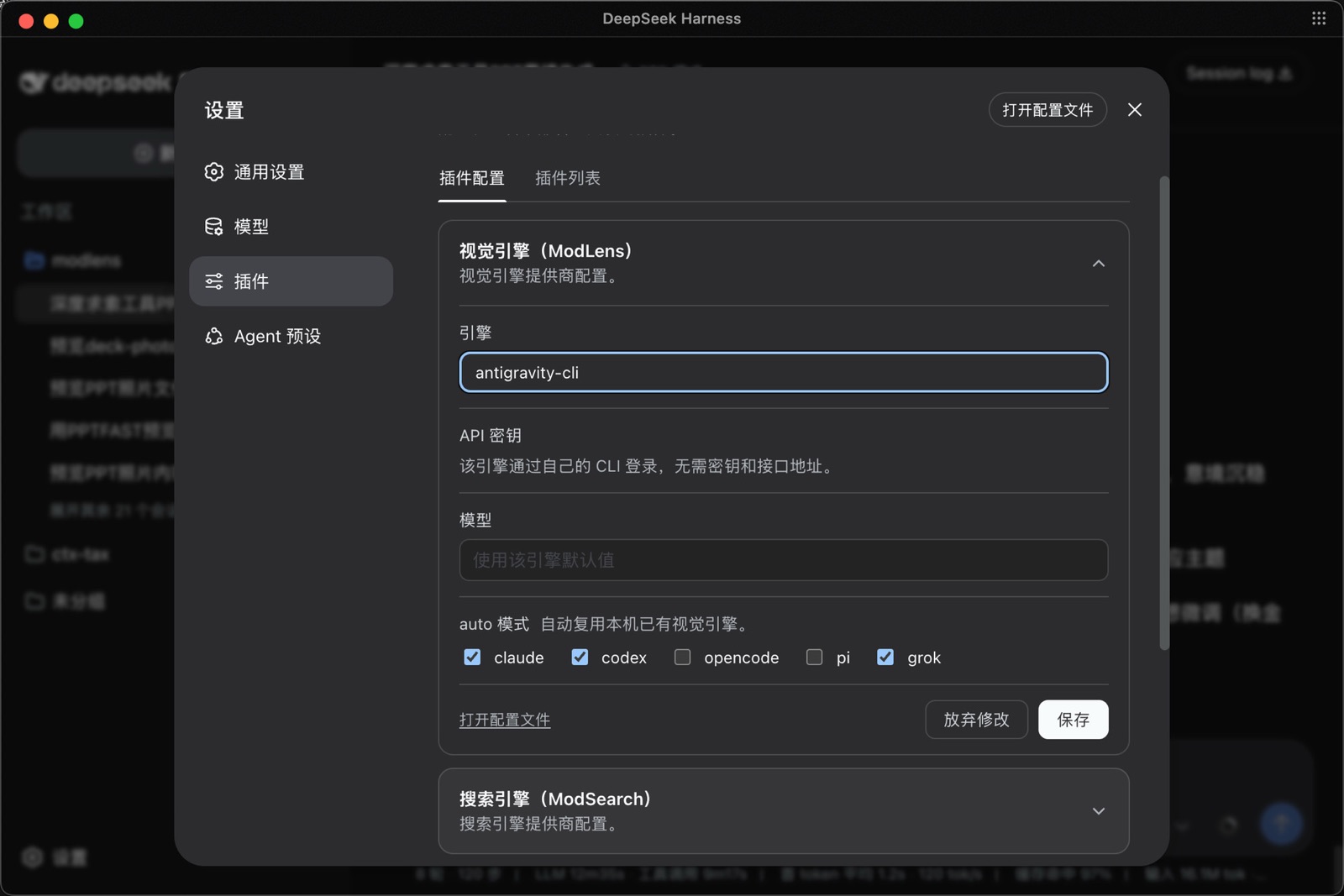
ModLens is a vision plugin for DeepSeek Harness that gives text-only models sight by reading images pasted directly into chat, with zero-config setup and multiple vision engines.
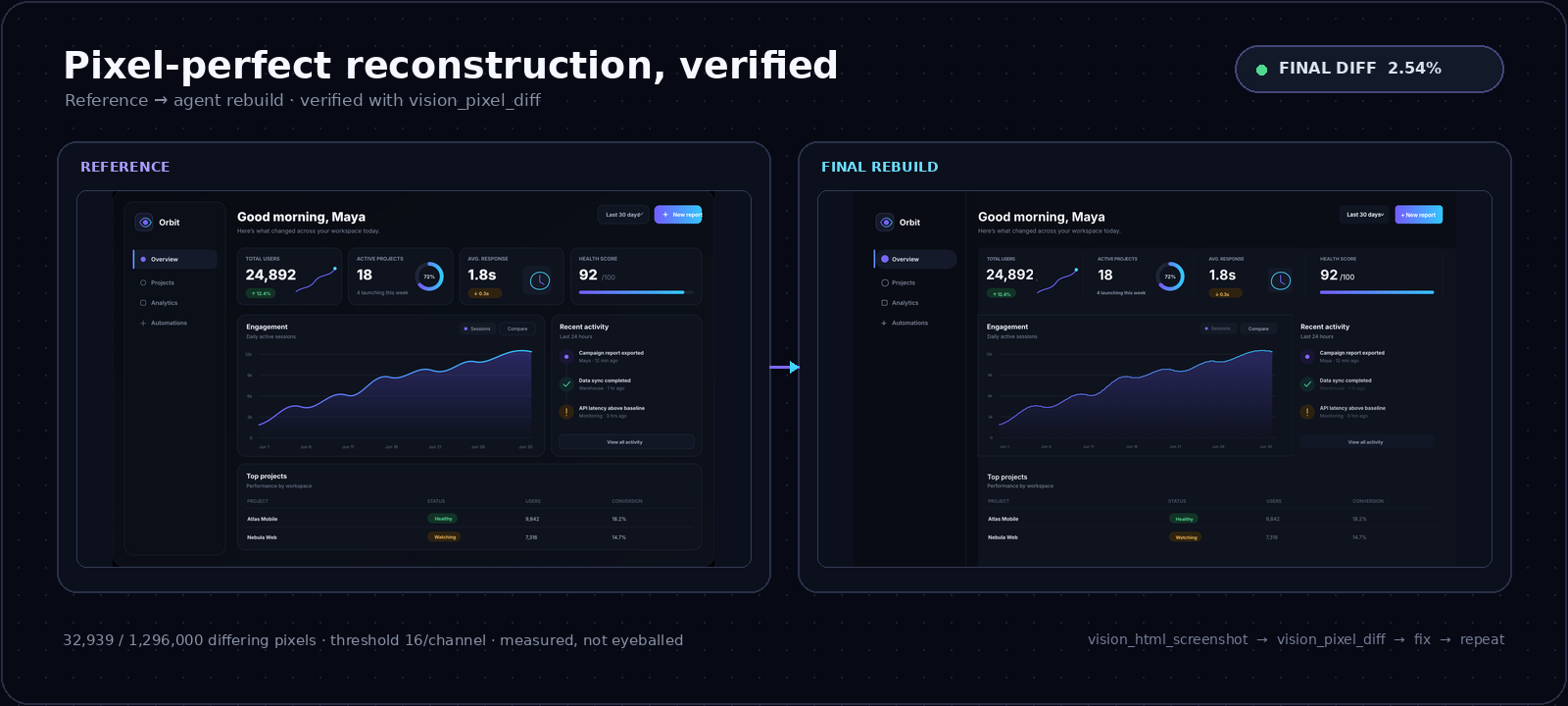
On-demand vision for text-only DeepSeek Harness agents: built-in free keyless vision chain and 14 vision tools, routing image turns as tool calls to vision models with pixel fidelity, no Python needed, one-command install.

Give text-only models in DeepSeek Harness eyes, enabling image Q&A, long-screenshot OCR, UI restoration, and GUI visual tasks.