dsh-deep-research
Run the following command in DeepSeek Harness:
dsh plugin install grloper/dsh-deep-research
Paste the following prompt into your AI chat to install this plugin:
Run dsh plugin install grloper/dsh-deep-research inside DeepSeek Harness to install the plugin; source code is at https://github.com/grloper/dsh-deep-research .
About this plugin
Most AI research tools share the same blind spot: a URL pasted beside a claim is treated as evidence, and twelve outlets are treated as twelve independent witnesses. Nobody checks whether the cited sentence actually appears on the page, and genuine refutations drown in a sea of syndicated support.
Kestrel closes those gaps with code, not prompts. Every citation must survive a literal substring (or normalized, or fuzzy) match against the stored source text before it is admitted, so a hallucinated quote simply fails the gate. MinHash-LSH similarity feeds a lineage DAG that Tarjan SCC condenses, so twelve outlets republishing one wire article count as a single origin. An adversarial tribunal pairs a prosecutor hunting refutation with a defender seeking support; one verified contradiction hard-caps confidence regardless of how many 'supporting' sources pile up. Verified claims persist in a local evidence graph with per-claim volatility-based freshness: five years for theorems, twenty-four hours for stock prices.
If you need an auditable research trail, Kestrel fits: analysts, researchers writing citation-heavy work, or any team skeptical of AI-generated conclusions. It ships with zero runtime dependencies, embeds as a standalone Node library, and degrades to a deterministic lexical judge when no LLM is present, so a research run never silently returns an empty result.
Screenshots
Use Cases
- Verify that every AI-generated citation actually appears verbatim on the cited page
- Determine whether a dozen URLs are one wire story republished or genuinely independent sources
- Run an adversarial search for both supporting and refuting evidence on a single claim
Best For
- Researchers who need an auditable evidence trail and refuse to treat a URL as proof
- Analysts who demand independent-source counting rather than raw URL totals
- Developers embedding a zero-dependency research engine into Node workflows
Related Plugins
A unified suite combining hot runtime injection, task-aware thinking-mode routing, and a graded session protocol with red-team gates to sustain model diligence across long-horizon inference.
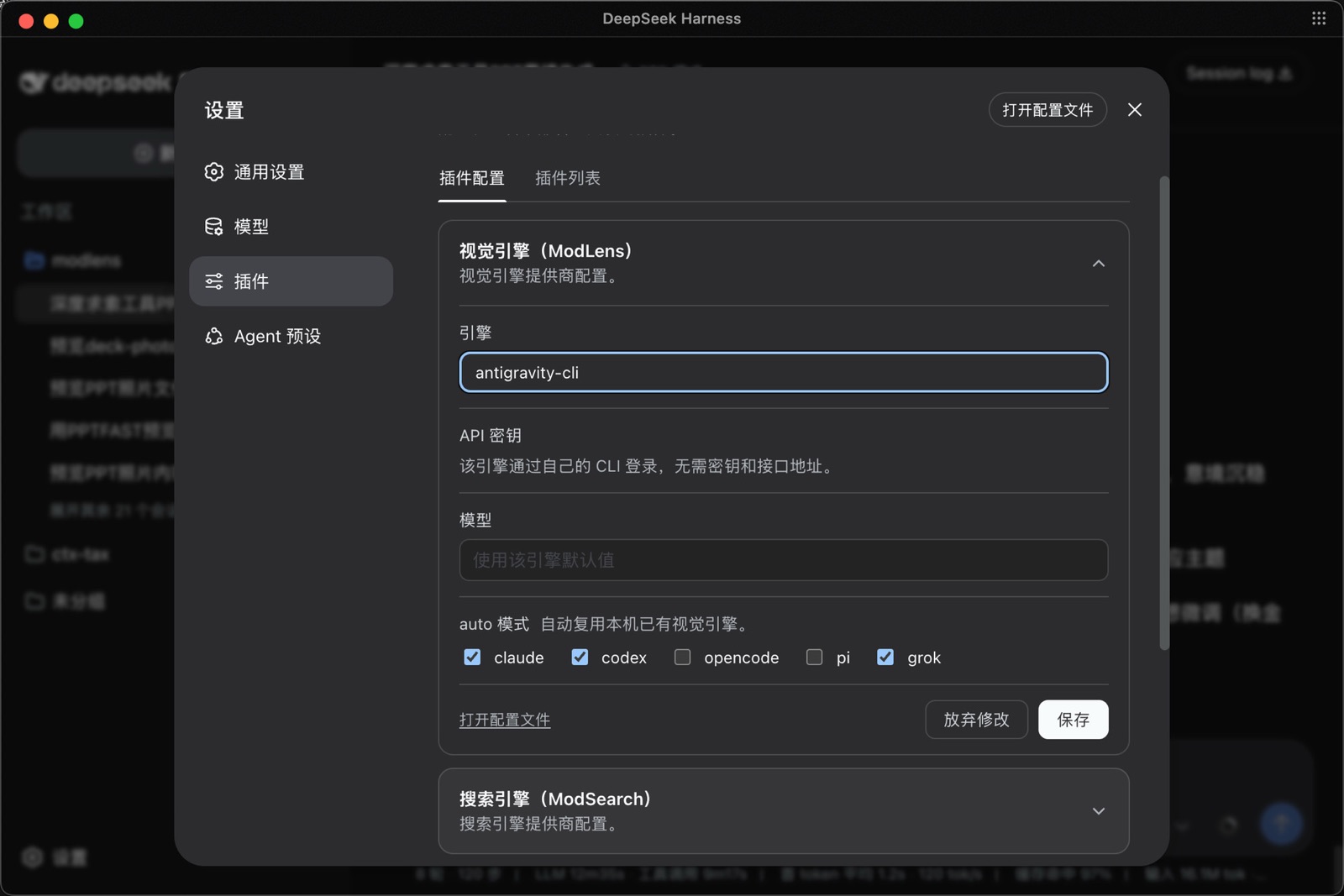
ModLens is a vision plugin for DeepSeek Harness that gives text-only models sight by reading images pasted directly into chat, with zero-config setup and multiple vision engines.
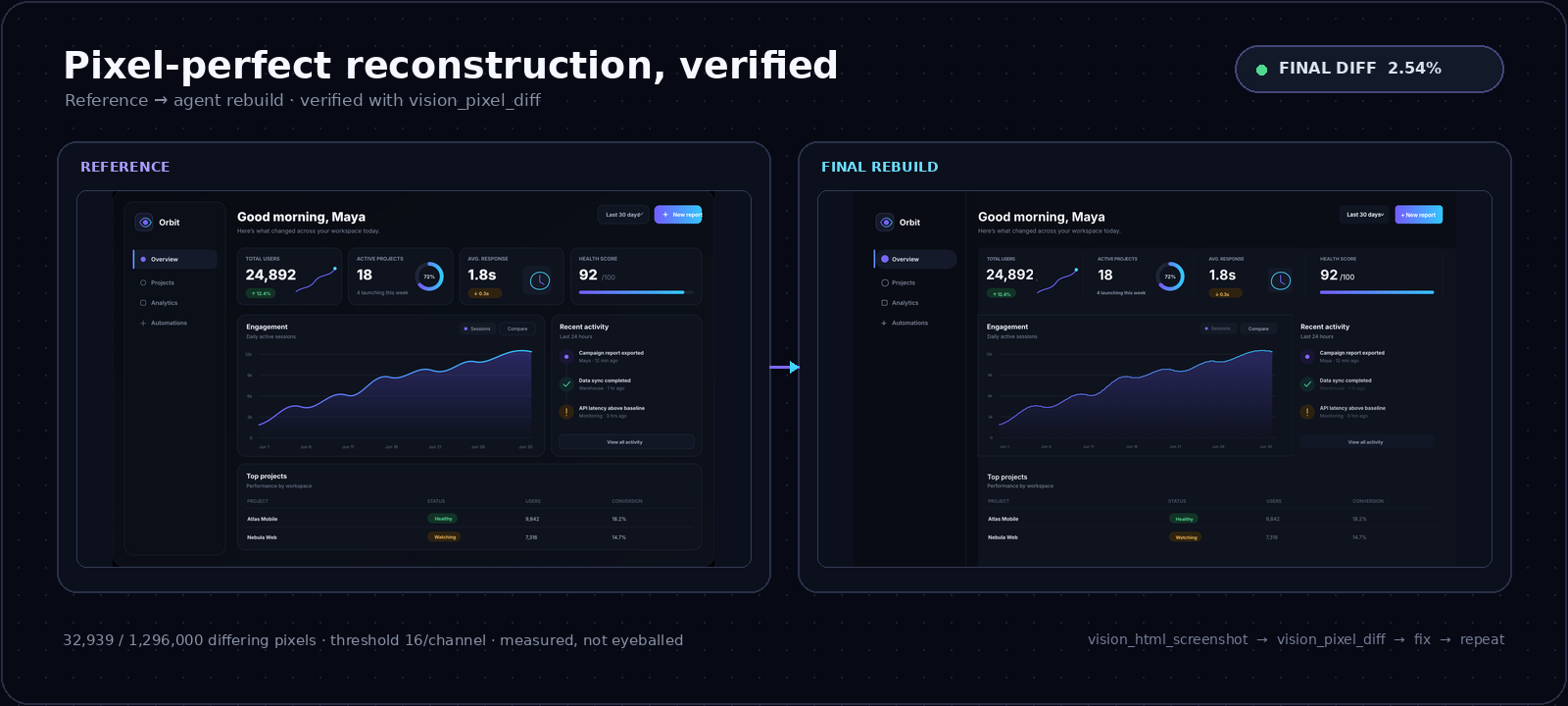
On-demand vision for text-only DeepSeek Harness agents: built-in free keyless vision chain and 14 vision tools, routing image turns as tool calls to vision models with pixel fidelity, no Python needed, one-command install.

Give text-only models in DeepSeek Harness eyes, enabling image Q&A, long-screenshot OCR, UI restoration, and GUI visual tasks.