dsh-opencode-go
Run the following command in DeepSeek Harness:
dsh plugin install xia-sc/dsh-opencode-go
Paste the following prompt into your AI chat to install this plugin:
Install the plugin inside DeepSeek Harness by running dsh plugin install xia-sc/dsh-opencode-go; the source repository is available at https://github.com/xia-sc/dsh-opencode-go .
About this plugin
Scheduling OpenCode Platform models inside DeepSeek Harness used to mean juggling three API surfaces (chat/completions, responses, messages), each with its own auth scheme, reasoning-tier vocabulary, and error semantics, while credentials were scattered across environment variables and config files, image-inlining limits were inconsistent, and token usage was essentially invisible. dsh-opencode-go collapses all of that into a single route called zen-go: once registered, every surface is immediately routable, every outbound request carries a per-session stable x-opencode-session header, and credentials are resolved layer-by-layer (process env, managed store, project .env) with hot reload so key rotation never requires a restart.
Core capabilities close the loop on the friction points hit most in production. Reasoning tiers auto-converge per surface: chat maps to reasoning_effort, responses to reasoning.effort, and messages has no tier vocabulary at all. When the settings card changes a model surface, the tier list is trimmed in the same write so the host never silently rejects the entire config block and falls back to defaults. For multimodal work, images are normalized by the attachment service and inlined as base64; when the per-request image budget (default 64 MiB) is exceeded, the plugin raises IMAGE_OFFLOAD_REQUIRED and hands off to the harness offload loop, which records the drop as a durable session decision and retries the step. Usage is bucketed per call into prompt, output, cache read/write, and reasoning tokens, persisted append-only to a local JSONL file, and surfaced in a calendar heatmap plus a per-model breakdown table where any day expands into session-grouped detail showing the exact session header sent. Unknown or newly released models can be manually classified for surface and capabilities in the settings card without waiting for upstream /v1/models metadata.
This plugin suits developers and small teams that need to schedule multiple OpenCode Platform models (mimo, deepseek-v4, grok, gpt-5.6-luna, kimi, minimax, qwen, and others) within a single Harness deployment, especially in scenarios requiring multimodal inference, token-cost tracking, and a unified endpoint-management surface.
Use Cases
- Unifying multiple OpenCode Platform models in a single DeepSeek Harness deployment
- Multimodal inference with image inlining and surface-specific reasoning tiers
- Per-session and per-model token usage tracking for cost analysis
Best For
- Developers and small teams using DeepSeek Harness
- Deployments that need unified endpoint management across multiple LLM providers
- Engineering teams focused on token-cost awareness and usage visibility
Related Plugins
A unified suite combining hot runtime injection, task-aware thinking-mode routing, and a graded session protocol with red-team gates to sustain model diligence across long-horizon inference.
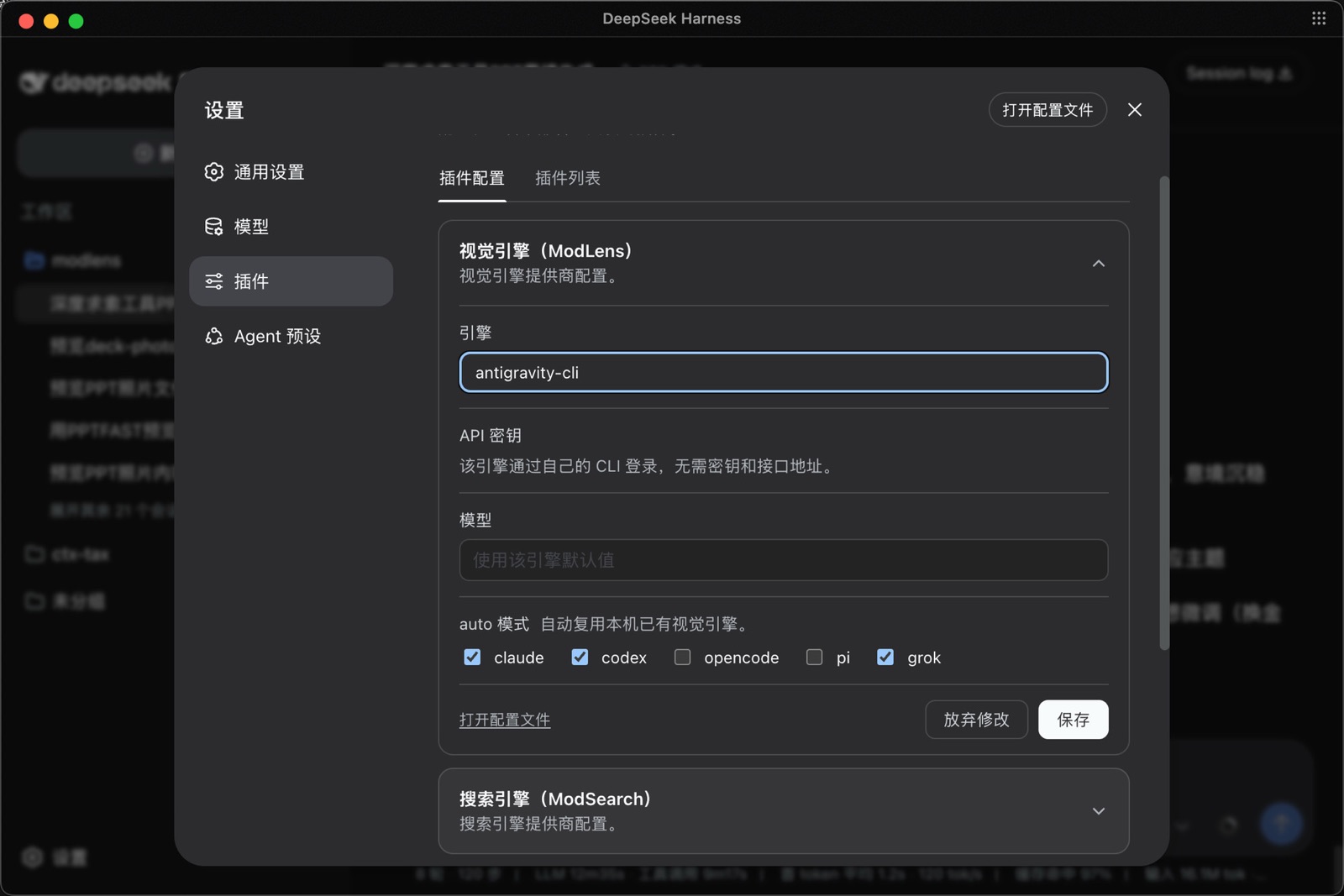
ModLens is a vision plugin for DeepSeek Harness that gives text-only models sight by reading images pasted directly into chat, with zero-config setup and multiple vision engines.
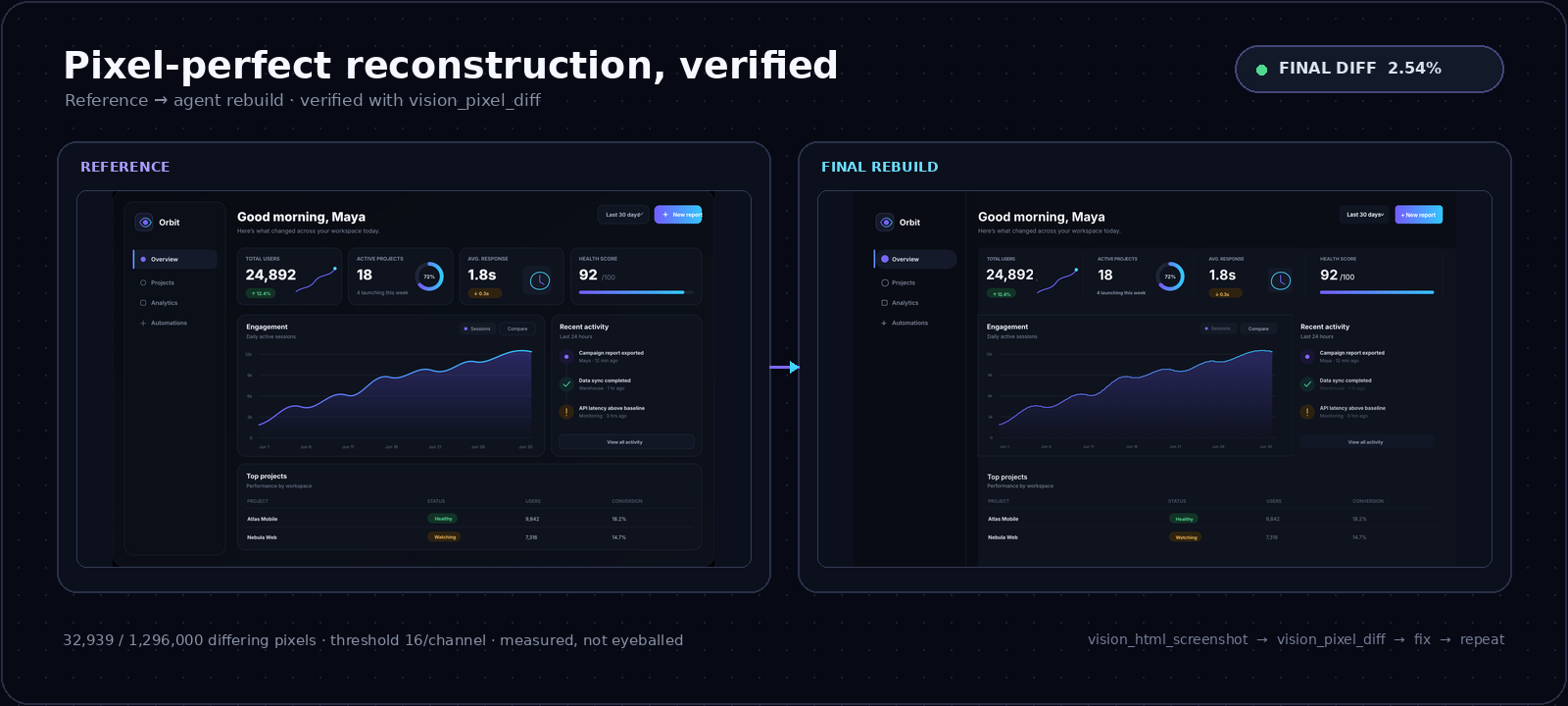
On-demand vision for text-only DeepSeek Harness agents: built-in free keyless vision chain and 14 vision tools, routing image turns as tool calls to vision models with pixel fidelity, no Python needed, one-command install.
Give text-only models in DeepSeek Harness eyes, enabling image Q&A, long-screenshot OCR, UI restoration, and GUI visual tasks.