dsh-models-input-modalities
Run the following command in DeepSeek Harness:
dsh plugin install DamonBao/dsh-models-input-modalities
Paste the following prompt into your AI chat to install this plugin:
Run dsh plugin install DamonBao/dsh-models-input-modalities in your terminal to install the plugin; the source code is available at https://github.com/DamonBao/dsh-models-input-modalities .
About this plugin
The DSH Models settings page deliberately keeps two per-model fields out of its forms: whether a third-party pi-ai provider model accepts image input, and which reasoning levels it exposes. In practice those details end up scattered across chat messages, wiki pages, or tribal knowledge instead of living in the one place you would naturally configure them. This plugin opens a Model capabilities fold on every third-party provider card, letting you tick the allowed input modalities and reasoning levels on a per-model basis and save directly into the gateway config.
Scope is intentionally narrow. Route-level knobs such as defaultInput, compat switches, and modelOverrides for built-in catalog models are still edited directly in settings.yaml. A reasoning level you declare is a claim, not a probe: nothing asks the gateway whether it actually serves that level, and an endpoint that does not honour the spelling will simply refuse mid-turn. The plugin fills exactly the two gaps the forms leave open, ships as a self-contained bundle with inlined CSS and type-only external imports, and enforces a build-time purity check to keep the artifact lean.
It is most useful when you run several third-party models side by side and their capabilities diverge: some accept vision input while others are text-only, some expose a single reasoning tier while others offer three. Open the Models page and the capability matrix is right there on each card, so you stop cross-referencing documentation before every API call and start trusting the settings panel you already have in front of you.
Use Cases
- Check at a glance which third-party models accept image input and how many reasoning tiers they expose
- After onboarding a new vision model, tick its allowed input modalities and reasoning levels per-model without cross-referencing docs
- In shared-gateway teams, the capability matrix lives on the settings page, cutting missed details from verbal handoffs
- Before swapping or retiring a model, review its current declarations in the fold to decide whether to keep or drop it
Best For
- Developers or teams running several third-party models with diverging capabilities
- Configuration admins who want the DSH Models page as the single source of truth for per-model capabilities
- Workflow designers mixing text, image, and multi-tier reasoning across providers
Related Plugins
A unified suite combining hot runtime injection, task-aware thinking-mode routing, and a graded session protocol with red-team gates to sustain model diligence across long-horizon inference.
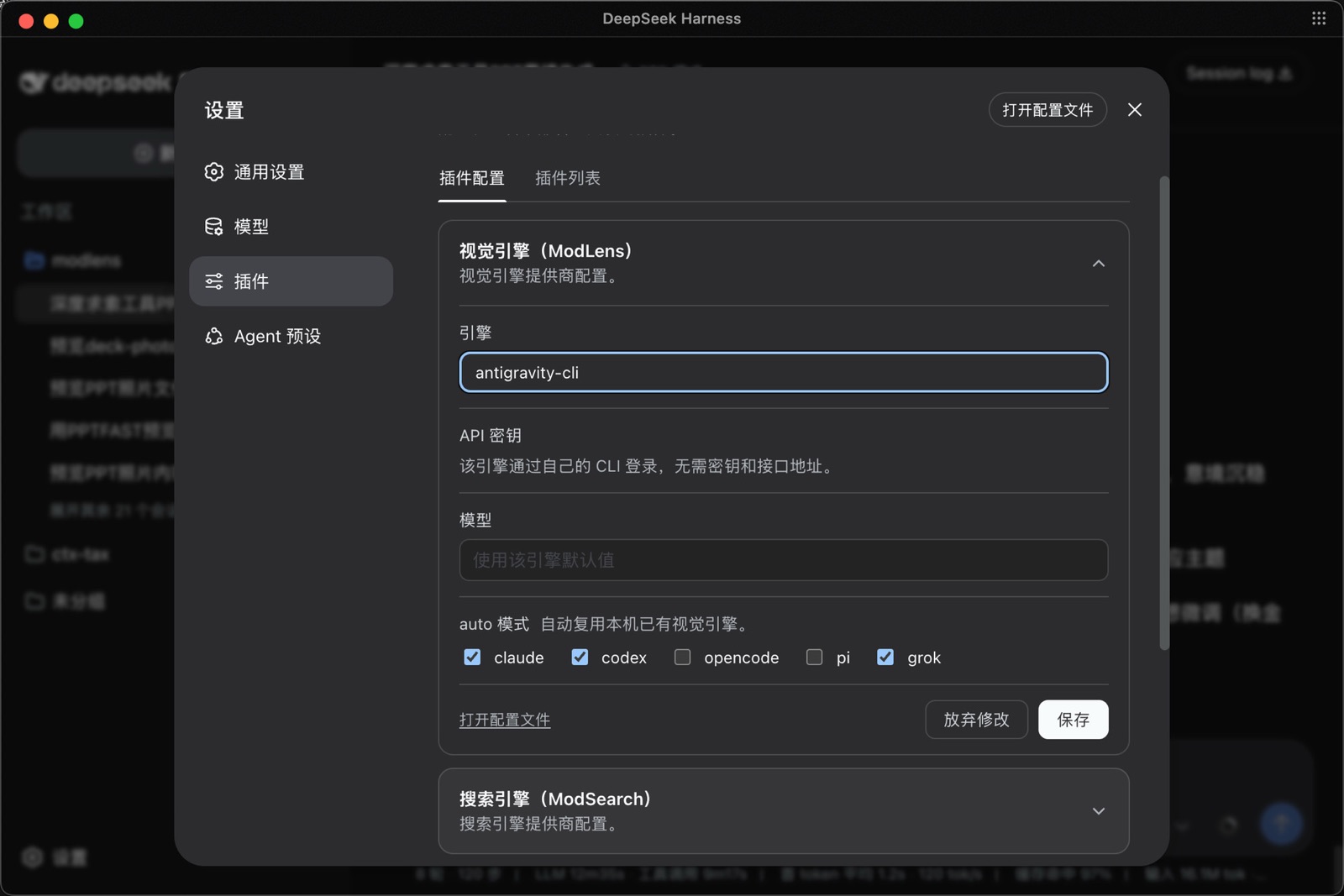
ModLens is a vision plugin for DeepSeek Harness that gives text-only models sight by reading images pasted directly into chat, with zero-config setup and multiple vision engines.
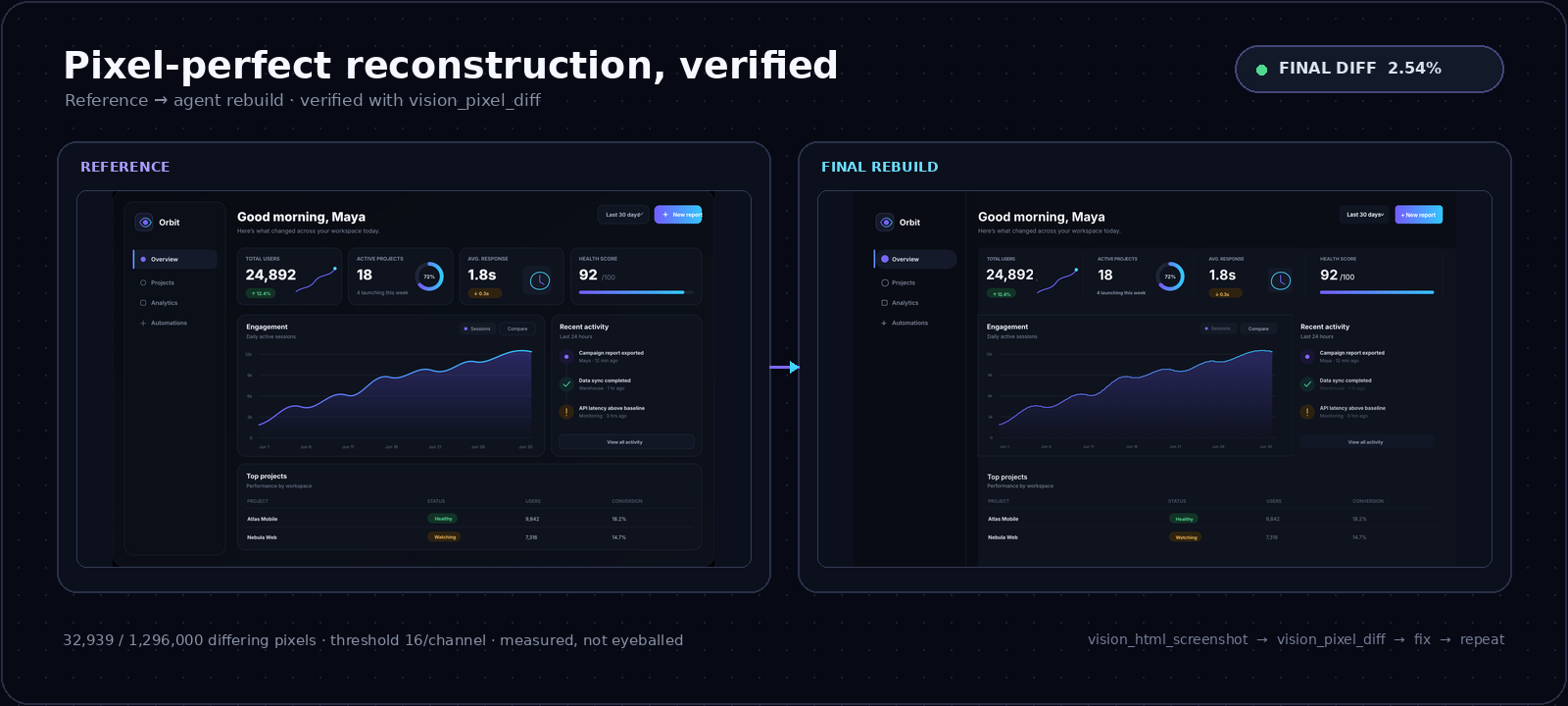
On-demand vision for text-only DeepSeek Harness agents: built-in free keyless vision chain and 14 vision tools, routing image turns as tool calls to vision models with pixel fidelity, no Python needed, one-command install.
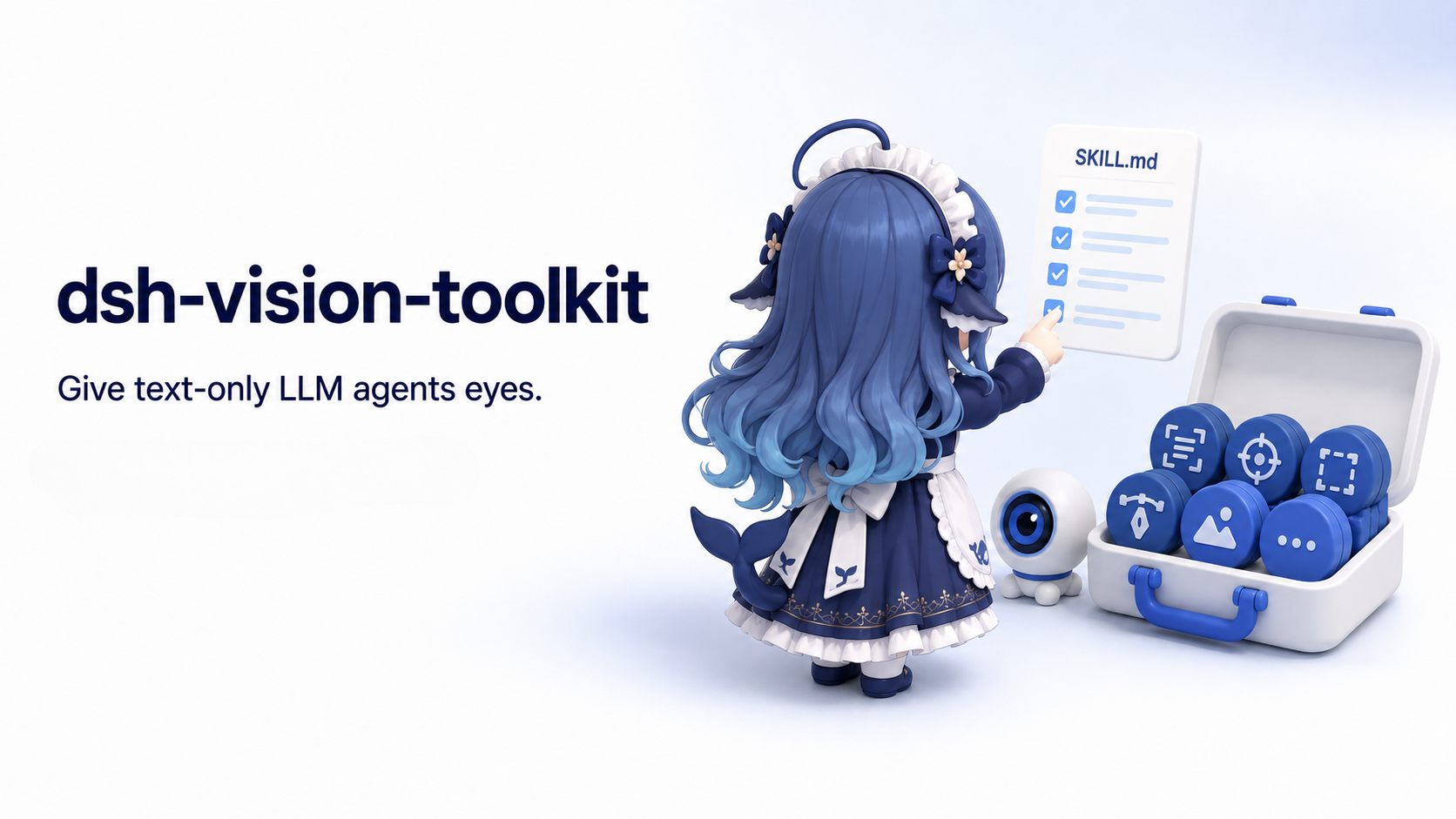
Give text-only models in DeepSeek Harness eyes, enabling image Q&A, long-screenshot OCR, UI restoration, and GUI visual tasks.