
dsh-plugin-vllm-ascend-profiler
Run the following command in DeepSeek Harness:
dsh plugin install nutsDad/dsh-plugin-vllm-ascend-profiler
Paste the following prompt into your AI chat to install this plugin:
Run dsh plugin install nutsDad/dsh-plugin-vllm-ascend-profiler to install this plugin from GitHub (https://github.com/nutsDad/dsh-plugin-vllm-ascend-profiler); after installation, restart your profile and the Profiler entry will appear in the sidebar.
About this plugin
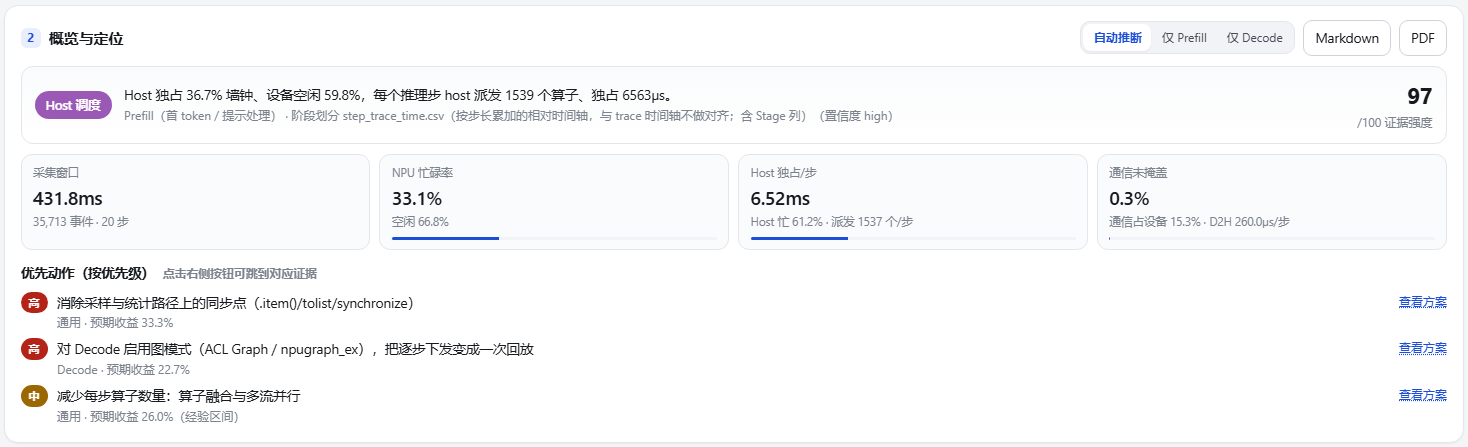
Pinpointing whether slow vLLM inference on Ascend NPUs is caused by host scheduling, NPU compute, cross-card communication, or H2D/D2H copies is hard when the raw CANN and torch_npu profiling artifacts (trace_view.json, kernel_details.csv, op_statistic.csv, and more) carry bare JSON arrays, CSV headers that shift across CANN versions, and virtually no Prefill-or-Decode labels. This plugin absorbs all of that parsing complexity: drag in a zip, point it at a server directory, or upload individual files, and you get a full analysis without maintaining a hand-rolled pipeline.
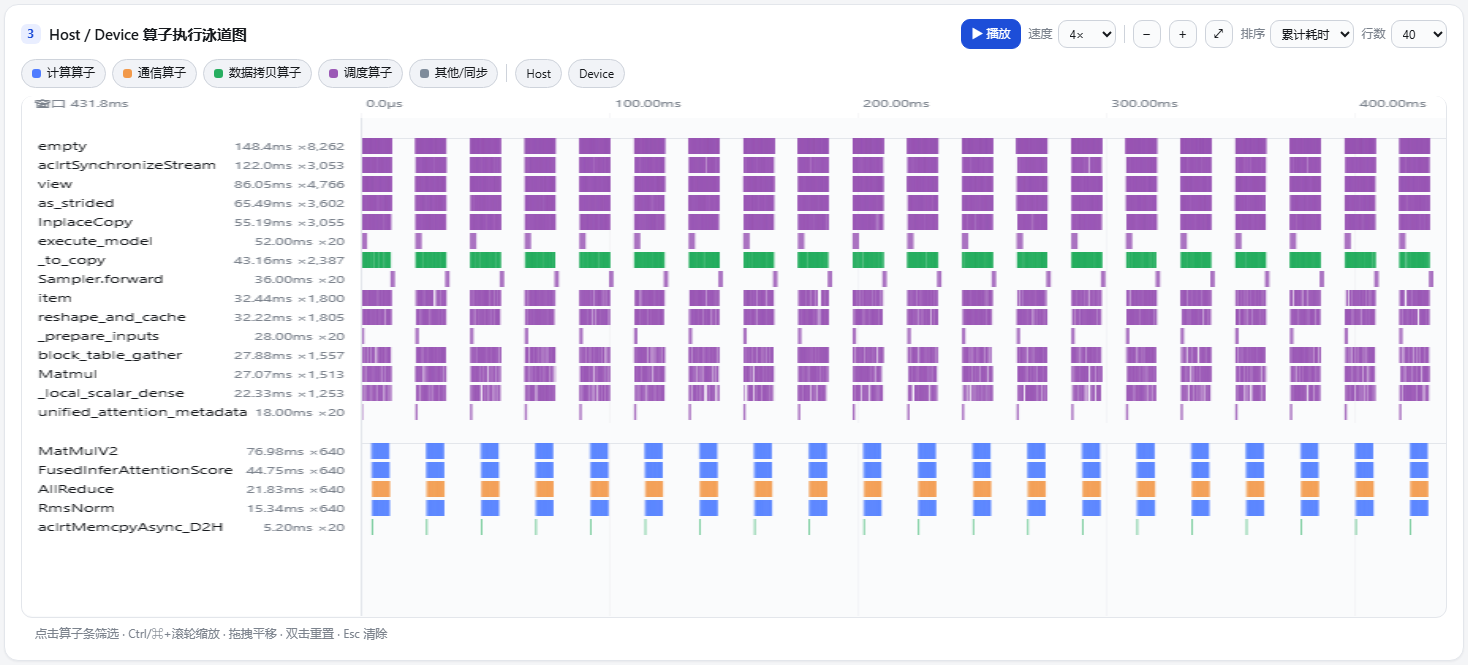
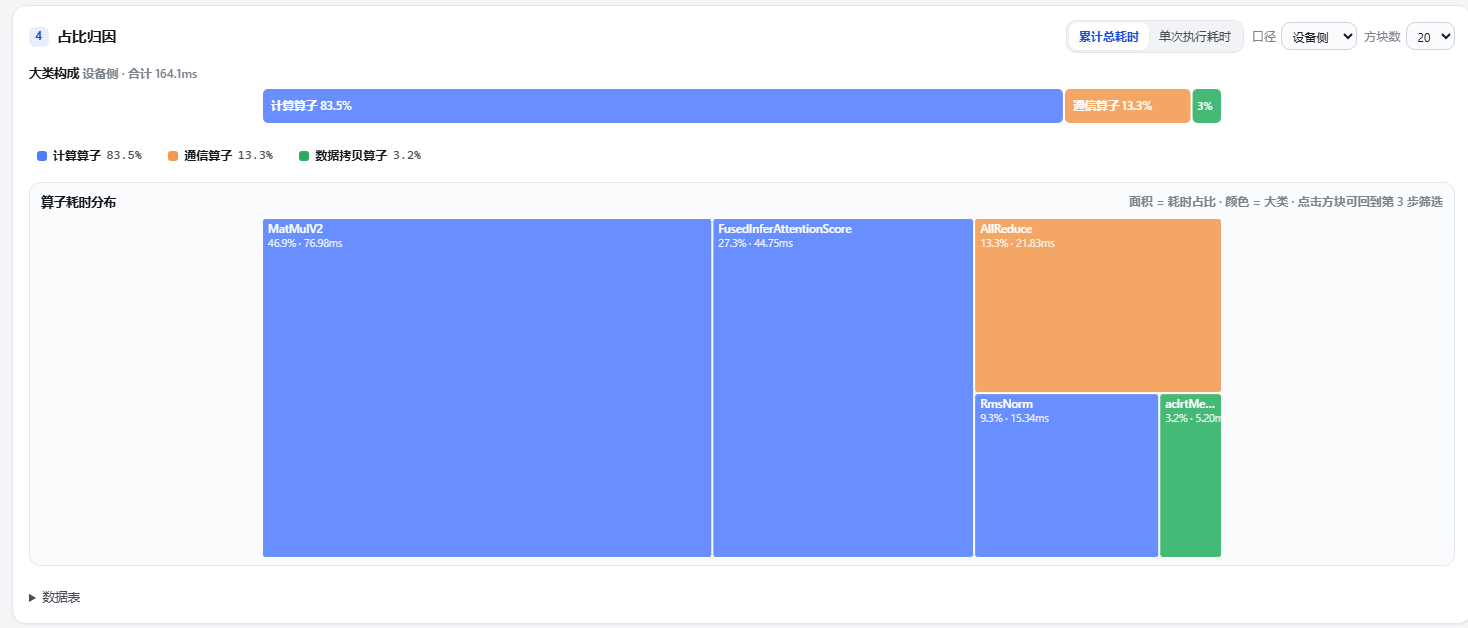
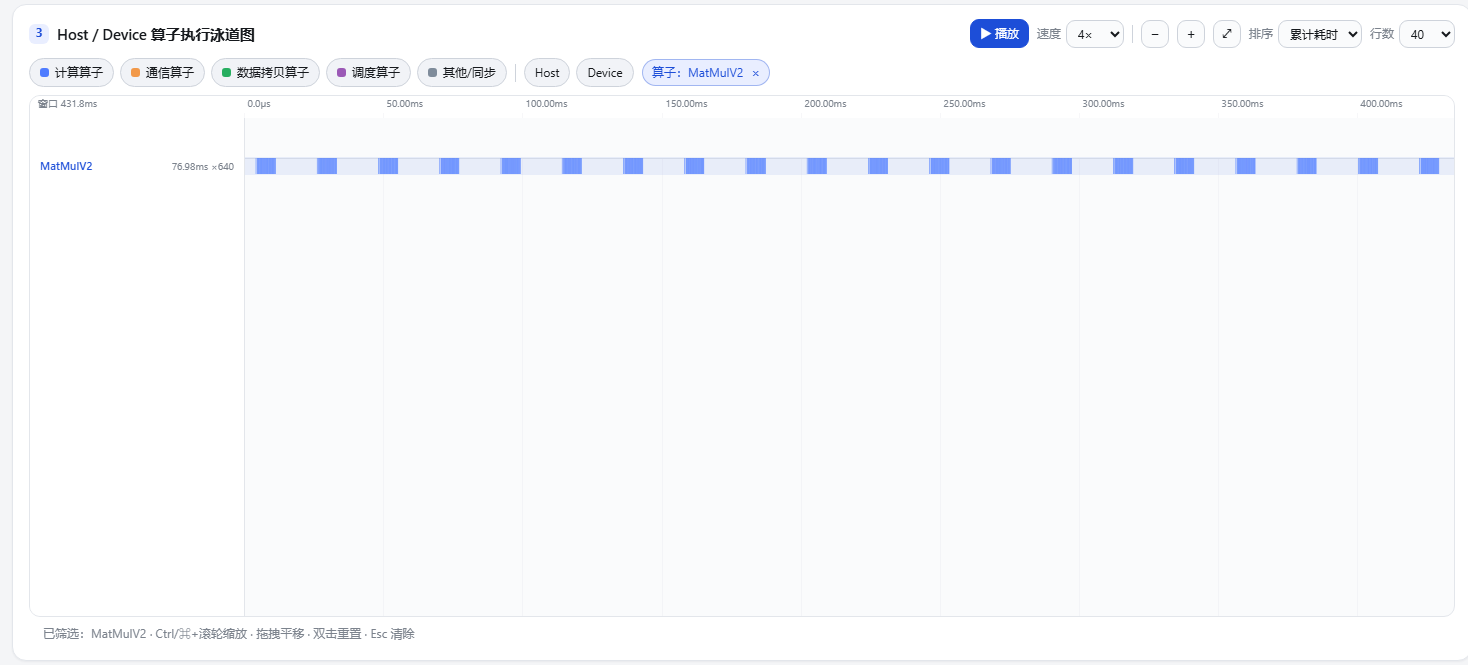
The six-step workflow goes: import, overview and bottleneck identification, Host and Device operator swim-lane timeline, 100-percent category bar plus operator latency treemap, a five-node reasoning chain (bottleneck scoring, quantitative evidence vs. thresholds, root-cause inference, prioritized actions, expected gains), and a before-and-after comparison. All three visualization modules share one linked filter state, so clicking an operator in the swim lane highlights the same operator across the treemap and category bar in sync. Every conclusion traces back to a specific metric, threshold, and formula, and Prefill and Decode phases are reported separately. The output is a self-contained Markdown report or a print-to-PDF document with vector chart snapshots, ready for a design review or a ticket.
Built for ML engineers and DevOps working on Ascend NPU inference optimization who need to isolate the dominant bottleneck fast, verify that a configuration change actually helped, and produce a defensible report without maintaining a front-end visualization stack. The plugin has zero runtime dependencies, is a pure ESM package, and is ready to use the moment the profile restarts.
Screenshots
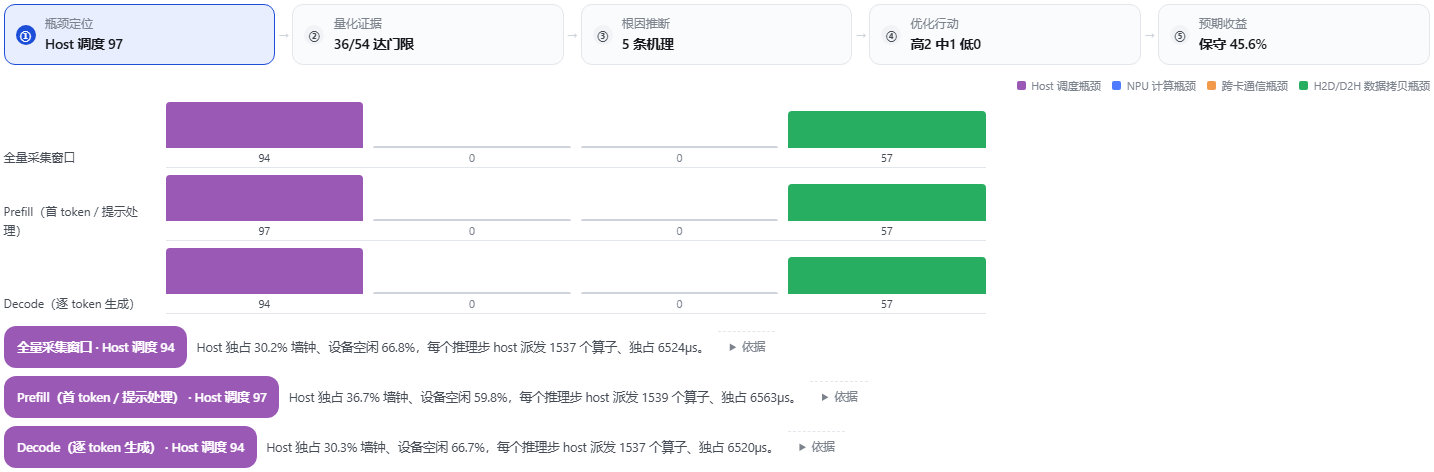
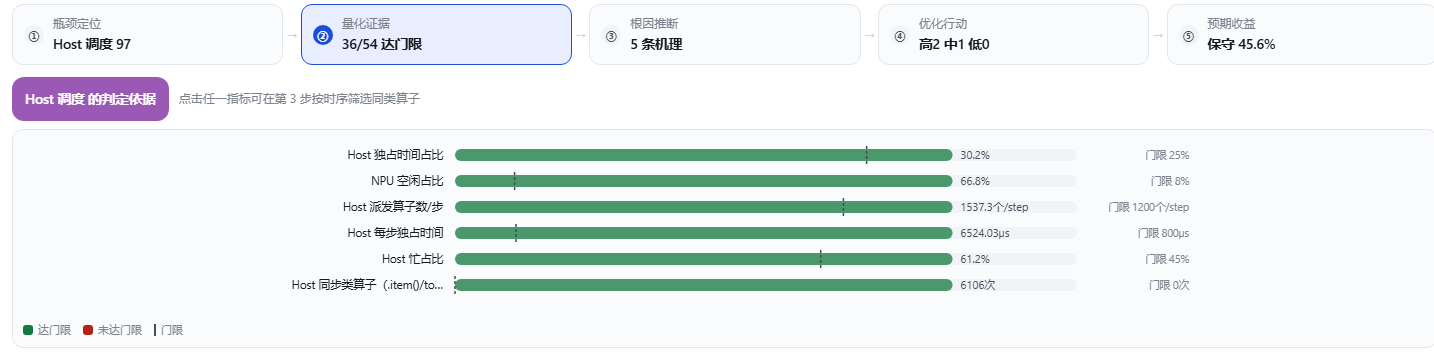
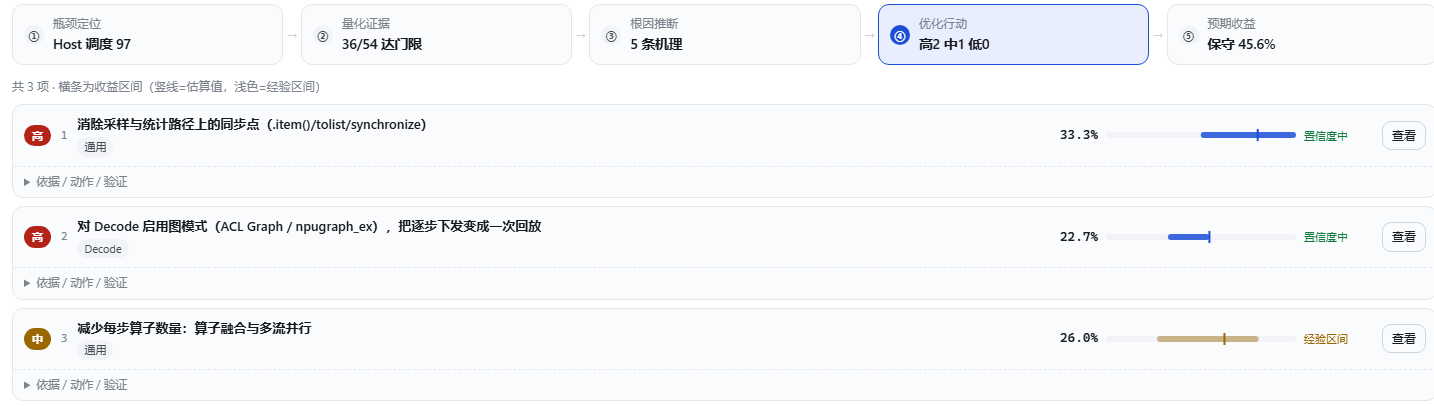
Use Cases
- Isolate the dominant bottleneck on Ascend NPU vLLM inference—host scheduling, NPU compute, cross-card communication, or H2D/D2H copies—with every conclusion traceable to a metric and threshold.
- Import a before-and-after pair of profiling artifacts to auto-compare wall-clock, NPU busy ratio, and host-exclusive time, verifying whether a config change actually helped.
- Turn raw CANN and torch_npu outputs (trace_view.json, various CSVs) into a self-contained Markdown or PDF performance optimization report in one click.
Best For
- ML engineers deploying vLLM inference on Ascend NPUs
- DevOps or SRE engineers tuning inference service performance
- Data analysts who need to extract traceable conclusions and produce review-ready reports from profiling artifacts
Related Plugins
A unified suite combining hot runtime injection, task-aware thinking-mode routing, and a graded session protocol with red-team gates to sustain model diligence across long-horizon inference.
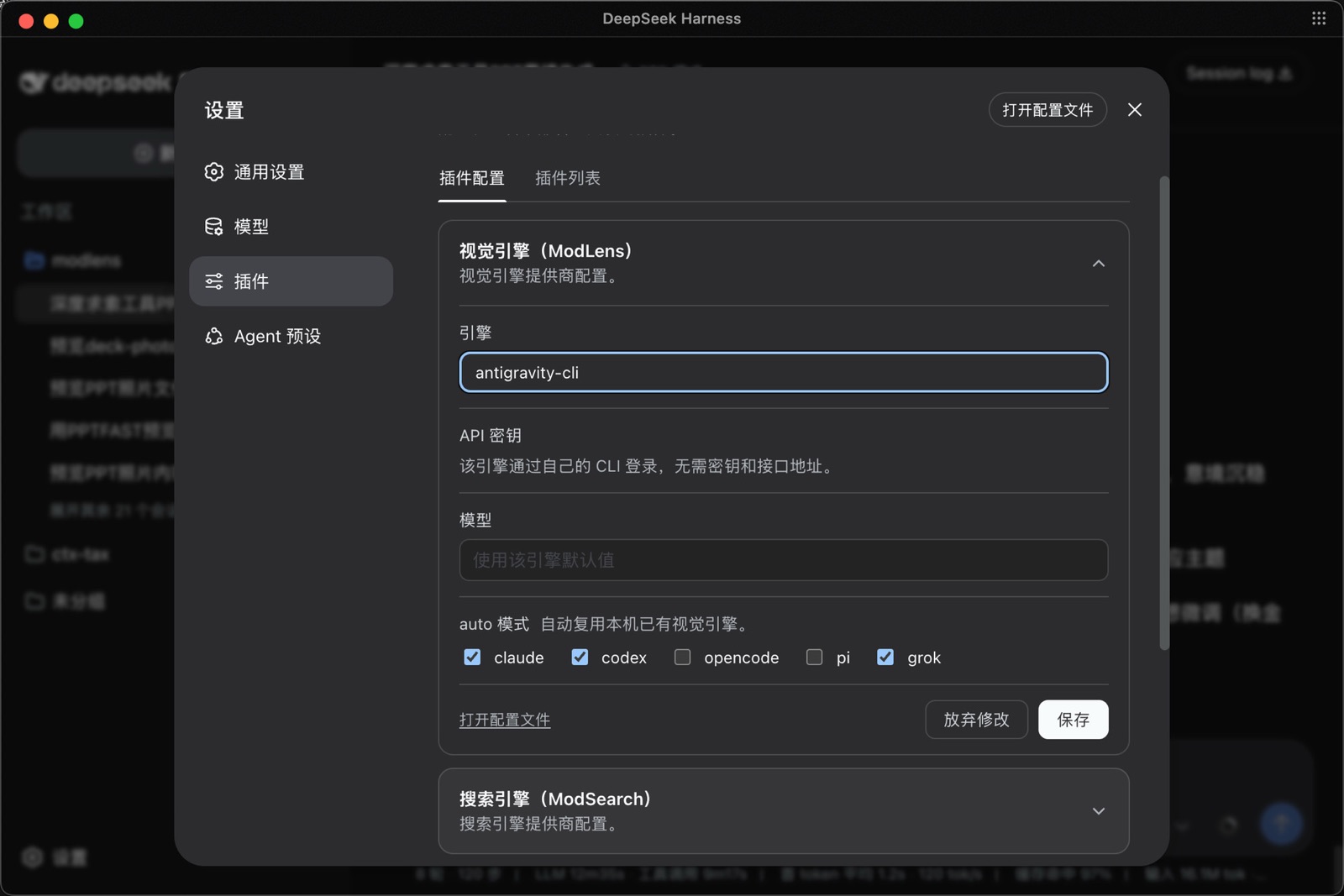
ModLens is a vision plugin for DeepSeek Harness that gives text-only models sight by reading images pasted directly into chat, with zero-config setup and multiple vision engines.
On-demand vision for text-only DeepSeek Harness agents: built-in free keyless vision chain and 14 vision tools, routing image turns as tool calls to vision models with pixel fidelity, no Python needed, one-command install.

Give text-only models in DeepSeek Harness eyes, enabling image Q&A, long-screenshot OCR, UI restoration, and GUI visual tasks.