dsh-plugin-h3-hip
Run the following command in DeepSeek Harness:
dsh plugin install alexhegit/dsh-plugin-h3-hip
Paste the following prompt into your AI chat to install this plugin:
Run dsh plugin install alexhegit/dsh-plugin-h3-hip inside your DeepSeek Harness web profile to install the plugin; the source repository is available at https://github.com/alexhegit/dsh-plugin-h3-hip .
About this plugin
Wiring the MiniMax-H3 inference engine into DeepSeek Harness often stalls because the upstream HIP release lags behind DSH preview API changes, leaving local integration stranded in a gap between releases. The h3-hip host bundle decouples the host-side integration into a standalone plugin so you can track and adapt to DSH-side breaking changes on your own schedule, keeping local loopback inference moving without waiting on an upstream release.
M1 delivers three core capabilities. h3_generate submits a semantic job to POST /v1/jobs and tails the SSE stream for real-time output. The h3-prompt skill ships MiniMax-H3 three-part prompt templates with reference tags, lowering the bar for crafting high-quality prompts. A GET /v1/info protocol probe detects v1alpha mismatches and returns a 426 upgrade hint to prevent silent failures. A bundled fake daemon also lets you exercise the full integration path under npm test without a real engine.
If your DSH web profile already mounts dsh-jobs-local and dsh-tool-jobs, and you are running h3-hip.c v0.12-exp or later in --serve mode on a private network, this plugin is the shortest bridge from engine to harness. It is built for developers who want private, local MiniMax-H3 semantic generation while retaining full control over the DSH tooling layer.
Use Cases
- Submit MiniMax-H3 semantic generation jobs on a local loopback and follow SSE output in real time
- Quickly craft high-quality H3 requests using the built-in three-part prompt skill
- Independently adapt to DSH preview API changes without waiting for an upstream engine release
Best For
- Inference developers who have already mounted jobs and tooling in a DSH web profile
- Local users running MiniMax-H3 --serve mode on a private network
- Integration engineers who want to decouple the DSH toolchain from upstream engine release cadence
Related Plugins
A unified suite combining hot runtime injection, task-aware thinking-mode routing, and a graded session protocol with red-team gates to sustain model diligence across long-horizon inference.
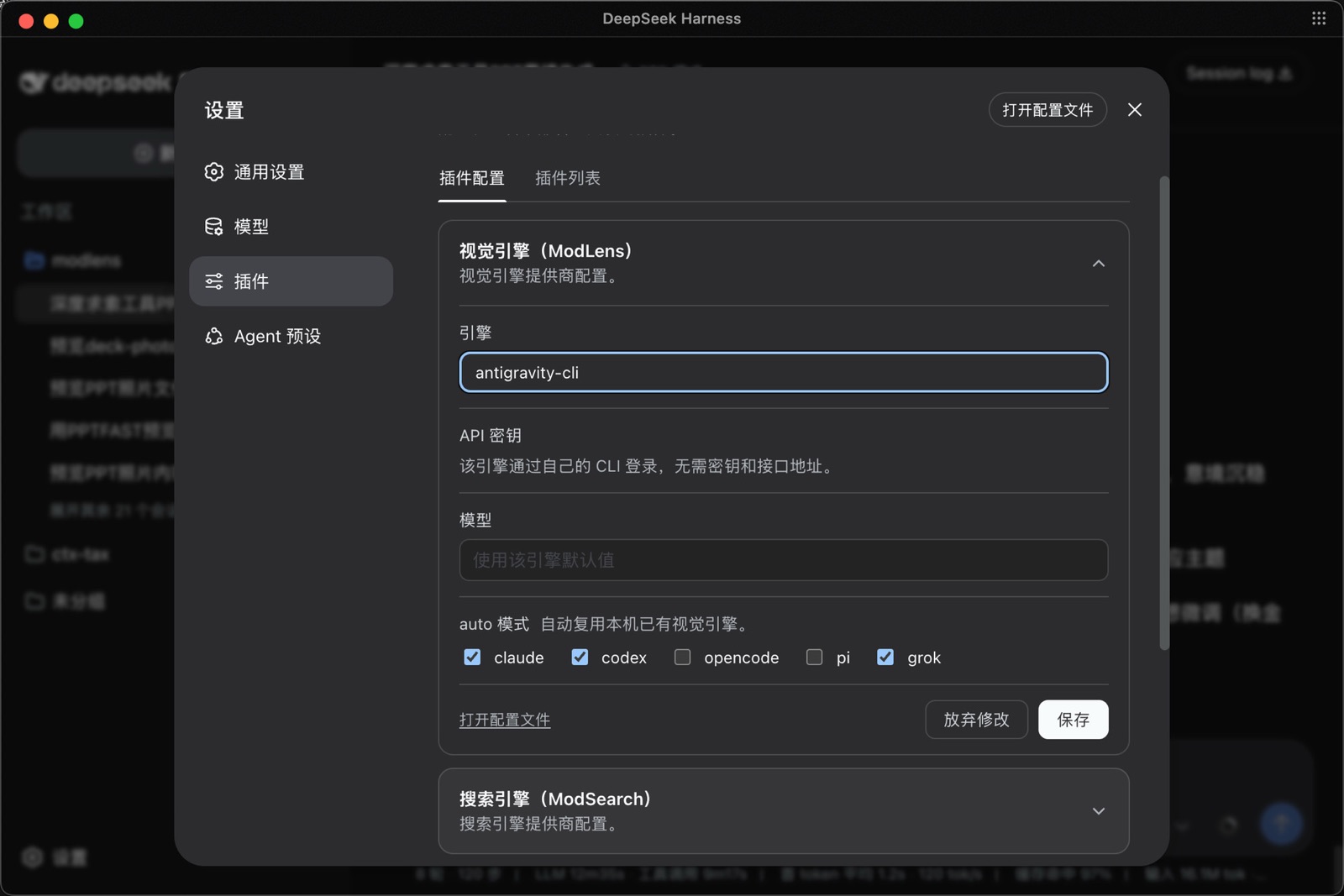
ModLens is a vision plugin for DeepSeek Harness that gives text-only models sight by reading images pasted directly into chat, with zero-config setup and multiple vision engines.
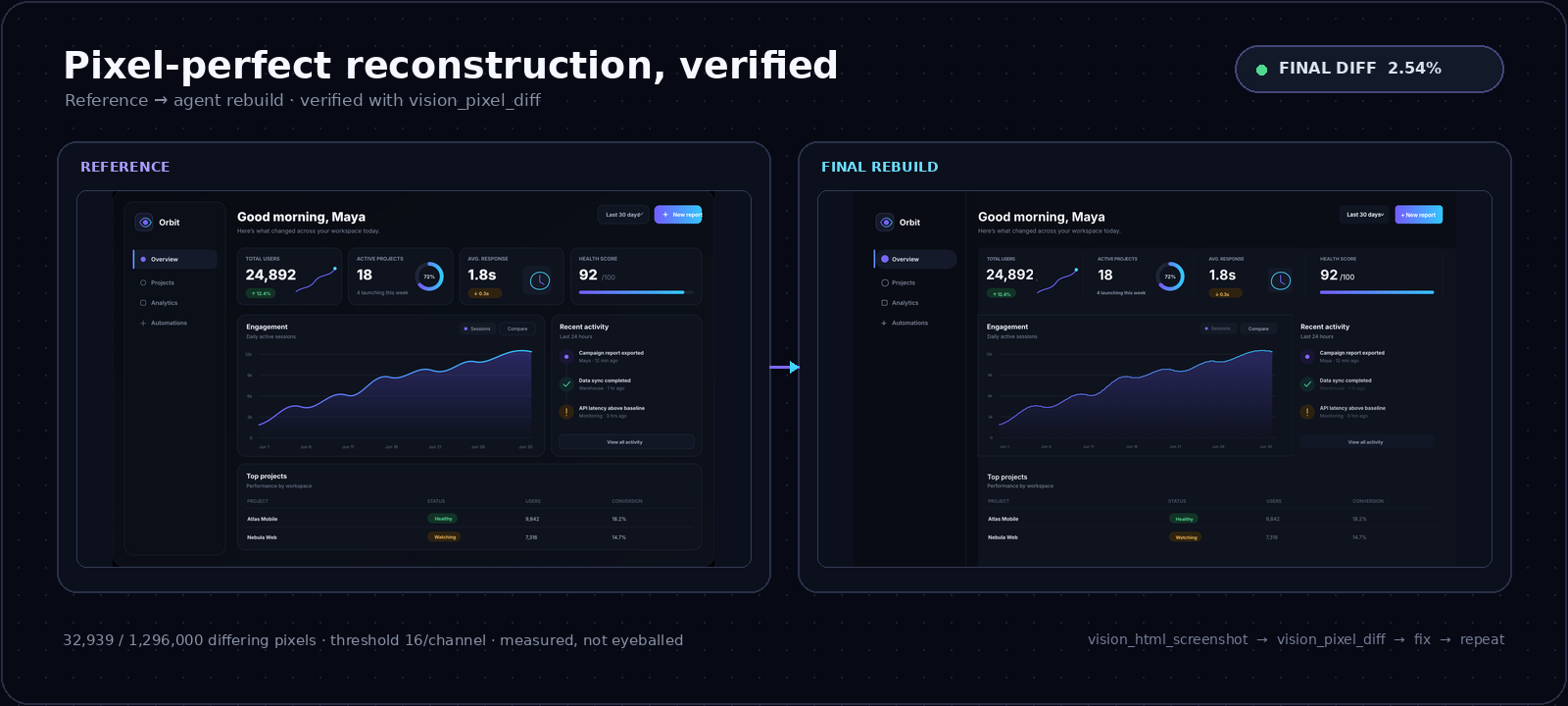
On-demand vision for text-only DeepSeek Harness agents: built-in free keyless vision chain and 14 vision tools, routing image turns as tool calls to vision models with pixel fidelity, no Python needed, one-command install.

Give text-only models in DeepSeek Harness eyes, enabling image Q&A, long-screenshot OCR, UI restoration, and GUI visual tasks.