dsh-codevault
Run the following command in DeepSeek Harness:
dsh plugin install 1014029855/dsh-codevault
Paste the following prompt into your AI chat to install this plugin:
Install it in DeepSeek Harness by running dsh plugin install 1014029855/dsh-codevault; the full source repository is available at https://github.com/1014029855/dsh-codevault
About this plugin
The most frustrating moment in reading open-source code is not the initial confusion but the total amnesia three days later. dsh-codevault closes that forgetting loop: after you understand a mechanism during a chat session, a single natural-language prompt triggers a record, and the plugin archives it as a knowledge card indexed by repository, file, and symbol. Re-reading the same object appends to that card's timeline rather than spawning a new entry, so the card grows organically with each encounter and the top-level readCount increments while earlier points are deduplicated and merged.
Cards are written as Markdown plus JSONL with auto-generated [[wikilinks]], so they drop straight into an Obsidian vault and the graph view works out of the box. Once you point the plugin at a vault directory, the model can read-only search and surface related notes you already have; after your confirmation, structured links are woven into the card to connect code understanding with project documentation. Because the underlying log is strictly append-only and the card is a generated view, read_history can replay any prior version precisely, and read_delete lets you remove an event and let the card rebuild correctly with no extra versioning storage. Each record can carry two or three revisit questions that prompt active recall the next time you return to the card.
Everything runs locally: the plugin never reads your repos, calls external APIs, or touches the network. It does not score code, does not invent fields it has not verified, and every destructive operation requires explicit confirmation. It is built for developers who read open-source code closely and want a lightweight, linked, replayable personal archive of what they understood, especially those already managing knowledge in Obsidian and looking to weave code-reading notes into their existing documentation.
Use Cases
- Capture a quick note after reading a mechanism; re-reading appends to the same card instead of creating new fragments
- Replay any prior version of your understanding via read_history and compare how your comprehension evolved
- Link code-understanding cards to project notes in your Obsidian vault to build a connected knowledge graph
Best For
- Developers who read open-source code closely and want a durable record of what they understood
- Knowledge workers already using Obsidian who want code-reading notes woven into their workflow
- Users who prefer local-only tools with no external API calls or network dependencies
Related Plugins

Memory layer for coding agents that indexes local session history and auto-recalls relevant context before edits, commands, and failures, with no manual search needed.
Traceable, searchable cross-session memory for AI agents that turns conversation knowledge into a typed knowledge graph and recalls relevant subgraphs instead of replaying full history, natively integrated with DeepSeek Harness.
Gives DSH AI cross-session long-term memory, to-do and skill management, plus multi-session orchestration, external AI delegation, and an infinite canvas that grows with you.
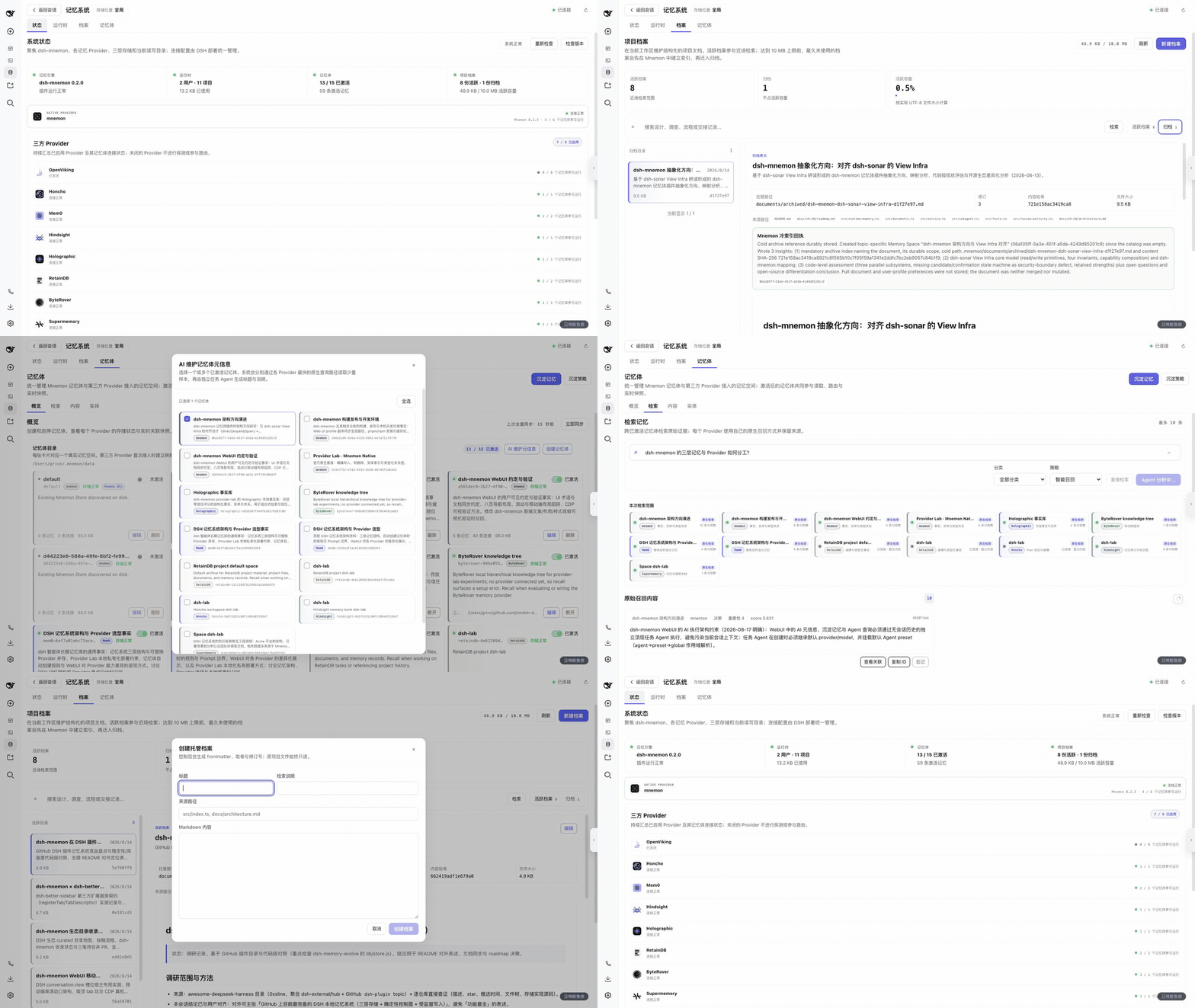
dsh-mnemon is a three-tier, pluggable, Agent-driven memory system for DeepSeek Harness, combining Runtime memory, Project Documents, and replaceable Memory Spaces with nine long-term providers.