dsh-opencode-models
Run the following command in DeepSeek Harness:
dsh plugin install Retr67/dsh-opencode-models
Paste the following prompt into your AI chat to install this plugin:
Run dsh plugin install Retr67/dsh-opencode-models in your terminal to install; the source is available at https://github.com/Retr67/dsh-opencode-models. After installation, restart dsh web and refresh the page to use it.
About this plugin
The built-in model fetch button in DSH settings reads a static snapshot shipped inside the pi-ai npm package. OpenCode Go's live roster shifts constantly—new models appear, old ones retire, others go temporarily dark—so that snapshot is always a step behind reality. dsh-opencode-models takes the honest route: it calls the server's /models endpoint for the current full list, then fires a text ping and a 1-pixel image ping at every single model before deciding what actually works, and only then writes the usable set back into your configuration.
The write-back logic is deliberately conservative. If nothing changed, the config file is never touched. If more than half the models are undecidable due to network-level errors, the entire sync aborts rather than risk wiping your list. Manual metadata you have already set—contextWindow, maxTokens, custom names—survives every sync cycle. New entries record only the model id and measured vision or reasoning support; concrete token limits are resolved later by DSH's built-in catalog, so a rough guess is never frozen forever. Probe outcomes also surface reasoningEfforts declarations, making a thinking-intensity slider appear directly in the Web UI.
This plugin is built for anyone running DSH alongside OpenCode Go or any OpenAI-compatible model aggregator. It targets the opencode-go route by default, and a single config swap (baseURL plus API key) repurposes it for other gateways. Zero build step and zero runtime dependencies on both the host and browser side—install, restart DSH Web, refresh the page, and the new model-sync panel is ready in your settings.
Use Cases
- One-click sync after OpenCode Go ships new models
- Periodic roster updates that auto-remove retired models
- Automatic vision and reasoning-tier annotation for new entries
- Diagnose 400/401/403 rejections and distinguish hard blocks from transient failures
Best For
- Developers pairing DSH with OpenCode Go
- Users relying on OpenAI-compatible model gateways
- Small teams that need real-time model availability tracking
Related Plugins
A unified suite combining hot runtime injection, task-aware thinking-mode routing, and a graded session protocol with red-team gates to sustain model diligence across long-horizon inference.
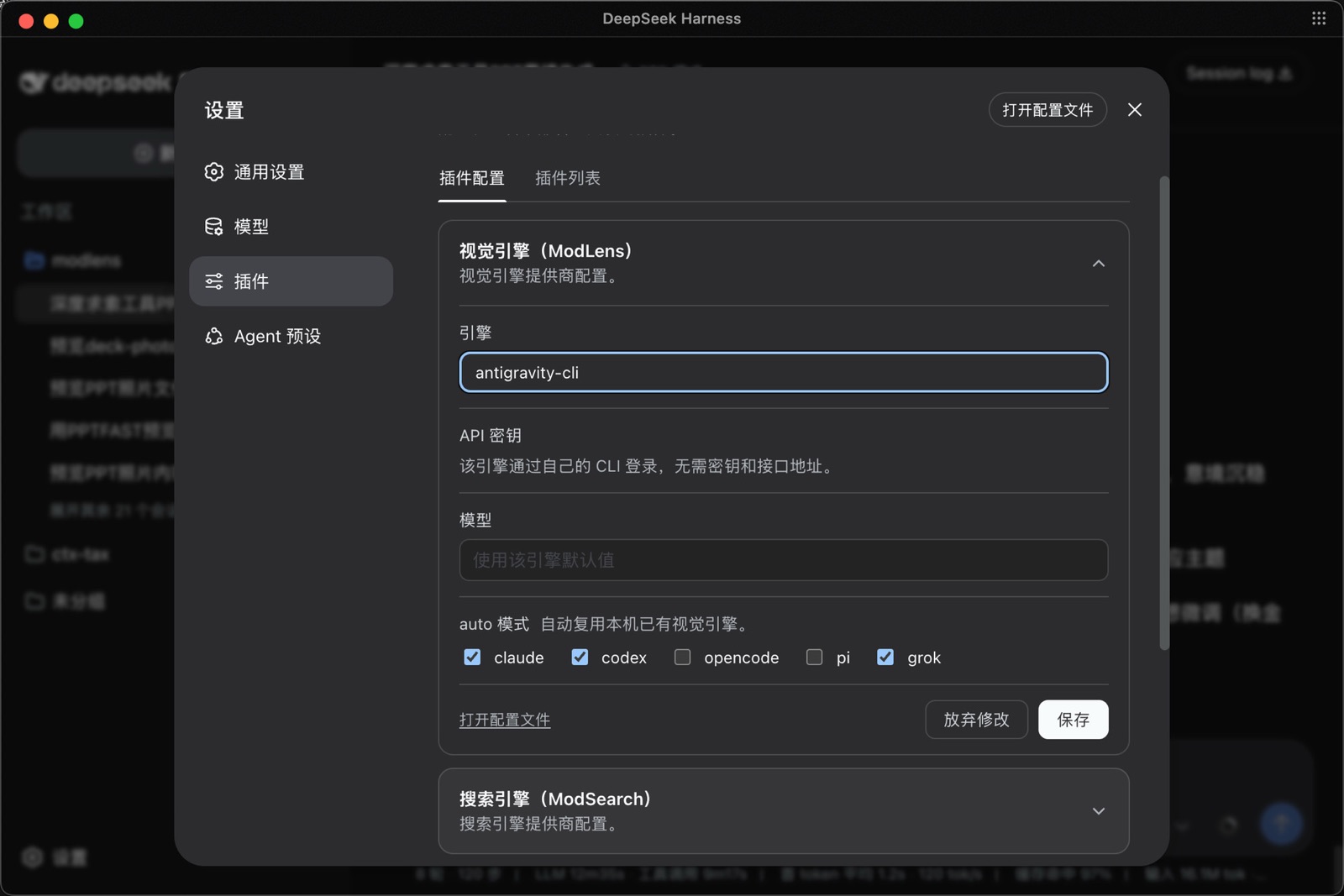
ModLens is a vision plugin for DeepSeek Harness that gives text-only models sight by reading images pasted directly into chat, with zero-config setup and multiple vision engines.
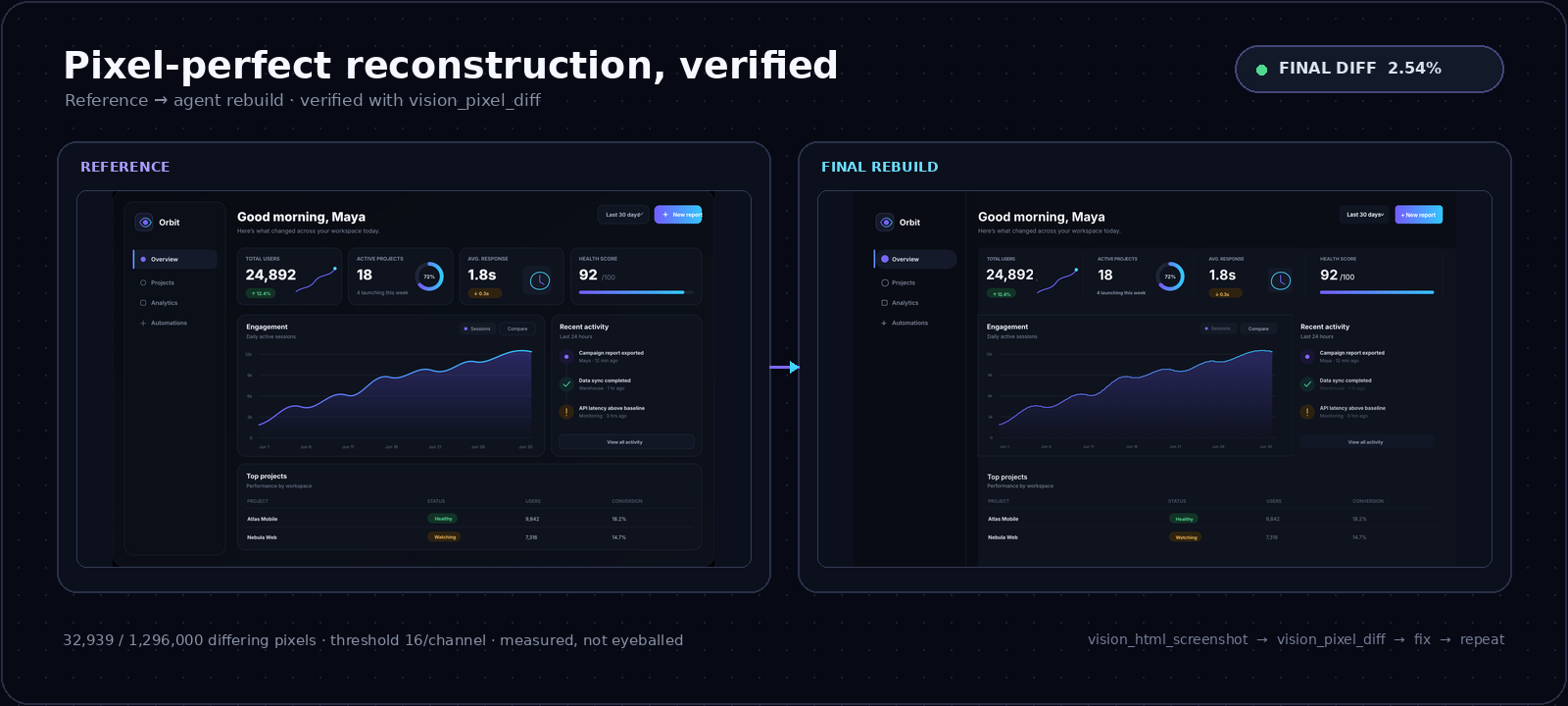
On-demand vision for text-only DeepSeek Harness agents: built-in free keyless vision chain and 14 vision tools, routing image turns as tool calls to vision models with pixel fidelity, no Python needed, one-command install.
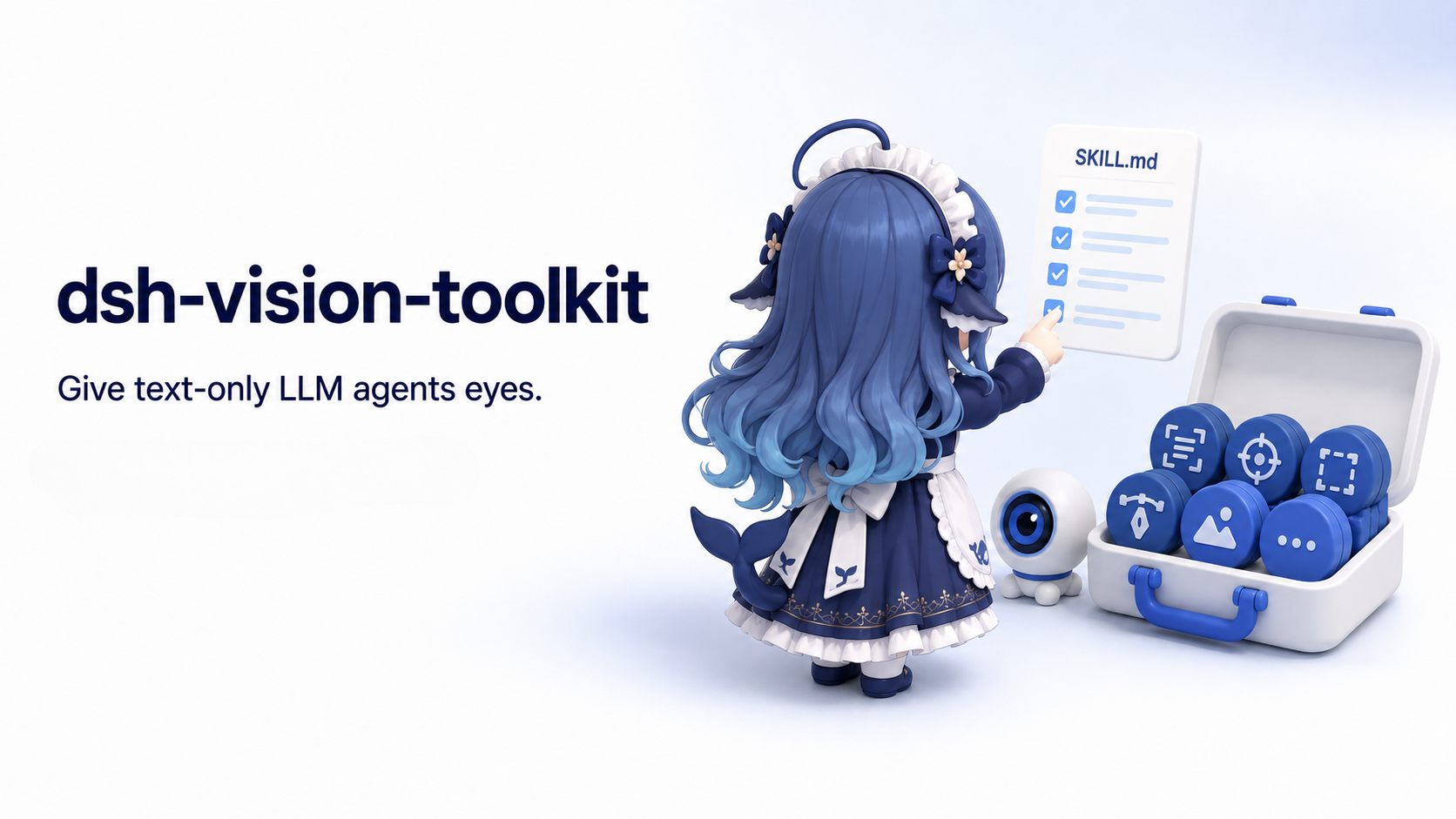
Give text-only models in DeepSeek Harness eyes, enabling image Q&A, long-screenshot OCR, UI restoration, and GUI visual tasks.