dsh-tap
Run the following command in DeepSeek Harness:
dsh plugin install taikaikaikai-pixel/dsh-tap
Paste the following prompt into your AI chat to install this plugin:
Run dsh plugin install taikaikaikai-pixel/dsh-tap in the DeepSeek Harness terminal, or clone directly from https://github.com/taikaikaikai-pixel/dsh-tap; restart the dsh process or Web UI after installation to activate the plugin.
About this plugin
Running DeepSeek, Zhipu GLM, Moonshot Kimi, MiniMax, and Tencent Hunyuan all inside DeepSeek Harness (dsh) typically means juggling several API keys, several dashboards, and several quota bills. dsh-tap routes everything through the Tencent CodeBuddy gateway as a single inference backend: one 127.0.0.1 streaming bridge becomes the sole credential entry point, so a single OAuth login or a small pool of API keys (with automatic round-robin and failure cooldown) unlocks the full model roster in one drop-down instead of one account per vendor.
The feature set covers the whole loop. On startup the plugin fetches the gateway catalog at /v3/config and merges it into the model selector—new models appear automatically, no code change required. Native dsh web_search and web_fetch tools are wired to the same gateway /agenttool endpoints for fresher index coverage with zero extra setup. An image_generate tool calls the Hunyuan image-generation backend and writes PNGs to the session workspace. The v0.8 OpenAI-compatible upstream registry lets you add Volcengine Ark, Alibaba Bailian, iFlow, Qwen Code, or any custom base URL; models land in the selector without a restart. v0.8.3 adds a TraeWork CN credit channel: a self-managed ECDSA P-256 device key runs the full OAuth device flow, a local translation bridge speaks both OpenAI Chat Completions and the proprietary Trae protocol over SSE, and the model catalog is read-only extracted from the local TRAE SOLO CN cache—no official IDE credentials are ever read or exfiltrated. The settings card is split into nine functional sections (models, providers, search, image-gen, bridge, quota, login, advanced); edits persist immediately and take effect on the very next request. Quota and usage panels poll every ten seconds, showing precise credit consumption, request counts, cache-hit ratios, and account-level balance signals.
dsh-tap is aimed at dsh users who want a coherent, single-credential workflow across Chinese LLM vendors: no more per-vendor environment variables, no more hand-maintaining a static model table that drifts from the live catalog, and no more separate logins for search, vision, and image generation. The plugin is dependency-free pure ESM—clone and run—and every secret stays under ~/.dsh/ on the user's own machine.
Use Cases
- Unify DeepSeek, GLM, Kimi, MiniMax, and Hunyuan calls in one dsh session with live model switching
- Leverage CodeBuddy gateway for web search, page fetch, and Hunyuan image generation
- Plug Volcengine Ark, Alibaba Bailian, and other OpenAI-compatible upstreams into a single model selector
Best For
- dsh users who want a unified workflow across Chinese LLM vendors
- AI developers comparing and switching models without per-vendor key management
- Teams looking to reuse CodeBuddy or TraeWork CN subscription credits to cut inference costs
Related Plugins
A unified suite combining hot runtime injection, task-aware thinking-mode routing, and a graded session protocol with red-team gates to sustain model diligence across long-horizon inference.
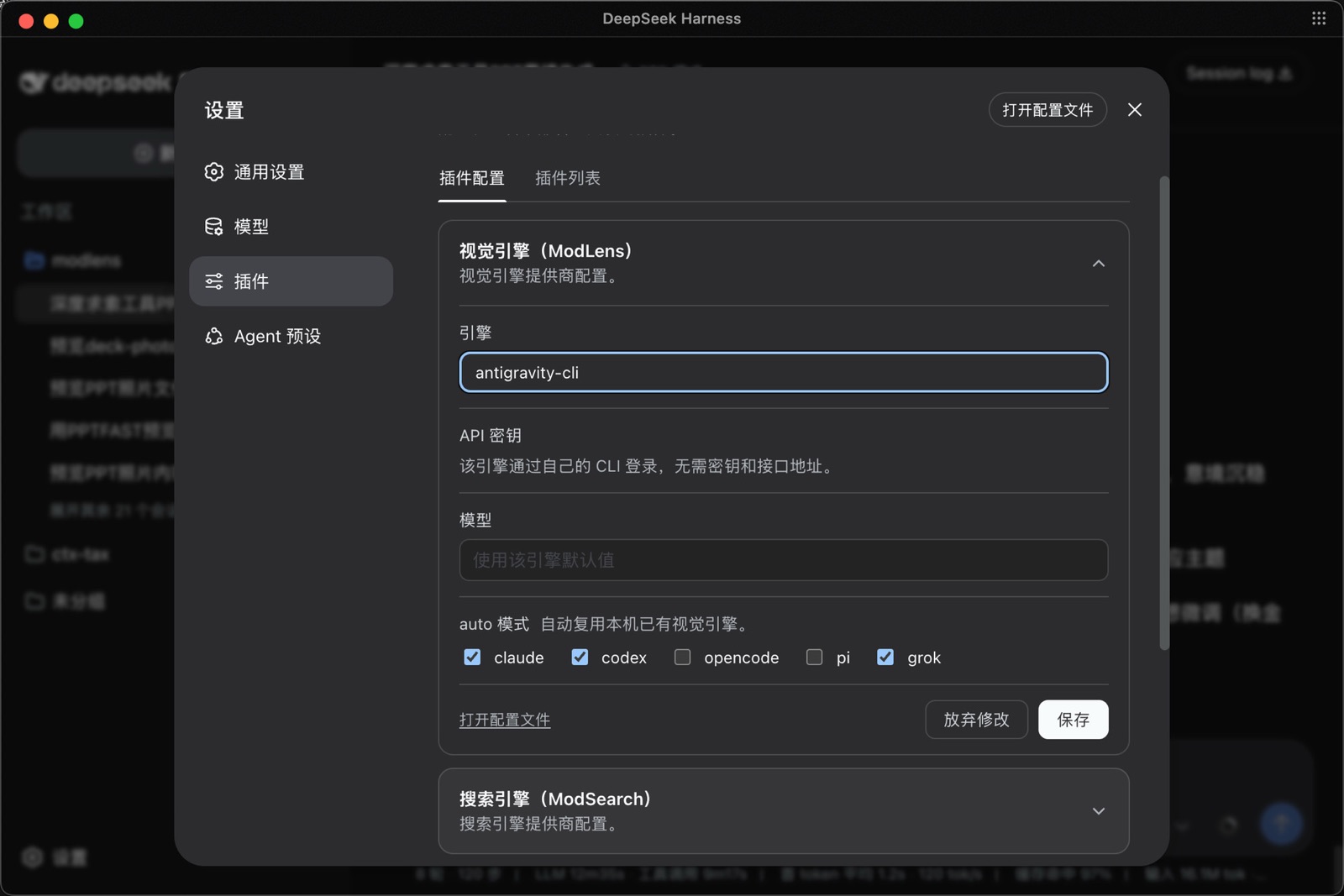
ModLens is a vision plugin for DeepSeek Harness that gives text-only models sight by reading images pasted directly into chat, with zero-config setup and multiple vision engines.
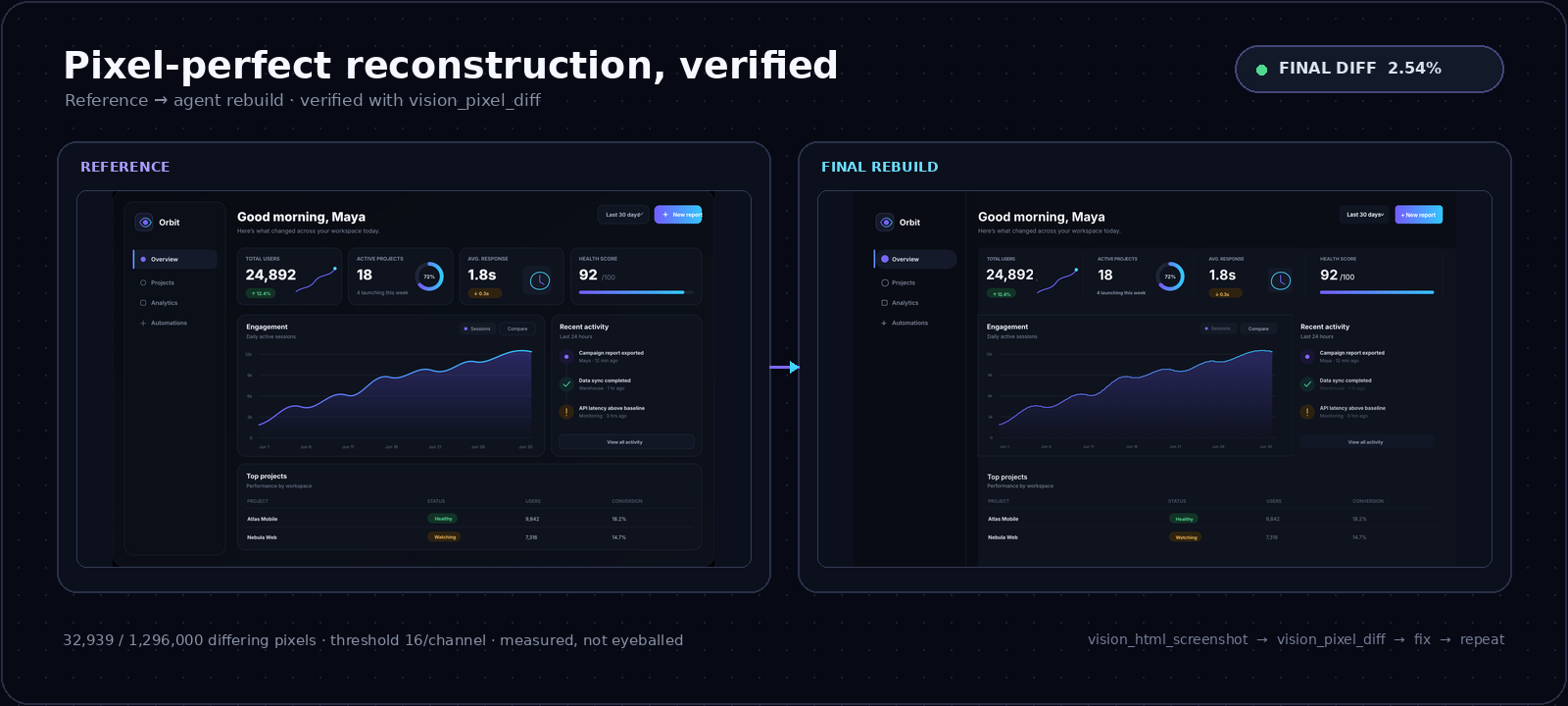
On-demand vision for text-only DeepSeek Harness agents: built-in free keyless vision chain and 14 vision tools, routing image turns as tool calls to vision models with pixel fidelity, no Python needed, one-command install.
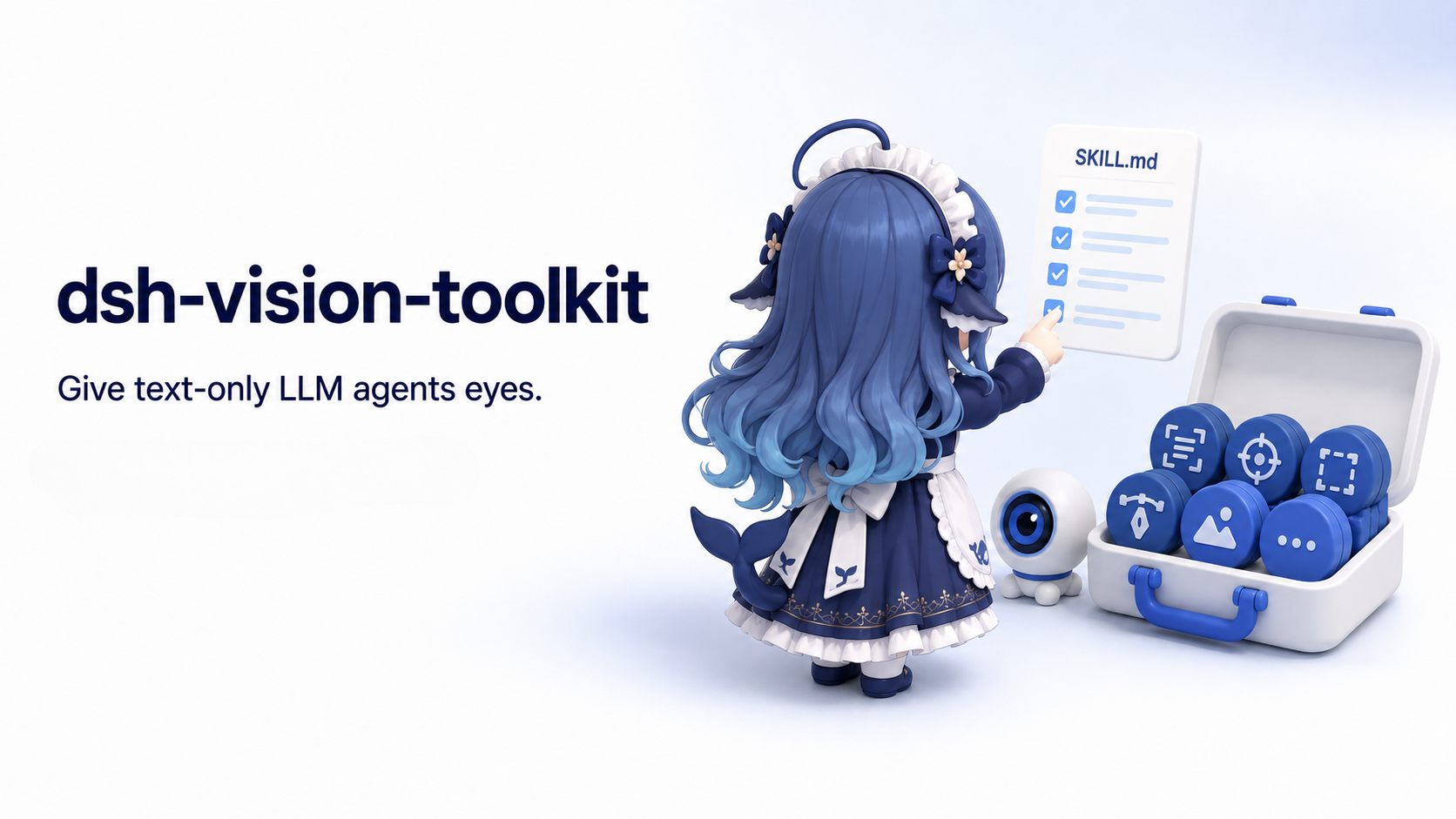
Give text-only models in DeepSeek Harness eyes, enabling image Q&A, long-screenshot OCR, UI restoration, and GUI visual tasks.