dsh-session-import
Run the following command in DeepSeek Harness:
dsh plugin install kinyokun/dsh-session-import
Paste the following prompt into your AI chat to install this plugin:
Install the plugin in DeepSeek Harness by running dsh plugin install kinyokun/dsh-session-import; source code is available at https://github.com/kinyokun/dsh-session-import.
About this plugin
Once a DSH conversation is exported, it is usually just a pile of JSONL files and scattered attachments. Copying them to a new machine does not let you keep chatting, and the sub-session hierarchy, model settings, and system prompts are all lost. dsh-session-import turns that into a single step: on the new-session page, click Import Conversation, pick a ZIP or raw JSONL, preview the validation report, choose a target workspace, and the entire session tree lands as one resumable conversation.
The plugin writes, validates, and closes sessions through the official DSH SessionHandle, preserving history messages, system prompts, model state, Agent presets, and parent-child relationships among sub-sessions. Image and file attachments are verified by SHA-256 before their references are restored; raw JSONL imports require the target DSH to already hold the attachment bytes. On any anomaly the plugin unmounts the root session and moves the created directory into a recovery area, and a finished import can be safely rolled back with a dry-run preview.
Ideal for developers and power users who migrate DSH conversations across machines, back up session history regularly, or want to pick up previous work seamlessly on a fresh DSH instance.
Use Cases
- Migrate local DSH conversations to a new machine or workspace
- Resume conversations seamlessly on a fresh DSH instance after export
- Periodically back up DSH session history for disaster recovery or audit
Best For
- Developers sharing DSH conversations across multiple machines
- Power users needing regular session history backups
- Users wanting to continue previous work on a fresh DSH instance
Related Plugins

Memory layer for coding agents that indexes local session history and auto-recalls relevant context before edits, commands, and failures, with no manual search needed.
Traceable, searchable cross-session memory for AI agents that turns conversation knowledge into a typed knowledge graph and recalls relevant subgraphs instead of replaying full history, natively integrated with DeepSeek Harness.
Gives DSH AI cross-session long-term memory, to-do and skill management, plus multi-session orchestration, external AI delegation, and an infinite canvas that grows with you.
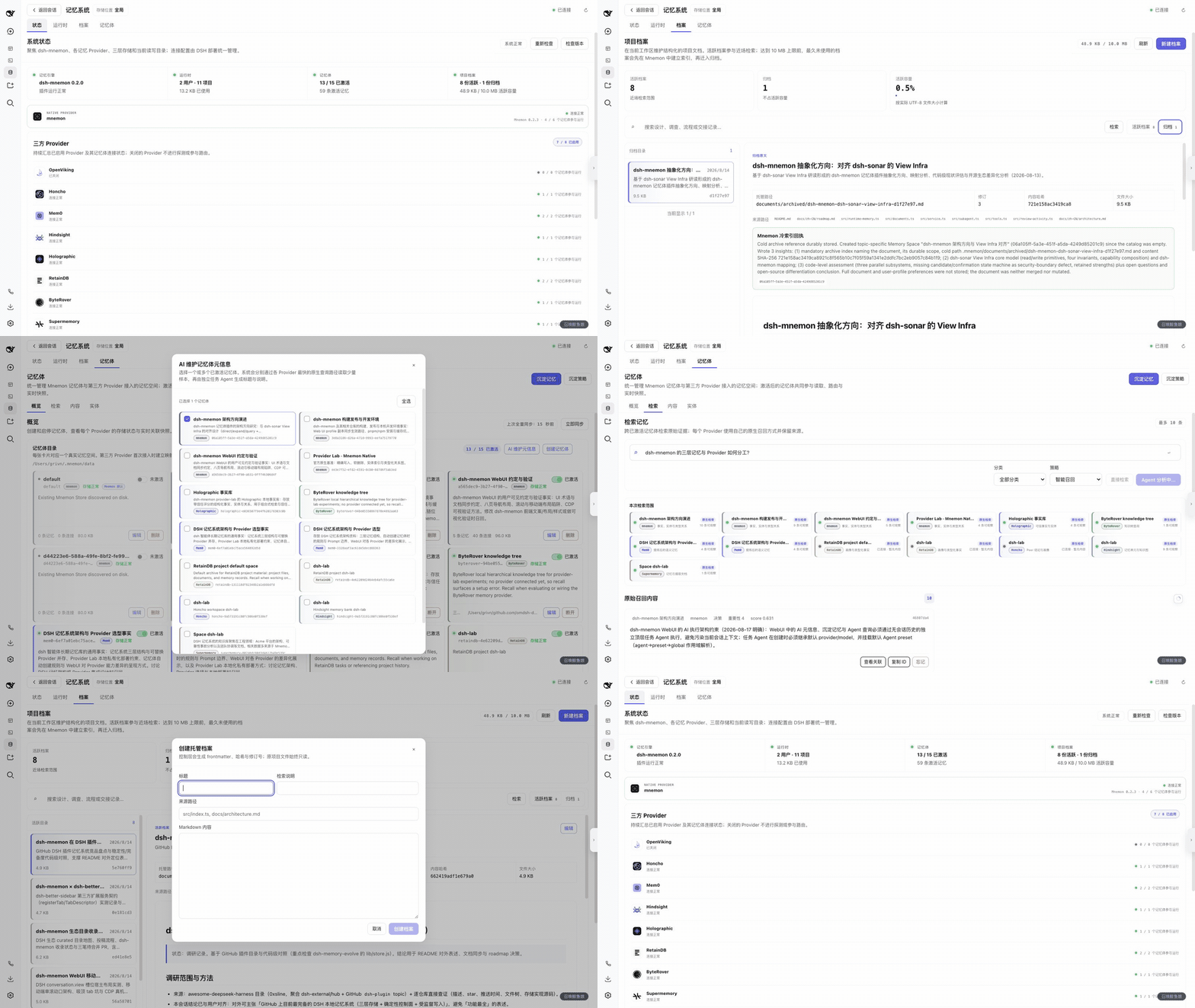
dsh-mnemon is a three-tier, pluggable, Agent-driven memory system for DeepSeek Harness, combining Runtime memory, Project Documents, and replaceable Memory Spaces with nine long-term providers.