dsh-qwen38-local-qol
Run the following command in DeepSeek Harness:
dsh plugin install Yunado/dsh-qwen38-local-qol
Paste the following prompt into your AI chat to install this plugin:
Run dsh plugin install Yunado/dsh-qwen38-local-qol in your terminal to install the plugin; the full source is available at https://github.com/Yunado/dsh-qwen38-local-qol — restart dsh web after installation to activate it.
About this plugin
Running Qwen3.8 locally inside DeepSeek Harness often hits friction that has nothing to do with the model itself. The real gaps live between the inference backend and the host: thinking budgets cannot be dispatched per-request by effort level, summarization checkpoints get silently clipped by a token cap, and there is no single live configuration surface to tune any of it. dsh-qwen38-local-qol plugs exactly those gaps without a single core patch or pi-ai patchfile — it works entirely at the configuration layer across all three OpenAI-compatible /v1 backends: llama.cpp llama-server, NInfer, and TabbyAPI (ExLlamaV3).
Three capabilities stand out. First, per-request thinking budgets: the llama.cpp line ships reasoning_effort and reasoning_budget_tokens on every request, overriding the server-side --reasoning-budget flag; the NInfer line reads its single budget from a startup flag (shown as a read-only note in the settings tab), while the TabbyAPI line accepts both natively and dispatches per-effort budgets on each call. Second, a hardened compaction backend: the summarizer prefill is trimmed before the call (recent reasoning only, images downgraded to text placeholders, tool results capped by character limit), the compaction request runs with thinking off at the line's full output cap, and checkpoints stop getting clipped mid-generation. Third, a dedicated Qwen3.8 Local tab in DSH settings where connection, window, budget, and trim knobs all apply live and persist to settings.yaml with hot-reload; a color-coded status dot tells you at a glance whether qwen38 is the active default preset.
This plugin is built for developers who self-host Qwen3.8 (including Qwen3.8-Flash-Next at the config level) behind llama-server, NInfer, or TabbyAPI and want DSH to feel turn-key. If you are already running one of those backends locally and want full thinking-budget control plus compaction protection without hand-rolling environment variables or patching the core, this is the drop-in layer that makes it work.
Use Cases
- Self-hosting Qwen3.8 via llama-server with per-effort thinking depth control
- Dispatching per-request thinking budgets through NInfer or TabbyAPI backends in DSH
- Summarization checkpoints getting clipped by a token cap and needing a hardened compaction path
Best For
- Developers self-hosting Qwen3.8 who want a turn-key DSH experience
- Local inference users on llama.cpp, NInfer, or TabbyAPI backends
- Anyone who wants thinking-budget and window tuning without hand-rolling env vars or core patches
Related Plugins
A unified suite combining hot runtime injection, task-aware thinking-mode routing, and a graded session protocol with red-team gates to sustain model diligence across long-horizon inference.
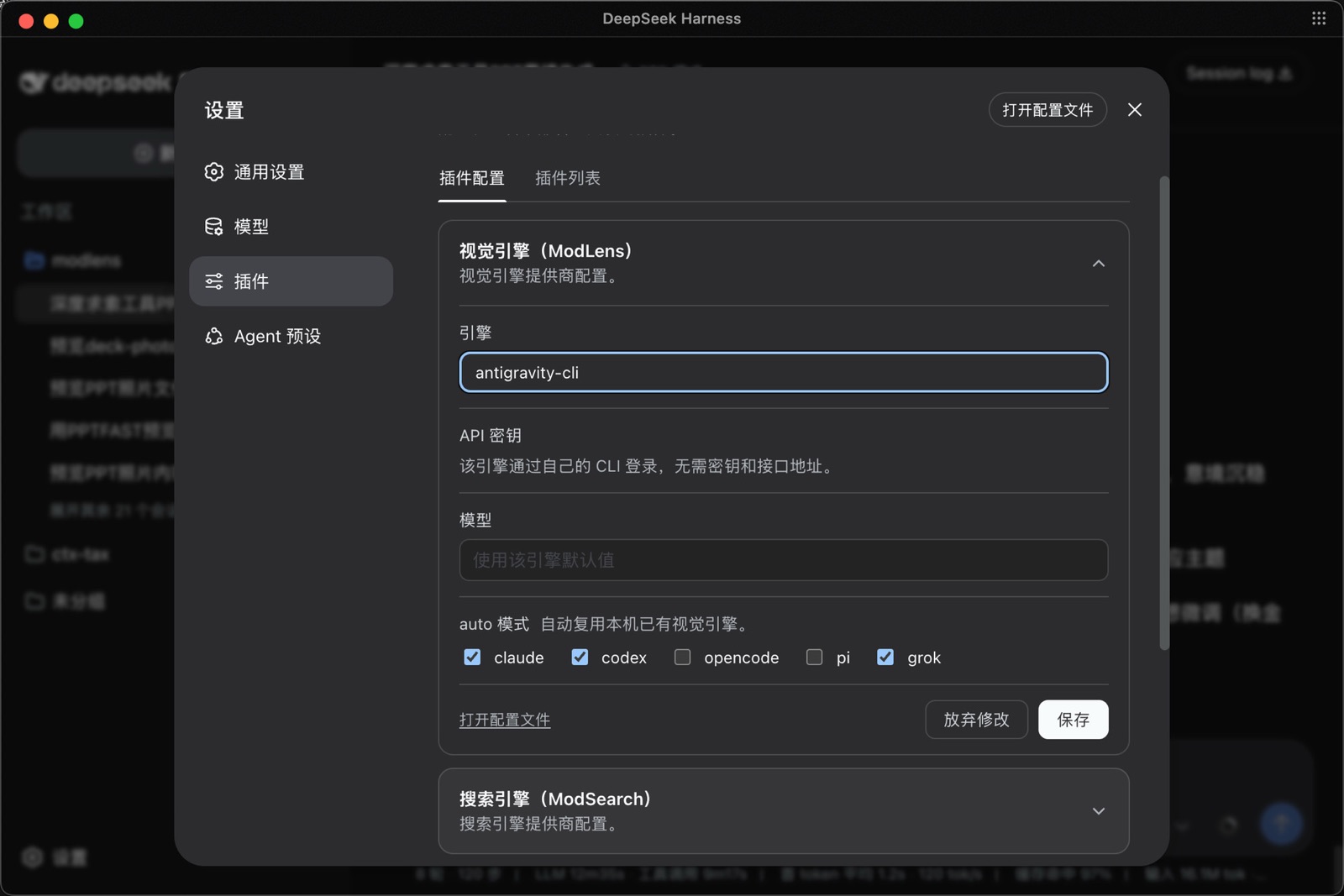
ModLens is a vision plugin for DeepSeek Harness that gives text-only models sight by reading images pasted directly into chat, with zero-config setup and multiple vision engines.
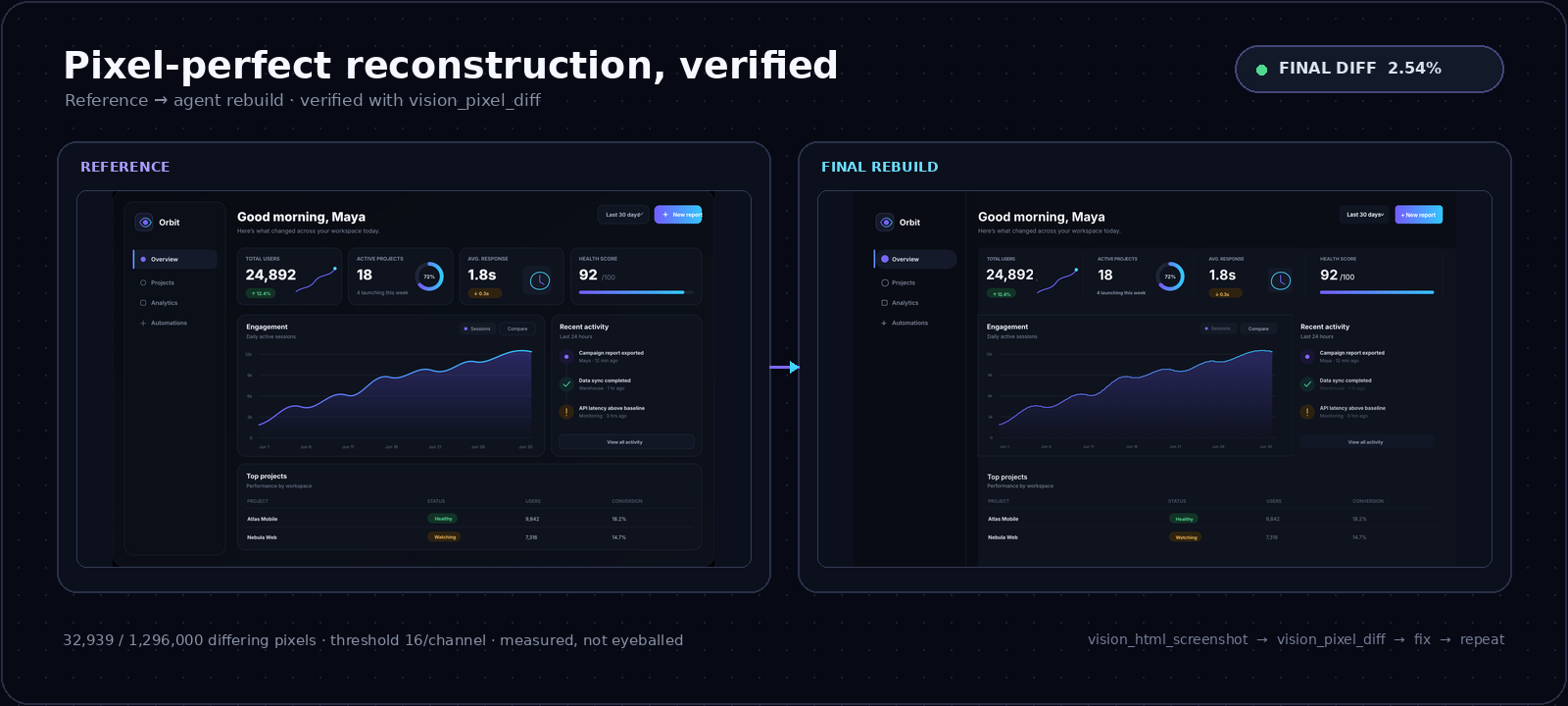
On-demand vision for text-only DeepSeek Harness agents: built-in free keyless vision chain and 14 vision tools, routing image turns as tool calls to vision models with pixel fidelity, no Python needed, one-command install.
Give text-only models in DeepSeek Harness eyes, enabling image Q&A, long-screenshot OCR, UI restoration, and GUI visual tasks.