dsh-hypatia
Run the following command in DeepSeek Harness:
dsh plugin install tkliuxing/dsh-hypatia
Paste the following prompt into your AI chat to install this plugin:
Install this plugin in DeepSeek Harness by running dsh plugin install tkliuxing/dsh-hypatia; make sure the hypatia binary is on your PATH and Node is 22.5 or later. The source code is available at https://github.com/tkliuxing/dsh-hypatia.
About this plugin
Building a project over several weeks in DeepSeek Harness, the most draining part is rarely the code itself. It is re-explaining project conventions, architecture decisions, and hard-won lessons every single turn. The old TRIGGER mode injected protocol text into the durable transcript and asked the model to shell out via Bash to drive hypatia, which polluted the log, left writes unverified, could lose the final assistant reply, and repurposed danger-full-access as memory consent. dsh-hypatia moves the entire pipeline into host code: the model only proposes what is worth remembering, while logging, database orchestration, permissions, retries, and deletion are all handled by the plugin control plane. Bash is no longer required.
Three promises anchor the day-to-day experience. First, same-request recall pulls relevant project memories into the turn that needs them within a fixed time and size budget, failing open on deadline rather than blocking the conversation. Second, verified writes: every record is read back and compared before it counts as stored, so saved means saved. Third, two-stage forget: you see the exact entries slated for deletion before anything is removed, and cleanup status is reported honestly instead of optimistically. Project scope is derived from the canonical workspace path and enforced by a host-side ledger, not by hoping content tags happen to align. Six memory_* tools cover remember, search, forget preview and confirm, status, and reconciliation of unverified items, so the routine flow requires zero manual CLI calls.
The plugin is equally honest about its boundaries: it serializes every hypatia invocation to avoid DuckDB exclusive-lock conflicts, dead-letters a write after three exponential-backoff retries and surfaces it in memory_status, and leaves vector recall off by default pending benchmarking. These trade-offs make dsh-hypatia a strong fit for developers and small teams running medium- to long-term projects in DeepSeek Harness who want reliable project memory without standing up extra infrastructure. Put hypatia on your PATH, restart once, and your project starts remembering quietly in the background.
Use Cases
- Iterating on the same project over weeks without re-exalining architecture decisions each turn
- Storing project-level rules such as no eval and having them auto-recalled in relevant later conversations
- Using full memory capabilities in read-only or workspace-write sessions without any Bash permission
Best For
- Solo developers running medium- to long-term projects in DeepSeek Harness
- Small teams wanting reliable project memory without standing up extra infrastructure
- Users who demand read-back verified writes and preview-confirmed deletions over optimistic assumptions
Related Plugins

Memory layer for coding agents that indexes local session history and auto-recalls relevant context before edits, commands, and failures, with no manual search needed.
Traceable, searchable cross-session memory for AI agents that turns conversation knowledge into a typed knowledge graph and recalls relevant subgraphs instead of replaying full history, natively integrated with DeepSeek Harness.
Gives DSH AI cross-session long-term memory, to-do and skill management, plus multi-session orchestration, external AI delegation, and an infinite canvas that grows with you.
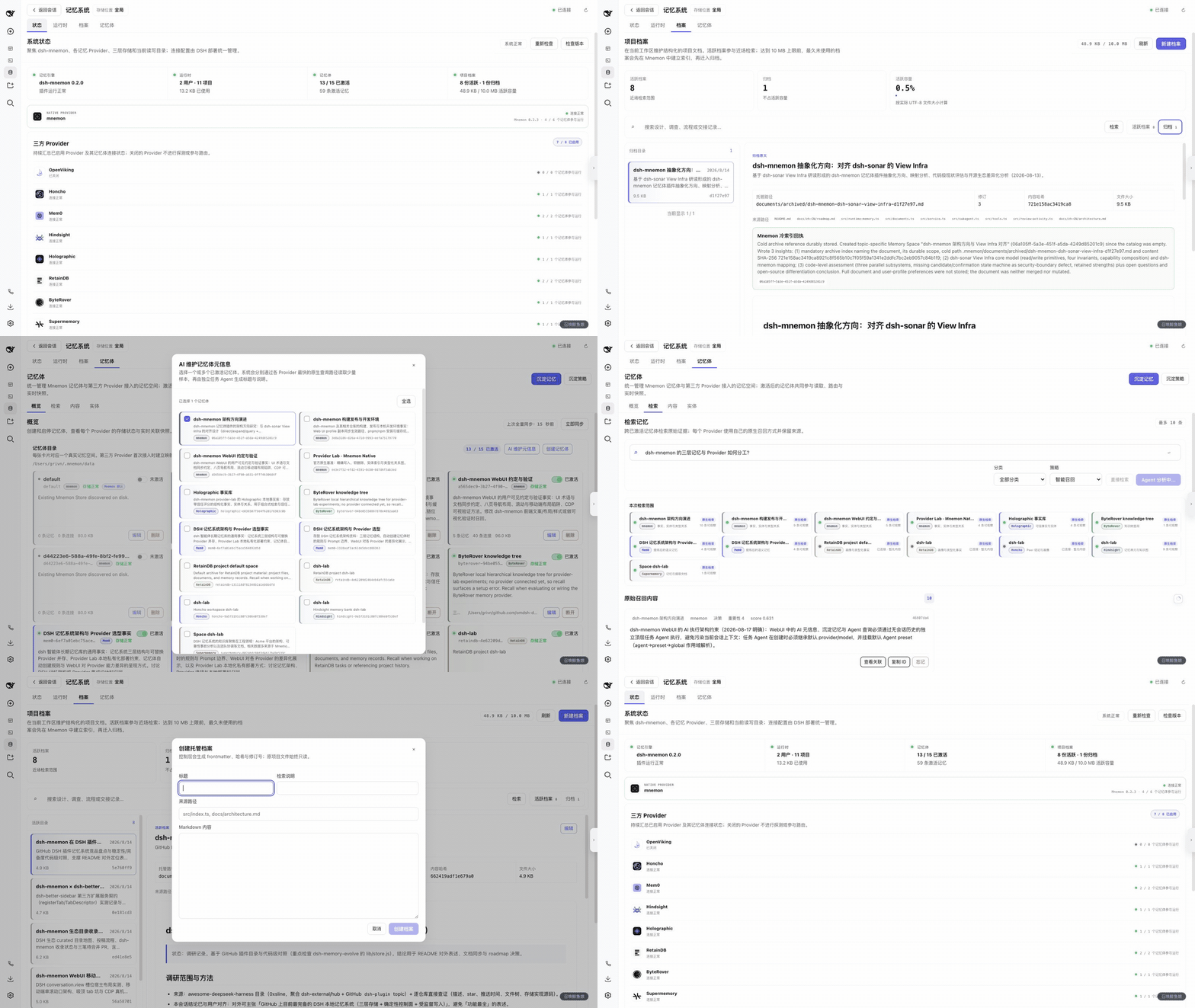
dsh-mnemon is a three-tier, pluggable, Agent-driven memory system for DeepSeek Harness, combining Runtime memory, Project Documents, and replaceable Memory Spaces with nine long-term providers.