dsh-sleev
Run the following command in DeepSeek Harness:
dsh plugin install xarleyn/dsh-sleev
Paste the following prompt into your AI chat to install this plugin:
Run dsh plugin install xarleyn/dsh-sleev in your terminal to install the plugin; the source is available at https://github.com/xarleyn/dsh-sleev .
About this plugin
After wiring up Sleev context-optimization routes for your model-inference provider, a common blind spot remains: the stream works, yet you have no lightweight way to see how many effective input tokens each call actually consumed or whether it was an agent step, a compaction pass, or a one-shot utility call. dsh-sleev fills that gap without touching the pipeline—it does not rewrite prompts, perform compaction, or proxy traffic; it simply records call metadata at the llm/stream boundary for matching routes.
Core capabilities include matching routes by exact alias or name prefix (default: sleev-), classifying each call as agent, compaction, session-title, or one-shot, yielding every stream chunk unchanged, recording provider usage and effective input token volume, retaining a bounded secret-free in-memory history, and emitting one structured completion record per observed call. All observer settings—matching rules, retention limit, and log level—are editable in the Settings > Plugins page and apply to the next matching call without a Host restart.
It suits DeepSeek Harness users who have already configured Sleev routes and want to quantify whether context compression actually reduced token overhead, as well as small teams that need to attribute agent, compaction, and one-shot call costs separately. It makes no token-savings promise; it simply makes the numbers visible.
Use Cases
- Observe effective input token cost per call after configuring Sleev routes
- Attribute token costs by classifying agent, compaction, and one-shot calls
- Tune observer matching prefixes and log levels in the Web UI with instant effect
Best For
- DeepSeek Harness users with Sleev routes who want to quantify compression impact
- Small teams that need per-call-type token cost attribution
- Developers seeking lightweight telemetry without touching the inference pipeline
Related Plugins
A unified suite combining hot runtime injection, task-aware thinking-mode routing, and a graded session protocol with red-team gates to sustain model diligence across long-horizon inference.
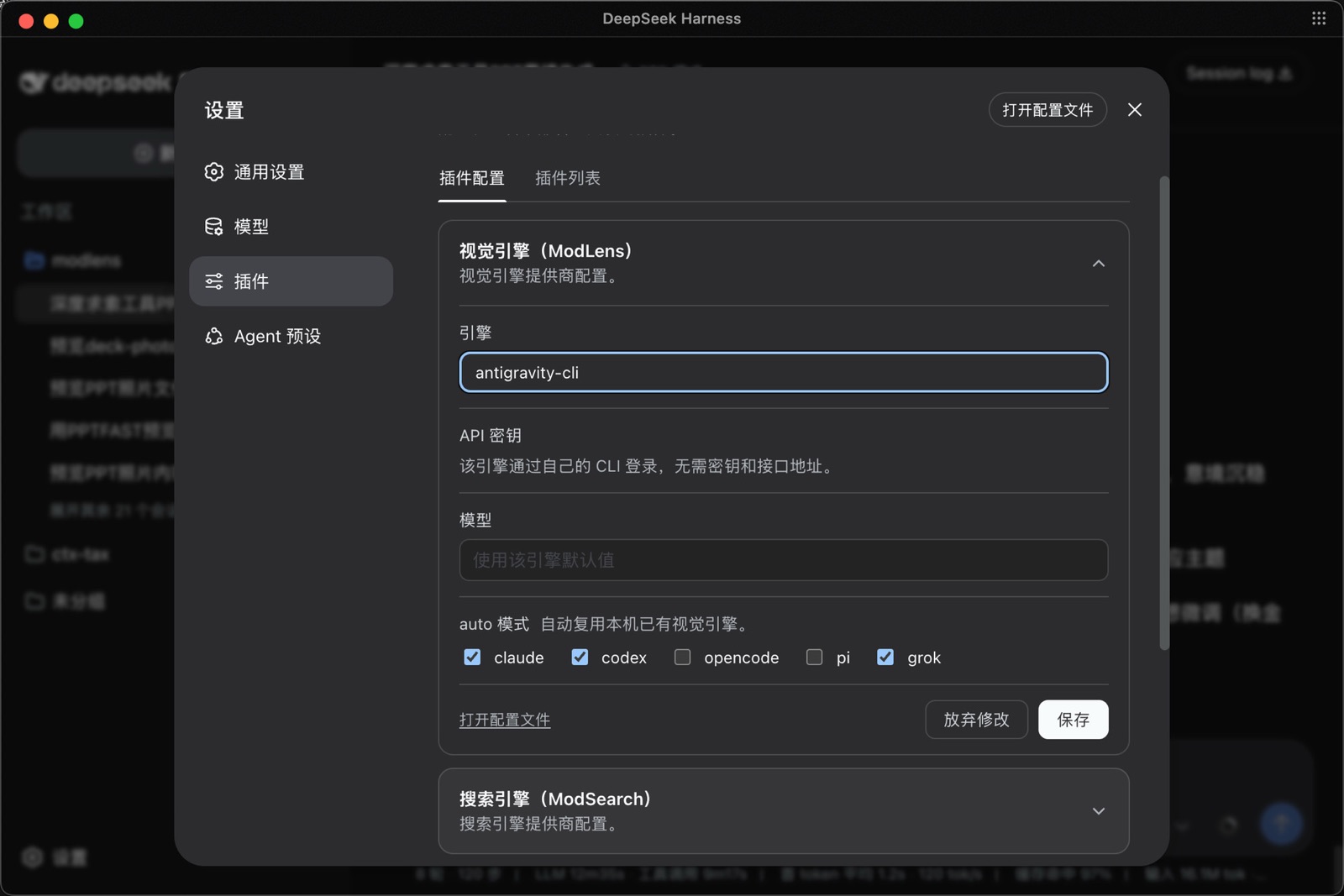
ModLens is a vision plugin for DeepSeek Harness that gives text-only models sight by reading images pasted directly into chat, with zero-config setup and multiple vision engines.
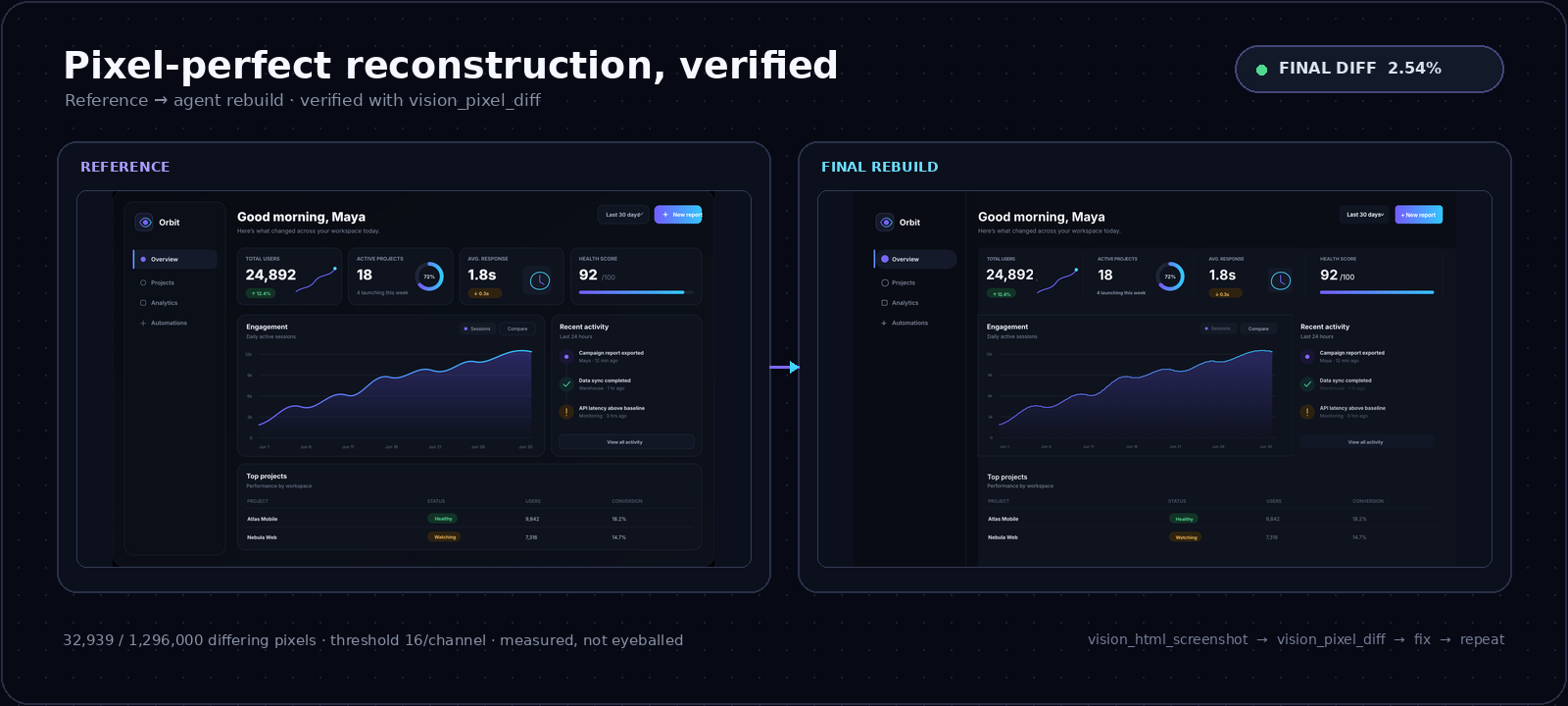
On-demand vision for text-only DeepSeek Harness agents: built-in free keyless vision chain and 14 vision tools, routing image turns as tool calls to vision models with pixel fidelity, no Python needed, one-command install.

Give text-only models in DeepSeek Harness eyes, enabling image Q&A, long-screenshot OCR, UI restoration, and GUI visual tasks.