dsh-memory-lite
Run the following command in DeepSeek Harness:
dsh plugin install pacoyi/dsh-memory-lite
Paste the following prompt into your AI chat to install this plugin:
Install the plugin in DeepSeek Harness from https://github.com/pacoyi/dsh-memory-lite by running dsh plugin install pacoyi/dsh-memory-lite; restart the profile and the memory tool is live.
About this plugin
Every DSH session starts with a blank slate: the transcript sits on disk for audit, but the model never sees it again. Project preferences, tech-stack decisions, and deployment constraints you have stated dozens of times vanish the moment you close a window. dsh-memory-lite bridges exactly that gap, giving the agent an explicit, durable memory layer that survives restarts, upgrades, and profile switches.
The core is a minimal four-operation tool: save, recall, list, and forget. All data lives in a single human-readable JSON file with zero runtime dependencies, editable and back-up-able by hand. Scope isolation keeps one project from reading another entries; every durable write passes a host-approval gate; and a two-phase audit log with startup reconciliation turns a crash window into a named, detectable record instead of a silent loss.
The Settings card adds a three-step import wizard (migrate curated notes from CLAUDE.md, AGENTS.md, or pasted text, with rule-like lines unchecked by default) and an export panel (render live entries as a plain markdown list, paste-ready for another agent, with idempotent round-trips via content digests). Built for DSH users who want persistent project context without a database, an index, or any external service.
Use Cases
- Persist project decisions and preferences across restarts and profile switches
- Batch-migrate curated notes from CLAUDE.md, AGENTS.md, or pasted text
- Isolate memory entries per project when developing multiple codebases in parallel
Best For
- DSH users who want persistent agent context without a database or external service
- Developers juggling multiple projects and profiles who need memory isolation
- Users migrating from other coding agents who already have curated memory files
Related Plugins

Memory layer for coding agents that indexes local session history and auto-recalls relevant context before edits, commands, and failures, with no manual search needed.
Traceable, searchable cross-session memory for AI agents that turns conversation knowledge into a typed knowledge graph and recalls relevant subgraphs instead of replaying full history, natively integrated with DeepSeek Harness.
Gives DSH AI cross-session long-term memory, to-do and skill management, plus multi-session orchestration, external AI delegation, and an infinite canvas that grows with you.
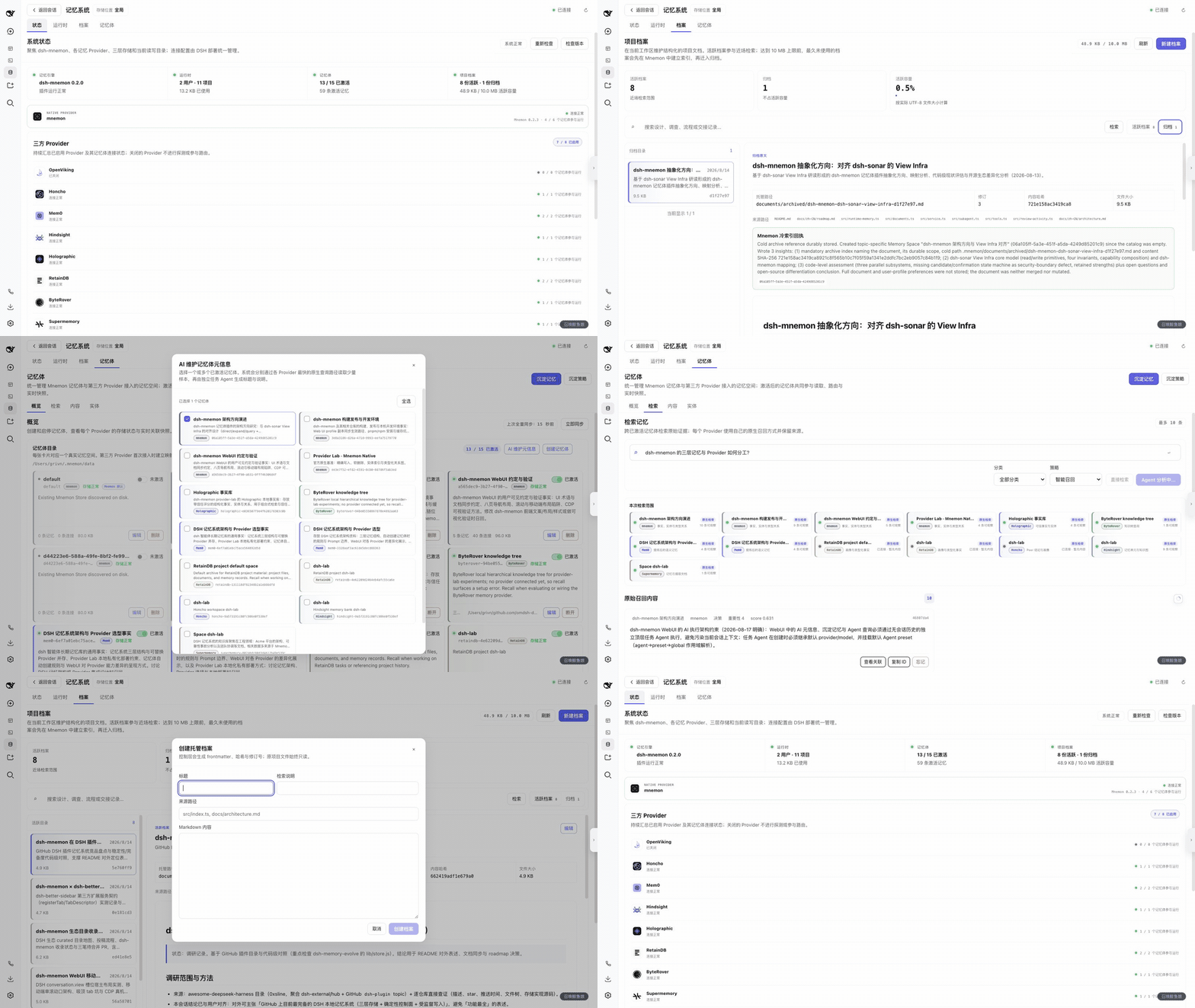
dsh-mnemon is a three-tier, pluggable, Agent-driven memory system for DeepSeek Harness, combining Runtime memory, Project Documents, and replaceable Memory Spaces with nine long-term providers.