xby-asr-f
Run the following command in DeepSeek Harness:
dsh plugin install xby-skill/xby-asr-f
Paste the following prompt into your AI chat to install this plugin:
Run dsh plugin install xby-skill/xby-asr-f in the DeepSeek Harness terminal; the source code is hosted at https://github.com/xby-skill/xby-asr-f, and the plugin becomes available for dialect speech recognition immediately after installation.
About this plugin
Most speech-to-text engines are tuned for standard Mandarin and degrade sharply—or fail entirely—when fed Cantonese, Sichuan-Chongqing, Northeastern, Minnan, or other regional dialects. xby-asr-f closes that gap by wiring the Fire-Red ASR CTC model (provided by Xiaoben Yang) directly into the DeepSeek Harness pipeline, so dialect-aware transcription happens inside your existing conversation loop without juggling external APIs.
The plugin offers three flexible input paths: an audio URL, a Base64-encoded payload, or a local file path, covering everything from streamed media to recorded files on disk. Your API key is set once in chat and persisted automatically, surviving session restarts with no re-entry. Once transcription completes, the text result can be chained straight into follow-up prompts for translation, summarization, or downstream NLP tasks—all within the same DSH thread.
It is a good fit for NLP developers working with multi-accent voice data, teams building dialect-aware chatbots or voice assistants, and researchers whose work involves regional language varieties. Shipped under the MIT license, it can be freely integrated into both commercial and open-source projects.
Use Cases
- Transcribing Cantonese, Sichuan, or Northeastern dialect recordings directly in chat
- Batch-converting multi-accent audio and piping results into translation or summarization
- Powering dialect-aware customer-service bots and voice assistants with real-time ASR
Best For
- NLP developers working with multi-accent voice data
- Engineering teams building dialect-aware chatbots or voice assistants
- Researchers studying regional languages and accent variation
Related Plugins
A unified suite combining hot runtime injection, task-aware thinking-mode routing, and a graded session protocol with red-team gates to sustain model diligence across long-horizon inference.
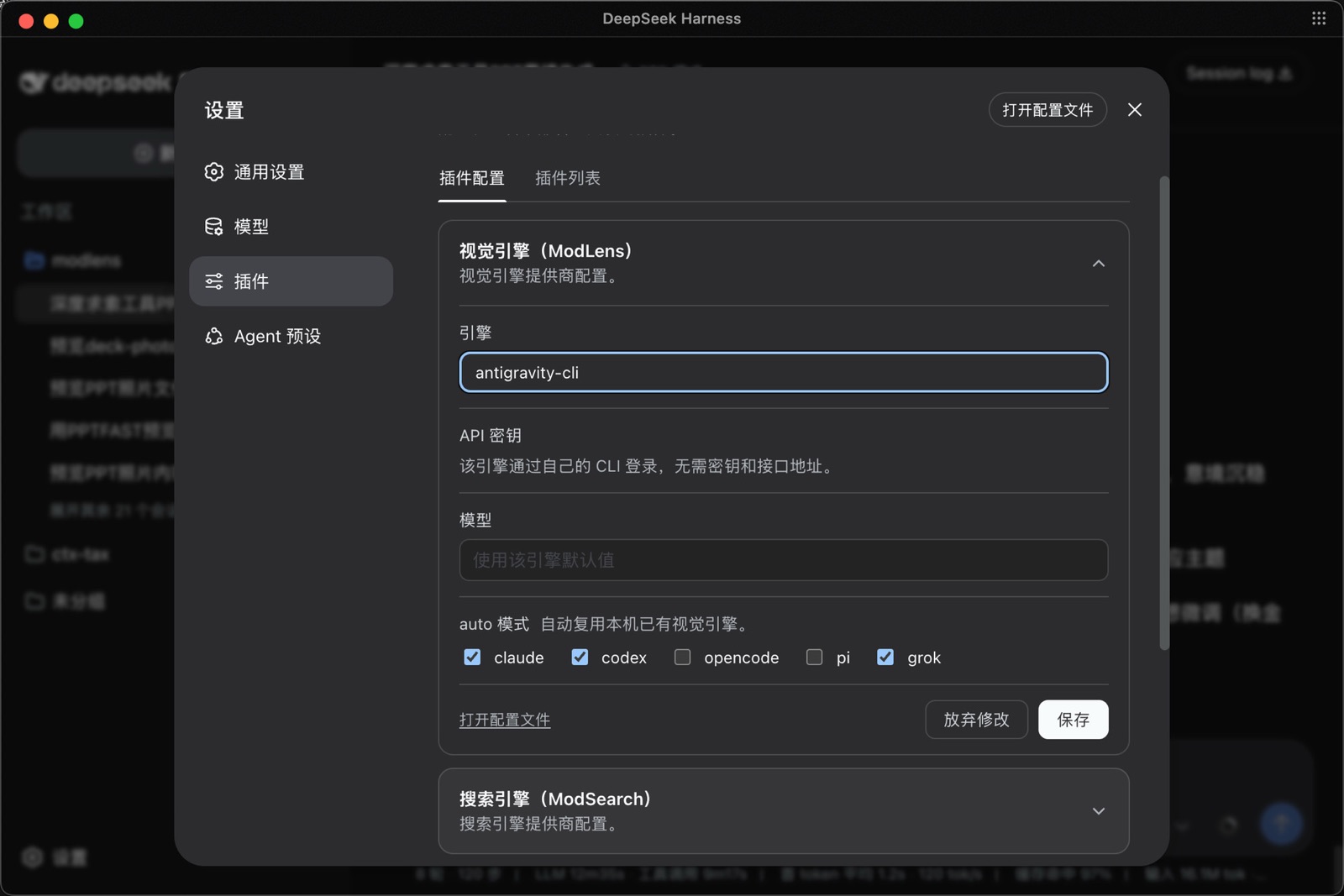
ModLens is a vision plugin for DeepSeek Harness that gives text-only models sight by reading images pasted directly into chat, with zero-config setup and multiple vision engines.
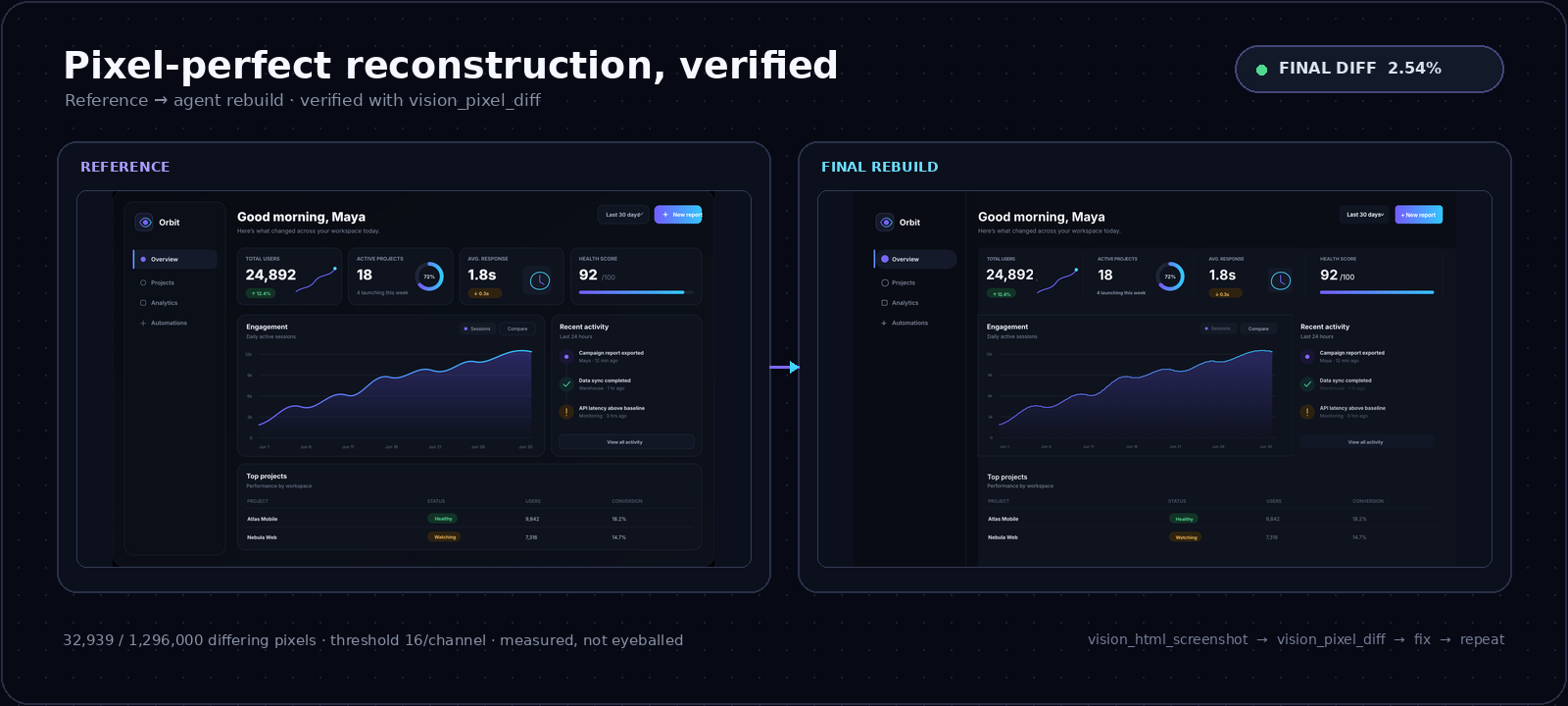
On-demand vision for text-only DeepSeek Harness agents: built-in free keyless vision chain and 14 vision tools, routing image turns as tool calls to vision models with pixel fidelity, no Python needed, one-command install.

Give text-only models in DeepSeek Harness eyes, enabling image Q&A, long-screenshot OCR, UI restoration, and GUI visual tasks.