xby-mm1-simulation
Run the following command in DeepSeek Harness:
dsh plugin install xby-skill/xby-mm1-simulation
Paste the following prompt into your AI chat to install this plugin:
Run dsh plugin install xby-skill/xby-mm1-simulation in the DeepSeek Harness terminal to install this plugin. Source: https://github.com/xby-skill/xby-mm1-simulation
About this plugin
Queuing is an unavoidable bottleneck in customer service stacks, API gateways, and database connection pools. The usual workflow either derives steady-state formulas by hand or wires up a SimPy script from scratch, and both paths tend to trip over stability checks, random seeds, or the gap between theory and simulation. xby-mm1-simulation collapses that entire pipeline into a set of conversational tool calls, so a single chat session can take you from parameter validation to a graded accuracy report.
The plugin exposes five tightly-integrated capabilities: validate_config verifies that the arrival-to-service ratio satisfies the stability condition and reports utilization; calculate_metrics computes exact steady-state figures (queue length, waiting time, system time) via closed-form equations; run_simulation drives a reproducible discrete-event model through SimPy; compare_results lines up simulated values against their theoretical counterparts and returns per-metric error, mean absolute error, maximum error, and an accuracy grade; recommend_parameters works in reverse, suggesting arrival rate, service rate, and simulation duration that hit a target utilization level so you stop guessing.
It is aimed at system architects who need a quick sanity check before committing to a capacity plan, at SREs trying to determine whether latency stems from arrival bursts or insufficient service capacity, and at students studying queuing theory who want an instant, script-free sandbox to dial parameters and watch the curves respond without spinning up a separate Python project.
Use Cases
- Validate queuing assumptions before scaling out a service
- Determine whether latency stems from arrival bursts or insufficient throughput
- Iteratively adjust parameters while studying queuing theory in a course
Best For
- System architects who need a quick check on capacity-planning assumptions
- SREs debugging latency root causes in production services
- Students and researchers learning queuing theory and discrete-event simulation
Related Plugins
A unified suite combining hot runtime injection, task-aware thinking-mode routing, and a graded session protocol with red-team gates to sustain model diligence across long-horizon inference.
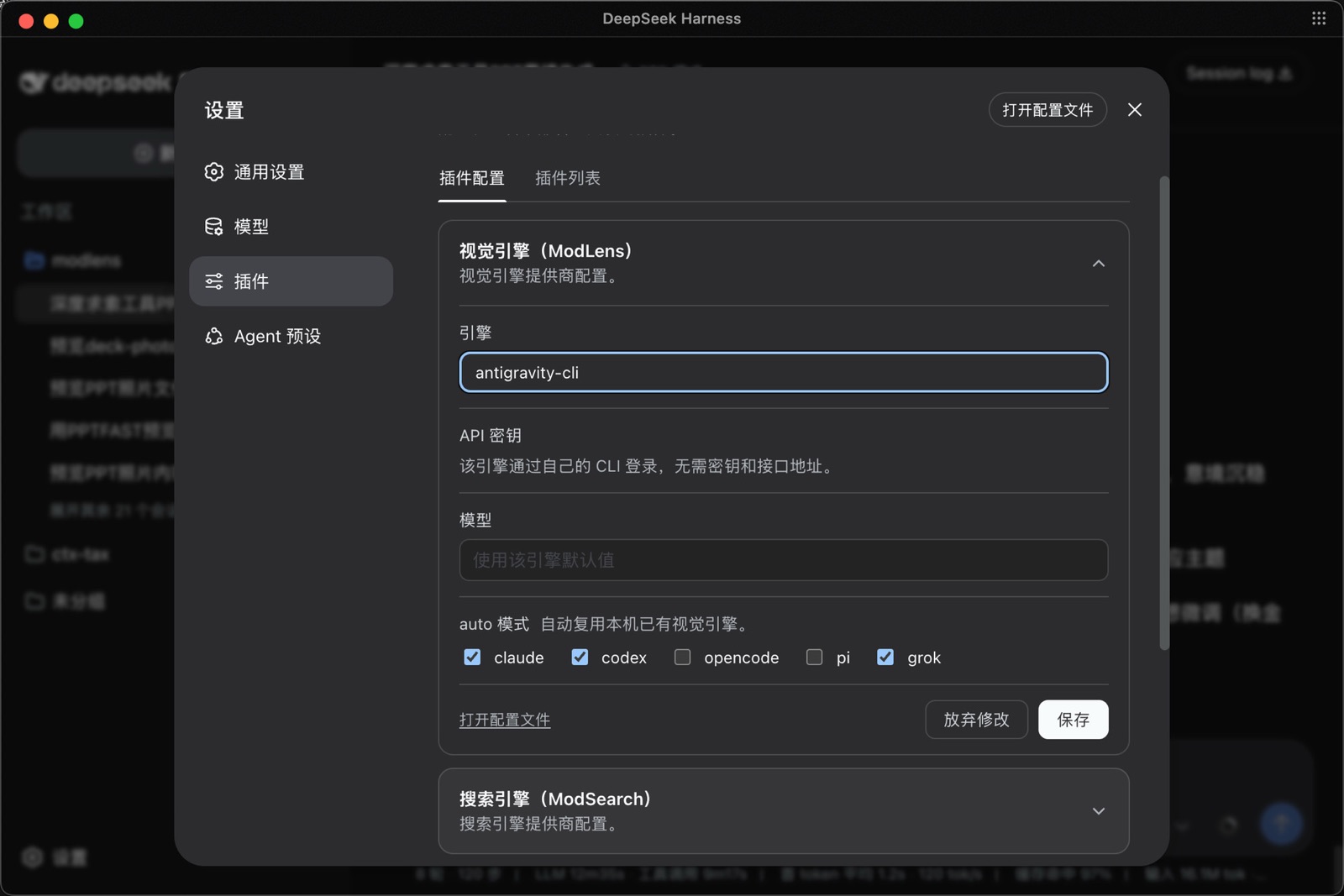
ModLens is a vision plugin for DeepSeek Harness that gives text-only models sight by reading images pasted directly into chat, with zero-config setup and multiple vision engines.
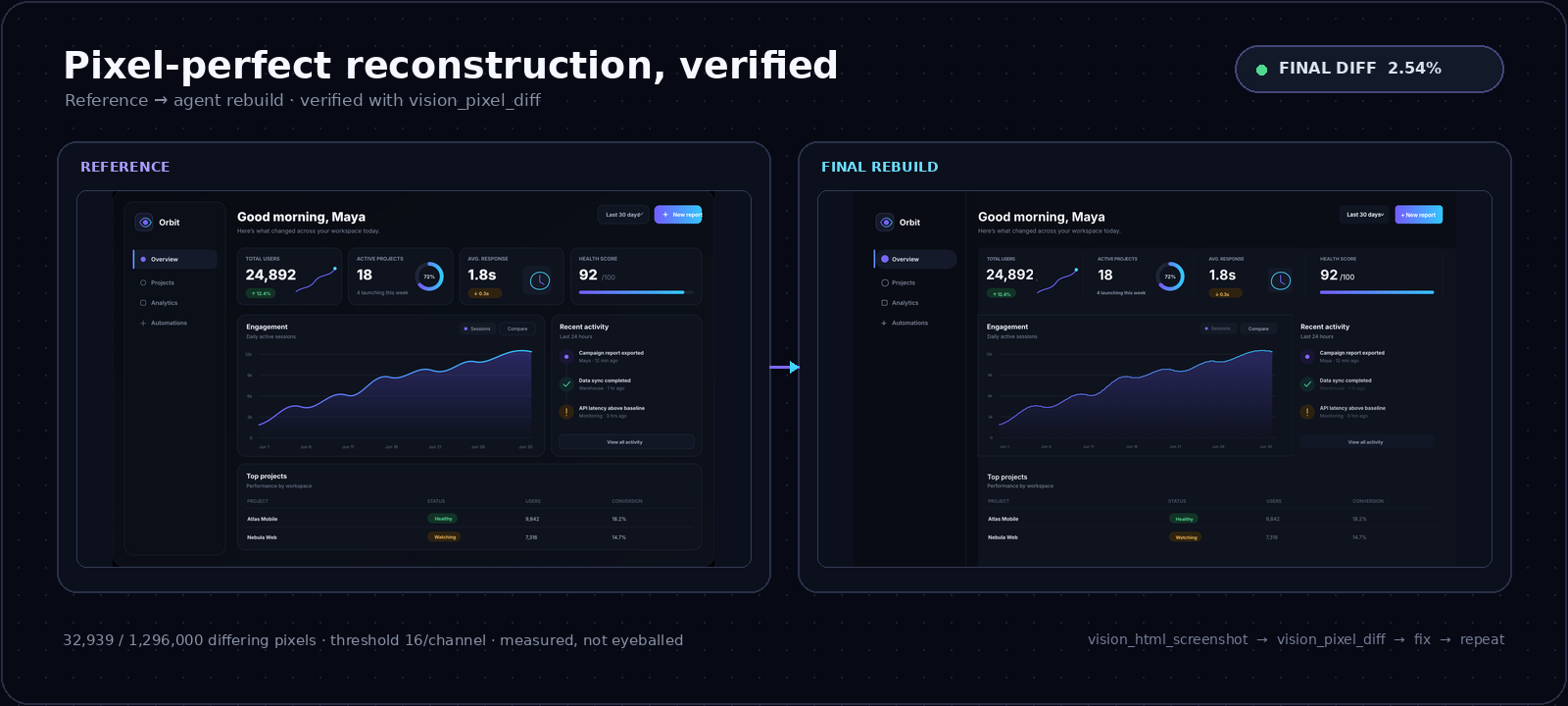
On-demand vision for text-only DeepSeek Harness agents: built-in free keyless vision chain and 14 vision tools, routing image turns as tool calls to vision models with pixel fidelity, no Python needed, one-command install.

Give text-only models in DeepSeek Harness eyes, enabling image Q&A, long-screenshot OCR, UI restoration, and GUI visual tasks.