dsh-local-vector-memory
Run the following command in DeepSeek Harness:
dsh plugin install liangxiaobing520/dsh-local-vector-memory
Paste the following prompt into your AI chat to install this plugin:
Install this local vector memory plugin in DeepSeek Harness by running dsh plugin install liangxiaobing520/dsh-local-vector-memory, source code at https://github.com/liangxiaobing520/dsh-local-vector-memory
About this plugin
DeepSeek Harness users often restate preferences, conventions, or caveats across sessions, only to lose them once the conversation ends. dsh-local-vector-memory puts long-term memory on your own machine: local embeddings via any OpenAI-compatible service, stored in a single SQLite file—no external vector database required.
Memories are written through three paths: manual memory_add, millisecond-level auto-capture when a user message hits recall cues, and session-flush extraction by DeepSeek v4-pro from the full conversation. Before every agent inference, the top-K relevant memories are injected into context with in-session LRU dedup. On write, a conflict check (similarity ≥ 0.86) nudges you toward memory_update instead of adding a duplicate. Deletion defaults to a soft-delete trash bin with one-click restore, and online backups use SQLite VACUUM INTO for a consistent snapshot, keeping the latest five by default.
The entire data path stays local: vector store, embedding inference, and keyword fallback all run on your machine. Only the end-of-session extraction call touches the DeepSeek official API. This plugin suits users who want full ownership of conversational memory, already run a local embedding service (e.g. Qwen3-Embedding 0.6B + llama-server), and work with the DSH web profile.
Use Cases
- Auto-capture preferences and conventions across multi-turn conversations and recall them later
- Extract key points from the full conversation at session end to reduce repetition
- Keep memory local with SQLite; fall back to keyword matching when embedding is down
Best For
- DSH users who already run a local embedding service (e.g. Qwen3-Embedding + llama-server)
- Developers who want full ownership of conversational memory on their own machine
- DSH web-profile users who prioritize data sovereignty and local-first workflows
Related Plugins

Memory layer for coding agents that indexes local session history and auto-recalls relevant context before edits, commands, and failures, with no manual search needed.
Traceable, searchable cross-session memory for AI agents that turns conversation knowledge into a typed knowledge graph and recalls relevant subgraphs instead of replaying full history, natively integrated with DeepSeek Harness.
Gives DSH AI cross-session long-term memory, to-do and skill management, plus multi-session orchestration, external AI delegation, and an infinite canvas that grows with you.
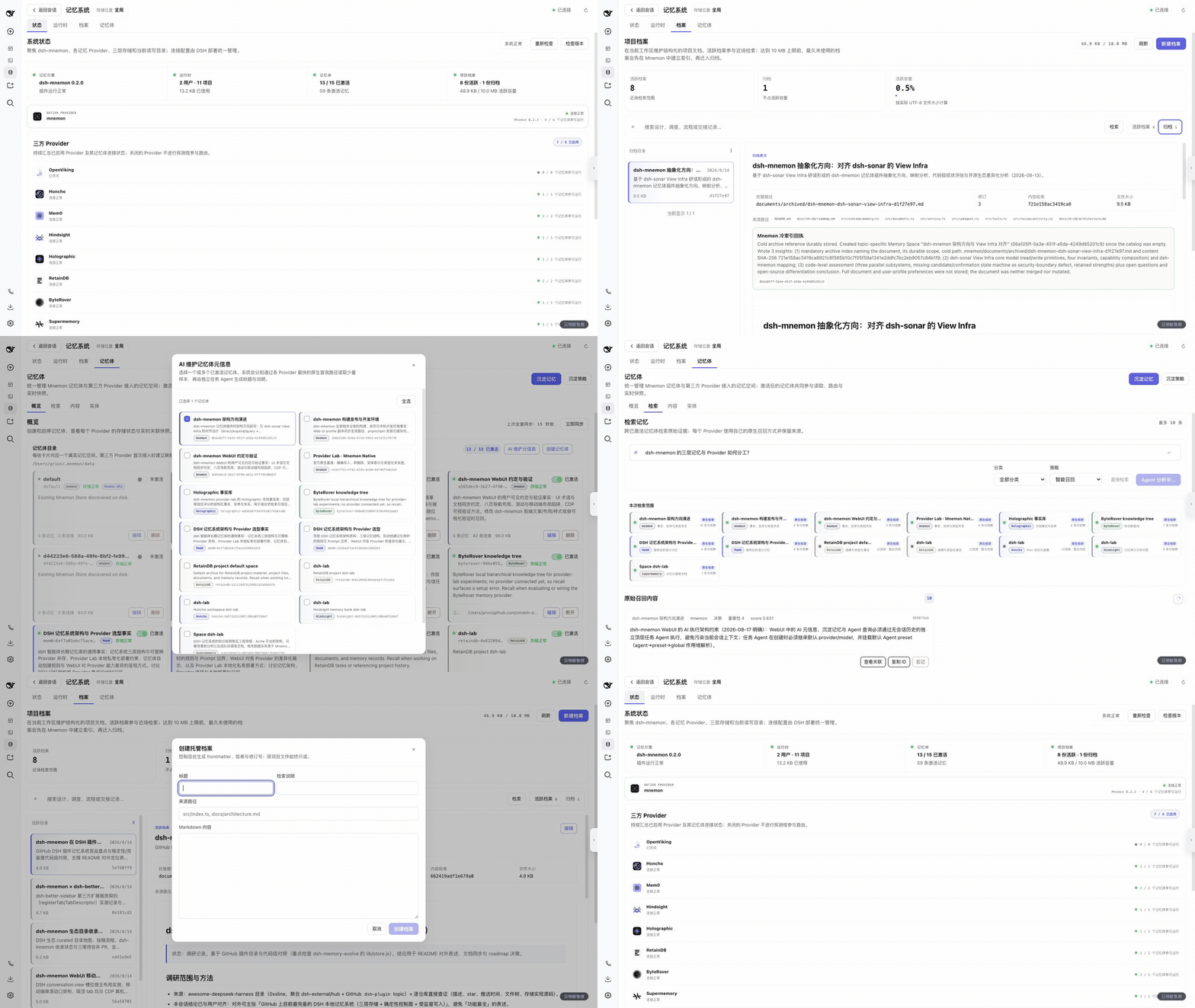
dsh-mnemon is a three-tier, pluggable, Agent-driven memory system for DeepSeek Harness, combining Runtime memory, Project Documents, and replaceable Memory Spaces with nine long-term providers.