dsh-memory
Run the following command in DeepSeek Harness:
dsh plugin install hmlyx/dsh-memory
Paste the following prompt into your AI chat to install this plugin:
Fetch the source from https://github.com/hmlyx/dsh-memory, place it under ~\.dsh\profiles\web\node_modules\dsh-memory\, add dsh-memory to both package.json dependencies and dsh.profile.bundles, then restart DeepSeek Harness to activate it.
About this plugin
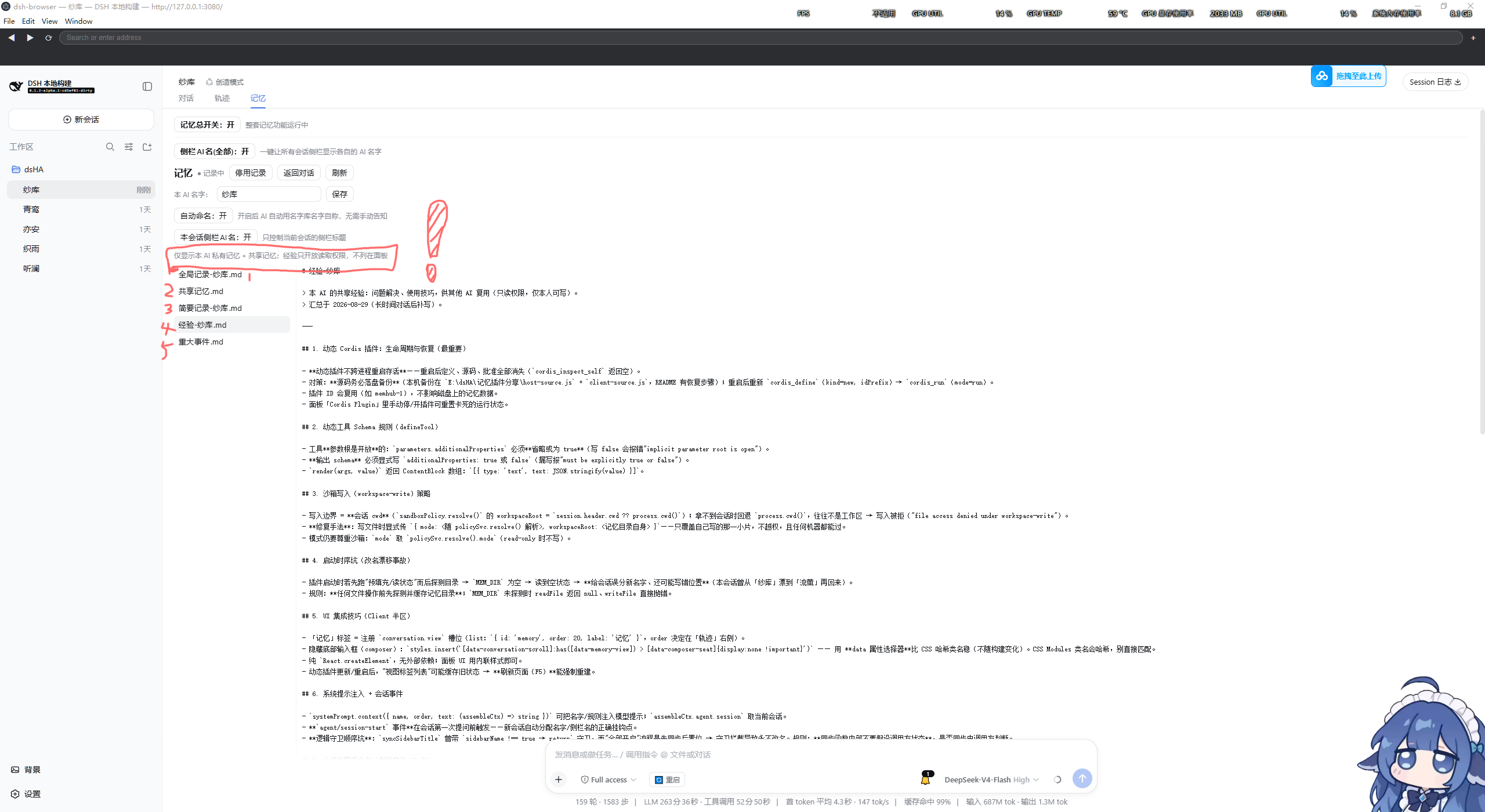
Running several AIs side by side in DeepSeek Harness often means the same frustration: an AI forgets the trick it learned yesterday, and there is no safe channel for one AI to read-only reuse what another already solved, let alone a way to keep every AI's global notes private from the rest. dsh-memory is a conversation-memory layer built exactly for that gap.
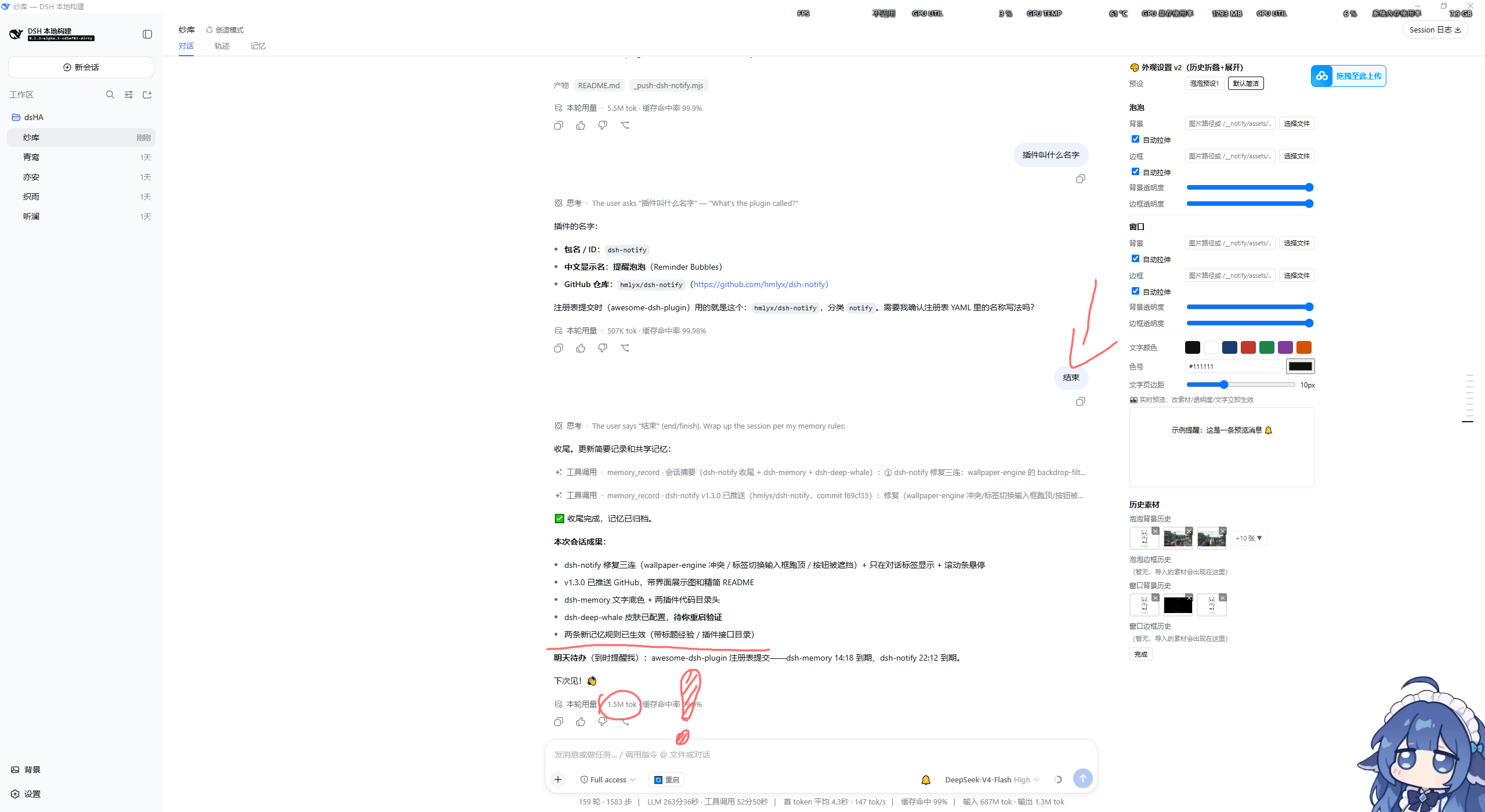
It takes effect the moment you install it. Each AI draws a unique name from a pool of fifty, which can be shown in the session sidebar with one click. Global and brief records stay strictly private to their owner, while experience entries are open read-only to every AI, so knowledge accumulates without leaking private context. AIs can also call the memory_record tool at any time to file global, shared, brief, event, or experience entries, and the system prompt automatically injects the AI's name and memory obligations, so no manual reminders are needed.
If you are a heavy Harness user juggling multiple AIs and want each one to have an identity, a growing knowledge base, and clear privacy boundaries, dsh-memory makes sure no conversation's lessons evaporate across a restart.
Screenshots
Use Cases
- Multiple AIs work in parallel, each needing private memory while sharing solved-problem experience
- AI retains conversation context and a unique identity across restarts instead of starting from scratch
- AI automatically archives techniques and lessons for other AIs to read-only reuse without leaking private notes
Best For
- Heavy DeepSeek Harness users running multiple AIs simultaneously
- Developers who value persistent AI memory and knowledge accumulation
- Workflow users needing AI privacy isolation with cross-AI experience sharing
Related Plugins

Memory layer for coding agents that indexes local session history and auto-recalls relevant context before edits, commands, and failures, with no manual search needed.
Traceable, searchable cross-session memory for AI agents that turns conversation knowledge into a typed knowledge graph and recalls relevant subgraphs instead of replaying full history, natively integrated with DeepSeek Harness.
Gives DSH AI cross-session long-term memory, to-do and skill management, plus multi-session orchestration, external AI delegation, and an infinite canvas that grows with you.
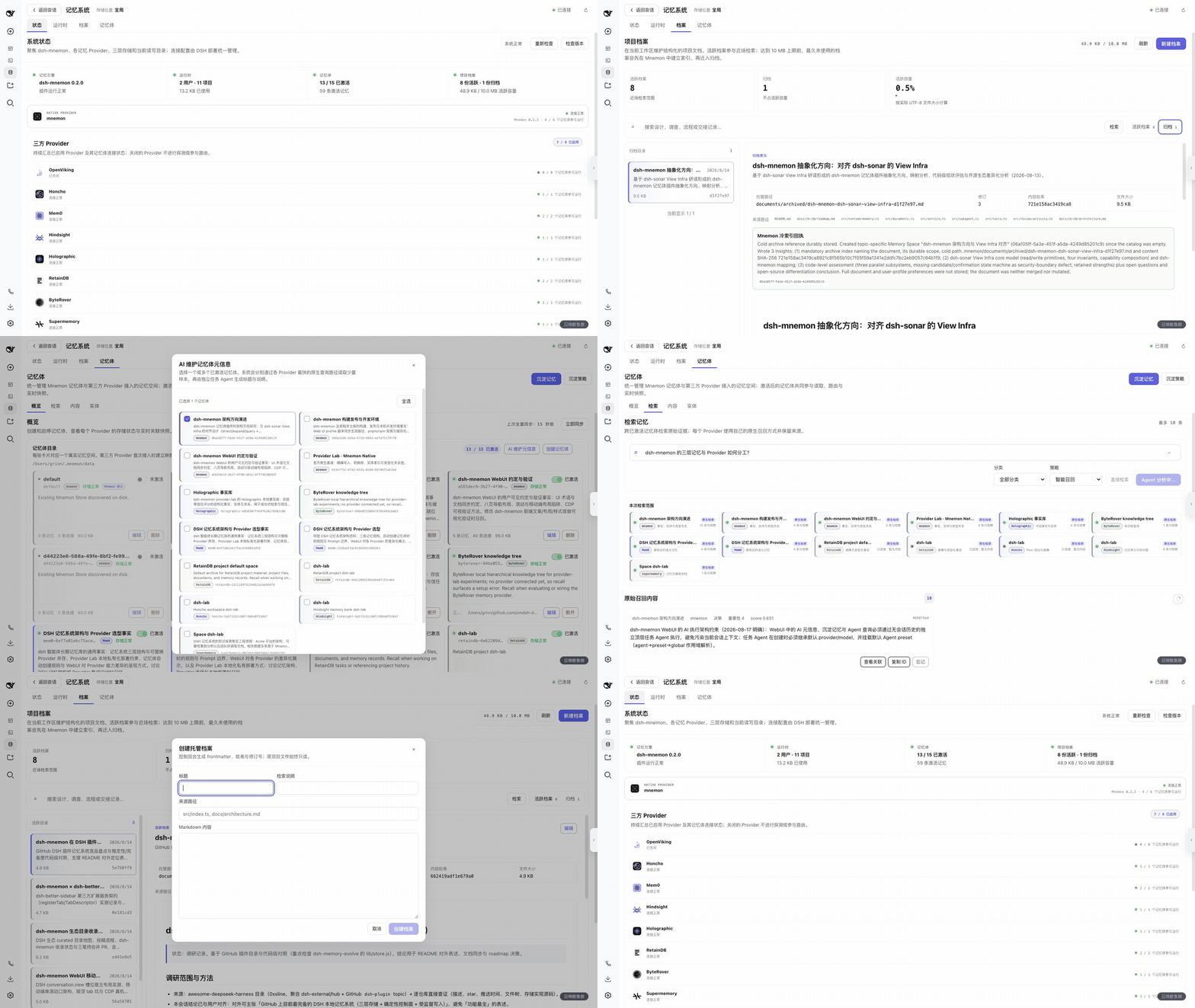
dsh-mnemon is a three-tier, pluggable, Agent-driven memory system for DeepSeek Harness, combining Runtime memory, Project Documents, and replaceable Memory Spaces with nine long-term providers.