dsh-biomni
Run the following command in DeepSeek Harness:
dsh plugin install ZhuYanTech/dsh-biomni
Paste the following prompt into your AI chat to install this plugin:
Install by running dsh plugin install ZhuYanTech/dsh-biomni in the terminal; full source at https://github.com/ZhuYanTech/dsh-biomni
About this plugin
Hand a biomedical tool library to an agent and the sneakiest failure is not an error — it is silence. The dependency is missing, so it quietly writes its own PubMed client. The data directory does not exist, so it fabricates a path. The result arrives confident, indistinguishable from a real one. dsh-biomni enforces a single rule: never advertise what this machine cannot deliver. Every one of the 218 research functions, 76 datasets, and 113 bioinformatics CLI tools must pass an environment probe before appearing in the skill catalog. What is missing is named out loud, with the package that would fix it and the price in megabytes.
The core experience centers on a persistent Python interpreter: imports, dataframes, and fitted models survive across calls within a session, so the agent works in small steps instead of resending a full script every time. An interpreter idle for thirty minutes is retired and the agent is told its namespace is empty — rather than hitting a NameError on the next call. The 21 module skills load on demand, cutting 218 functions from roughly 26k to about 1.6k tokens of context. The Settings panel gives an honest availability report and tags the four opt-in extras that cost 494 MB for just 7 more functions as expensive, not free.
If you are a biomedical, pharmacology, or computational-biology researcher who drives analysis pipelines through DeepSeek Harness and wants the agent to actually call samtools, query_pubmed, or a molecular-docking function instead of reinventing them, dsh-biomni is the bridge that plugs Biomni into the agent — no forking, no patching, install and go.
Use Cases
- Drive multi-step analysis through Biomni's 218 research functions with a persistent Python interpreter
- Run bioinformatics pipelines on already-downloaded local datasets without repeated network round trips
- Get an honest environment report that names every callable function, every gap, and the fix cost in megabytes
Best For
- Researchers using DeepSeek Harness for biomedical or computational-biology workflows
- Developers who want the agent to reach for validated tools instead of silently bypassing missing dependencies
- Research teams that need auditable, reproducible bioinformatics automation pipelines
Related Plugins
A unified suite combining hot runtime injection, task-aware thinking-mode routing, and a graded session protocol with red-team gates to sustain model diligence across long-horizon inference.
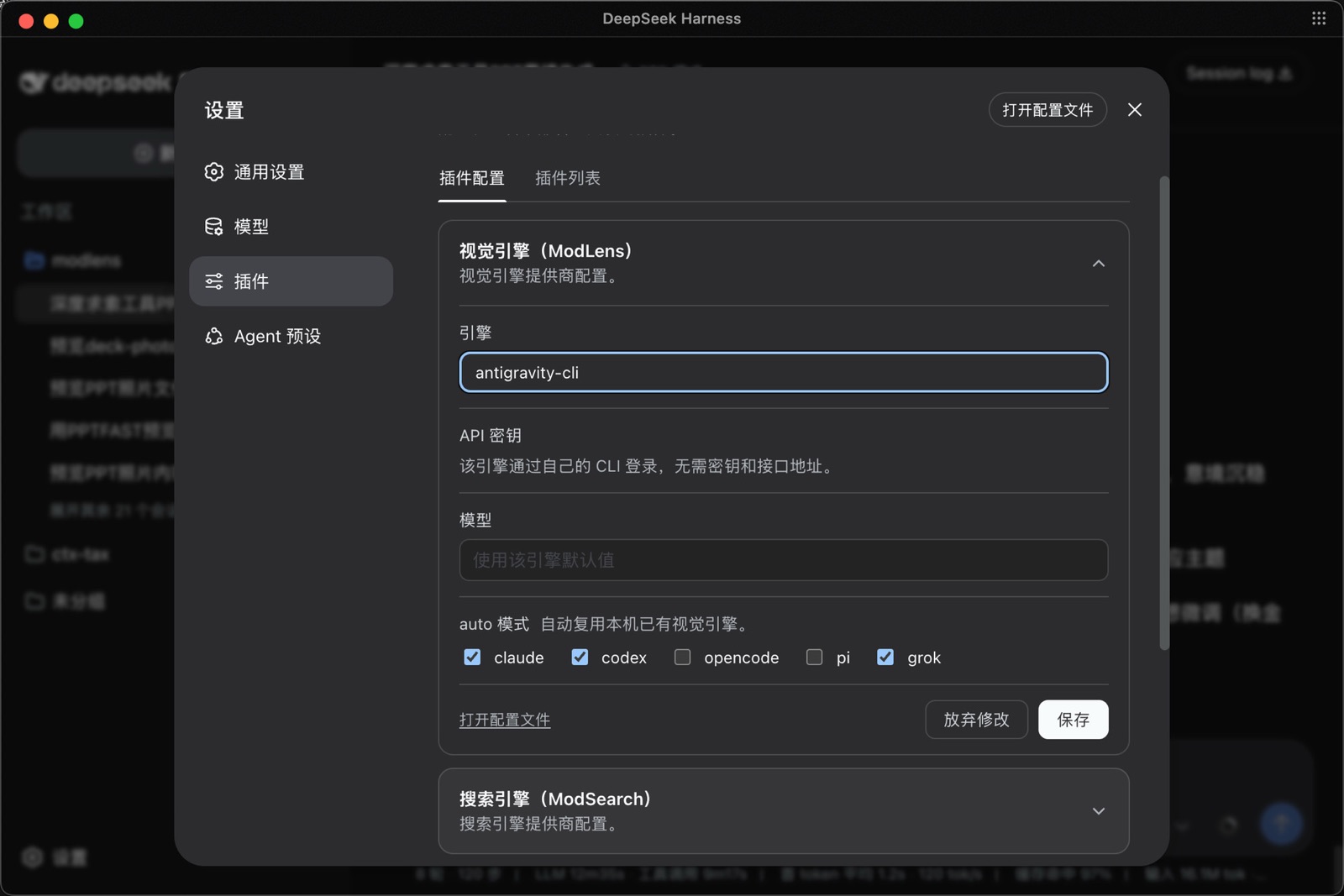
ModLens is a vision plugin for DeepSeek Harness that gives text-only models sight by reading images pasted directly into chat, with zero-config setup and multiple vision engines.
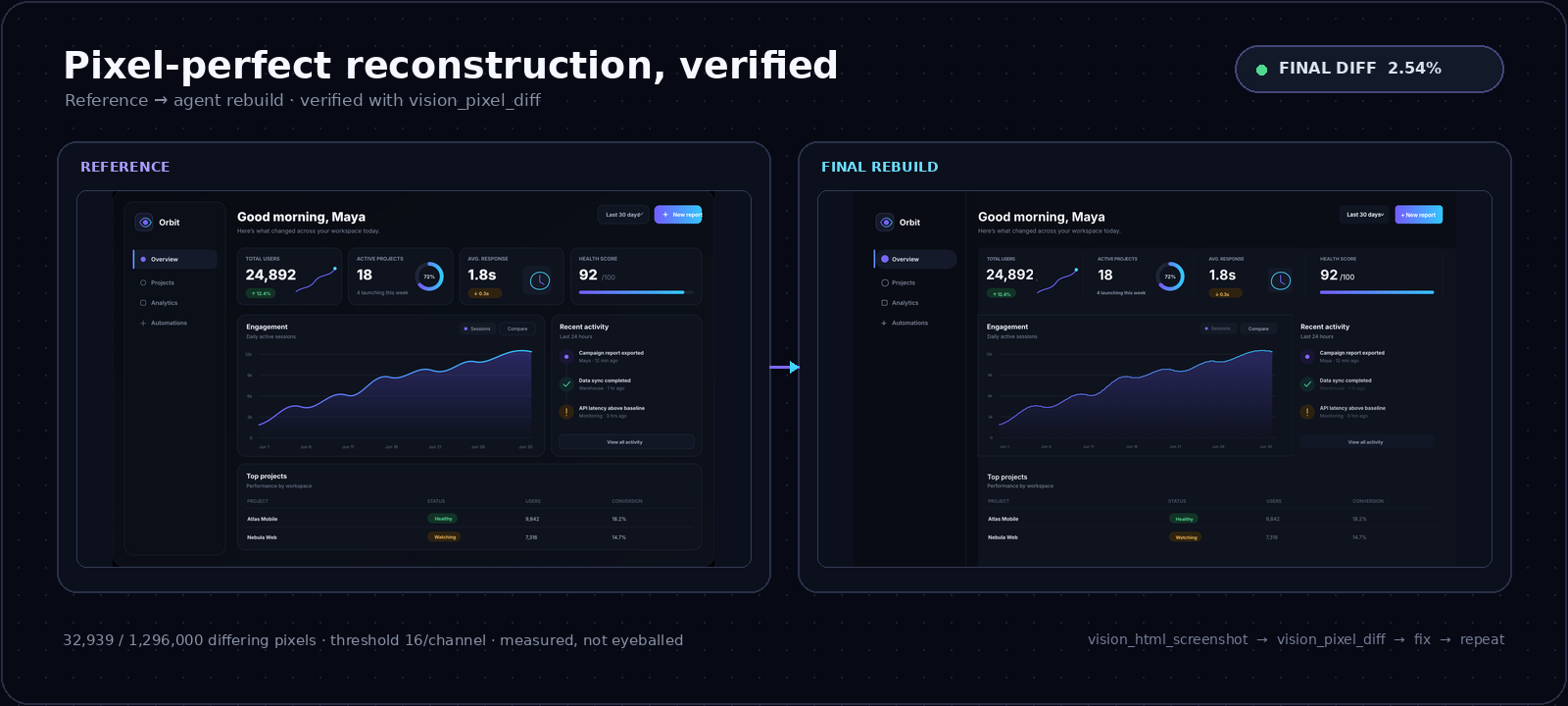
On-demand vision for text-only DeepSeek Harness agents: built-in free keyless vision chain and 14 vision tools, routing image turns as tool calls to vision models with pixel fidelity, no Python needed, one-command install.

Give text-only models in DeepSeek Harness eyes, enabling image Q&A, long-screenshot OCR, UI restoration, and GUI visual tasks.