dsh-native-codex-oauth
Run the following command in DeepSeek Harness:
dsh plugin install kfc966/dsh-native-codex-oauth
Paste the following prompt into your AI chat to install this plugin:
Run dsh plugin install kfc966/dsh-native-codex-oauth in DeepSeek Harness to install this plugin; full source available at https://github.com/kfc966/dsh-native-codex-oauth.
About this plugin
Running OpenAI Codex models through DeepSeek Harness often trips up at the login step: you either paste an API key into a config file or shuffle a third-party OAuth shim in the browser. dsh-native-codex-oauth takes the direct route and wires the native ChatGPT OAuth flow straight into Harness's built-in Web Models page. Click "Sign in with ChatGPT", finish authorization, save the provider — no tokens cached in browser state, no auth.json to hunt down.
The plugin is deliberately thin. Harness already owns the heavy lifting: llm-pi-ai manages the model catalog and request lifecycle, credentials anchors grants on the host, and authorization defines the one-attempt-per-key login cycle. What the plugin contributes is the connective tissue between those native seams and the Settings → Models provider-card slot. It does not spawn a second Codex adapter, does not duplicate credential files, and keeps the browser's view limited to flow labels, prompts, and value-free status. Sign-out deletes the credential record through the host service. Prebuilt artifacts ship in the repo and a Git install triggers no build script, so deployment is friction-free.
Best suited to developers working on the DeepSeek Harness 0.1.2-alpha.3 source line who want Codex models without bypassing the native OAuth path. The plugin depends on the models.provider-card slot and the llm-pi-ai authorization flow introduced in that line; published 0.1.0-rc.x releases lacking either capability are not supported.
Use Cases
- One-click ChatGPT sign-in from the Web Models page instead of pasting an API key.
- Pick a Codex model and send inference requests with credentials anchored on the host.
- Sign out and delete the credential record through the host service, leaving no tokens in the browser.
Best For
- Developers integrating Codex models on the Harness 0.1.2-alpha.3 source line.
- Harness users who prefer no third-party OAuth shim or manual auth.json handling.
- Local developers who require zero OAuth tokens in browser state and prioritize credential safety.
Related Plugins
A unified suite combining hot runtime injection, task-aware thinking-mode routing, and a graded session protocol with red-team gates to sustain model diligence across long-horizon inference.
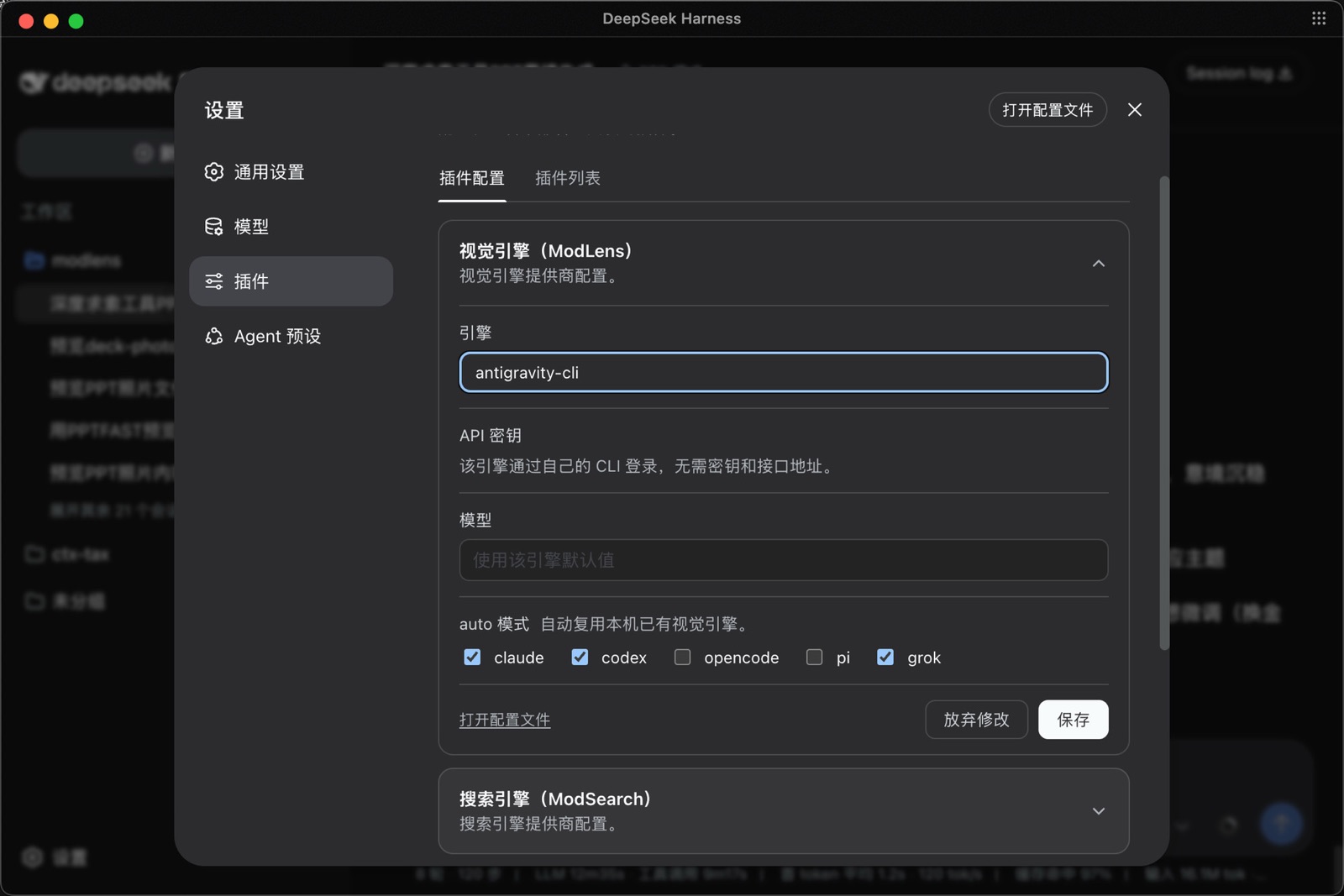
ModLens is a vision plugin for DeepSeek Harness that gives text-only models sight by reading images pasted directly into chat, with zero-config setup and multiple vision engines.
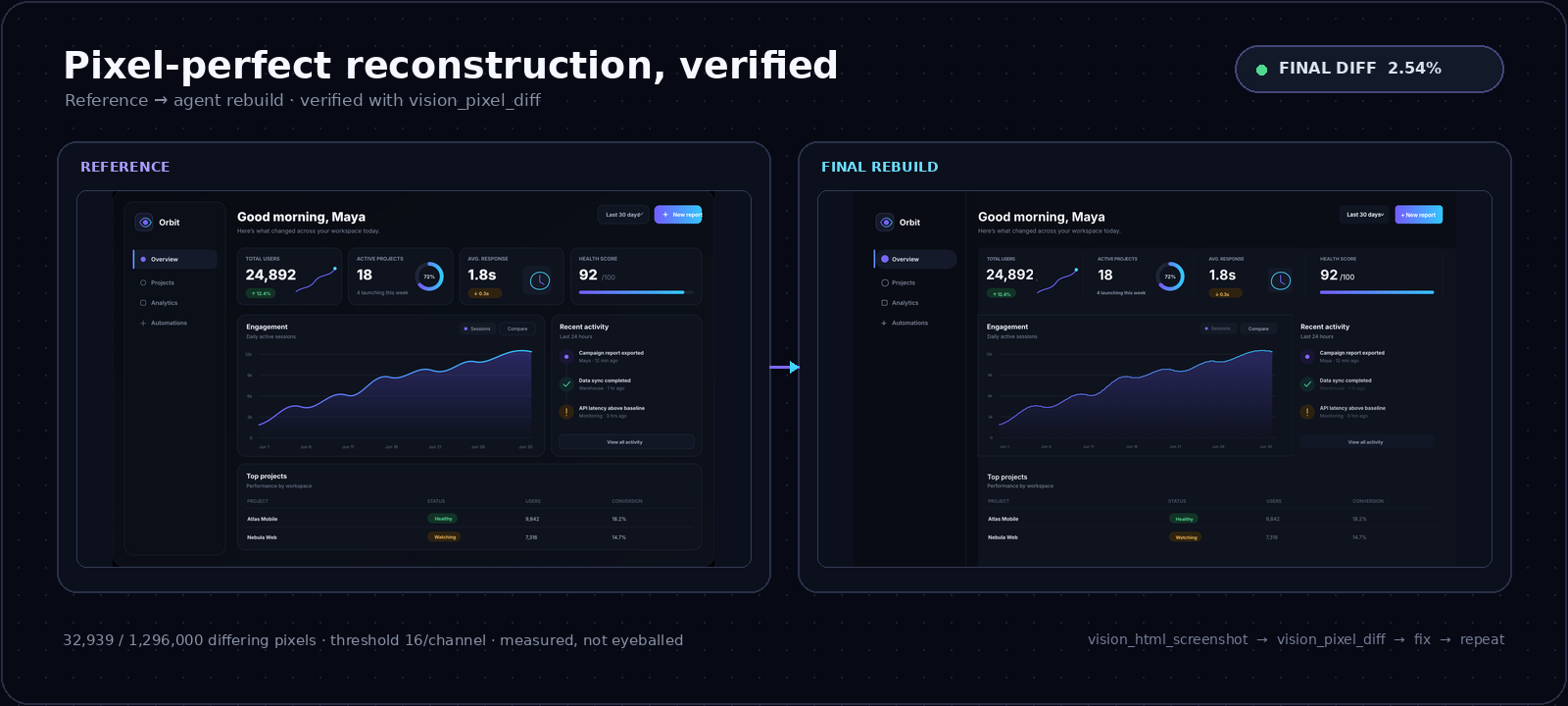
On-demand vision for text-only DeepSeek Harness agents: built-in free keyless vision chain and 14 vision tools, routing image turns as tool calls to vision models with pixel fidelity, no Python needed, one-command install.
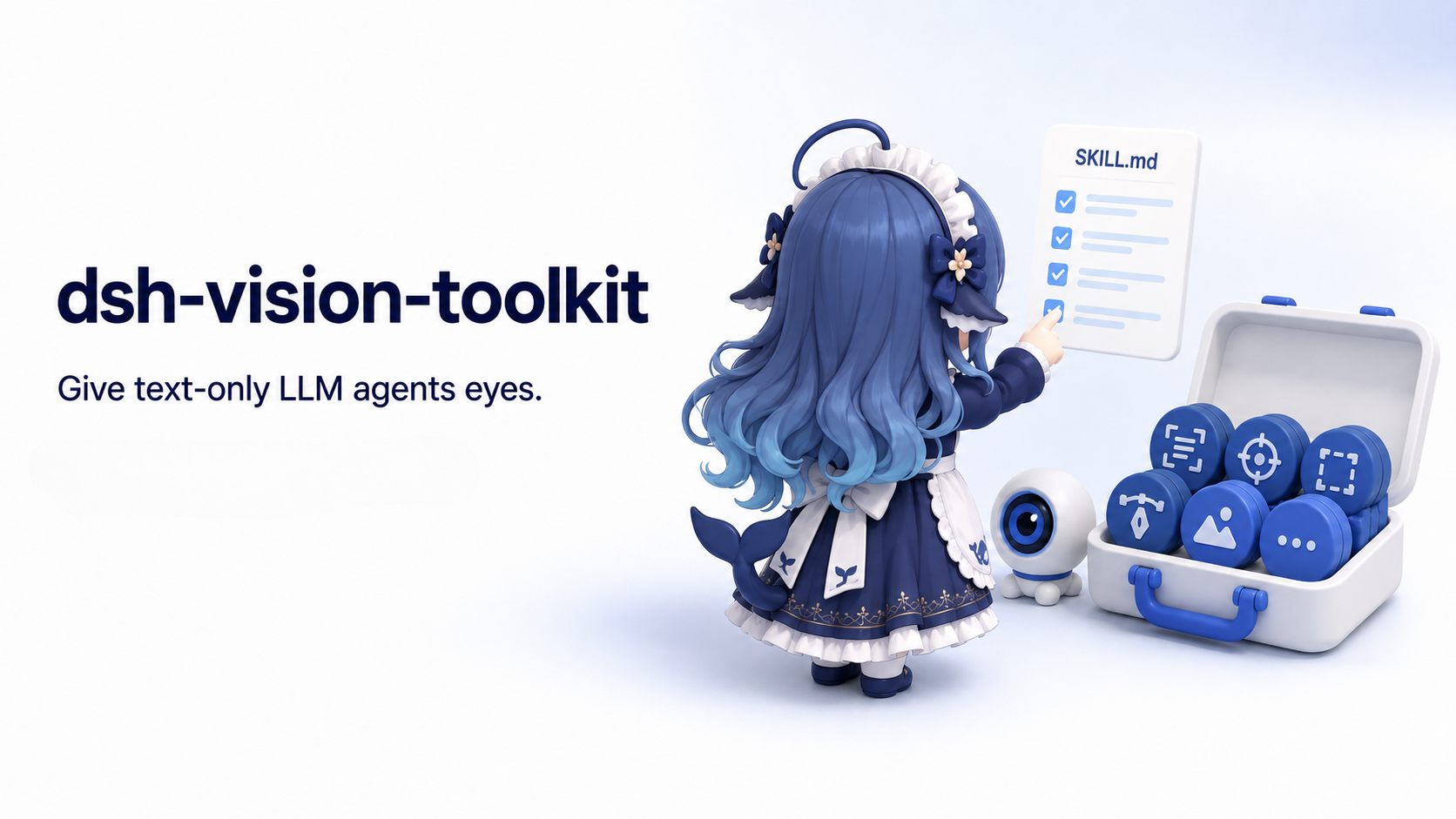
Give text-only models in DeepSeek Harness eyes, enabling image Q&A, long-screenshot OCR, UI restoration, and GUI visual tasks.