dsh-memory-nexus
Run the following command in DeepSeek Harness:
dsh plugin install Frank-NF/dsh-memory-nexus
Paste the following prompt into your AI chat to install this plugin:
Run dsh plugin install Frank-NF/dsh-memory-nexus in your DeepSeek Harness terminal to install this plugin; the source is available at https://github.com/Frank-NF/dsh-memory-nexus .
About this plugin
In AI coding assistants, the context window is finite while conversations keep growing, making efficient memory and context management a real pain point. dsh-memory-nexus was built for exactly this: as a DSH enhancement plugin, it lets developers steer what the model retains and what it releases, without hand-crafting prompts every turn.
At its core is a four-layer memory system (L1-L4) that stratifies information by importance. On top of that layered store, the plugin offers context compression, trimming, and freezing so the limited window always carries the most critical content. A built-in prompt orchestrator assembles memory layers, frozen snippets, and the current instruction into a well-structured prompt automatically, while input-box UI buttons keep frequently used actions a single click away.
It is a good fit for engineers who do long-session development, multi-file refactors, or any workflow that requires project context to survive across many turns under DSH. If you often find the model forgetting constraints you stated earlier, or you want to pin team coding conventions as frozen memory, this plugin earns a place in your daily toolchain.
Use Cases
- Auto-stratifying memory across long sessions to keep project context coherent
- Freezing critical constraints during multi-file refactors to prevent model drift
- Persisting team coding conventions as frozen snippets to reduce repeated prompting
Best For
- Engineers doing long-session development or multi-file refactors under DSH
- Developers who need cross-turn project context without hand-crafting prompts
- Tech leads who want to codify team standards into memory layers for better collaboration
Related Plugins

Memory layer for coding agents that indexes local session history and auto-recalls relevant context before edits, commands, and failures, with no manual search needed.
Traceable, searchable cross-session memory for AI agents that turns conversation knowledge into a typed knowledge graph and recalls relevant subgraphs instead of replaying full history, natively integrated with DeepSeek Harness.
Gives DSH AI cross-session long-term memory, to-do and skill management, plus multi-session orchestration, external AI delegation, and an infinite canvas that grows with you.
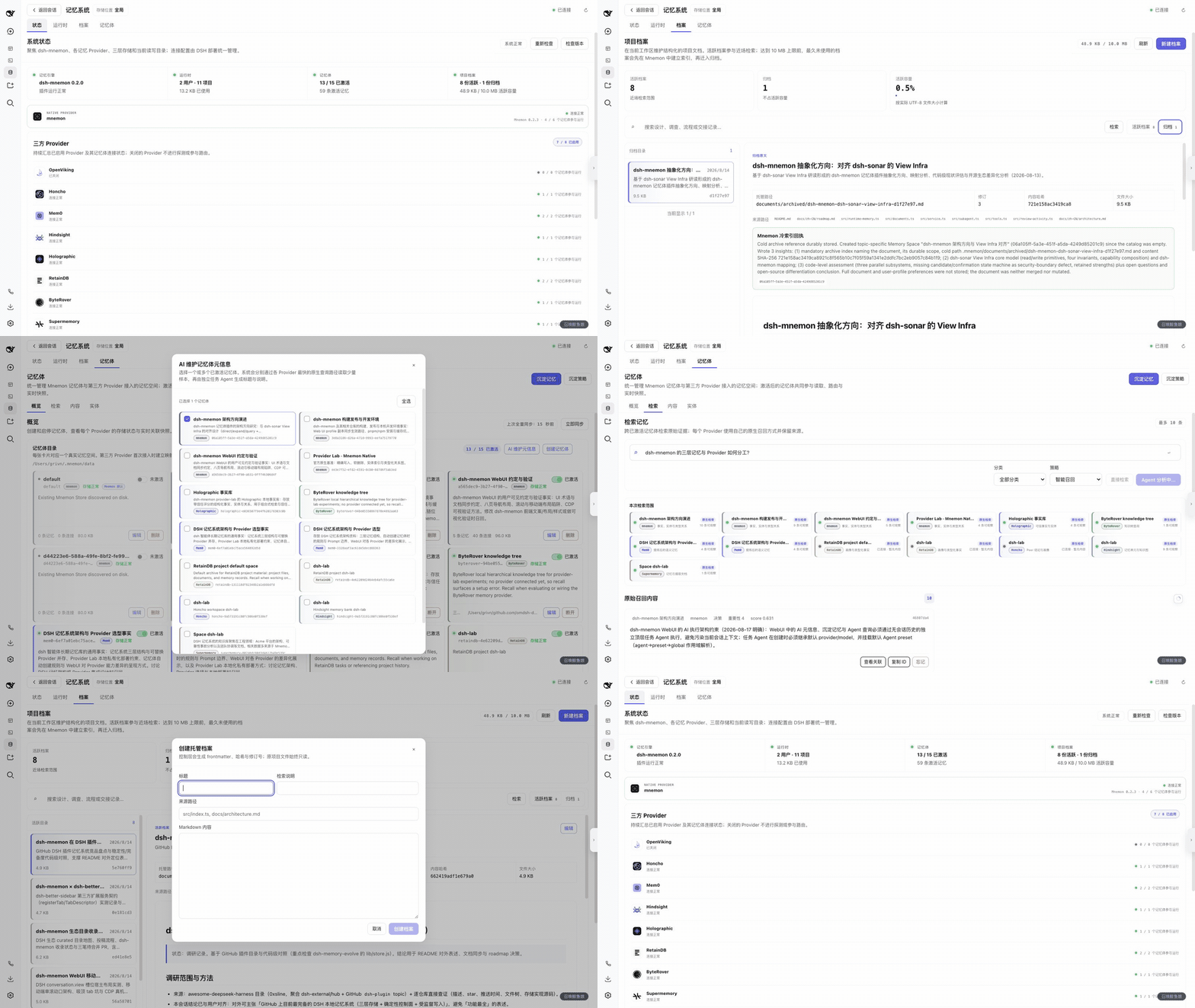
dsh-mnemon is a three-tier, pluggable, Agent-driven memory system for DeepSeek Harness, combining Runtime memory, Project Documents, and replaceable Memory Spaces with nine long-term providers.