dsh-model-capabilities
Run the following command in DeepSeek Harness:
dsh plugin install fuzz1og/dsh-model-capabilities
Paste the following prompt into your AI chat to install this plugin:
Run dsh plugin install fuzz1og/dsh-model-capabilities in your DeepSeek Harness terminal to install; the source code is available at https://github.com/fuzz1og/dsh-model-capabilities ; restart the web profile (Settings → Restart or dsh --profile web) after installation to activate.
About this plugin
Configuring capability parameters for custom llm-pi-ai providers in DeepSeek Harness used to mean opening settings.yaml, editing JSON by hand, and hoping the schema check passes. dsh-model-capabilities moves that entire workflow into the native extension card on the Models settings page. Every action routes through the official settings.mutate API, so invalid protocol or effort combinations are rejected at write time with a clear reason, eliminating the guesswork of blind YAML edits.
Inside the card you can pick per-model input modalities (inherit, text-only, or text+image), assign reasoning-effort presets (disabled, standard tiers, or custom one-by-one mappings), and set provider-level defaults for reasoning and modality. A compatibility section exposes toggles for the developer role, the reasoning_effort field name, the max-tokens field name, and the thinking format, making it straightforward to fix gateway 400 responses by matching upstream documentation. The request-header area lets you add arbitrary custom headers; values may contain the {{session}} placeholder, which the plugin replaces at the wire layer with a SHA-256 stable identifier for the current DSH session. The same token persists across turns within a session and differs across sessions, fitting gateways like opencode Go that rely on session-affinity routing for prompt caching. Literal values pass through unchanged, and user-defined headers always take precedence over auto-injected ones.
This plugin is for DSH users who have connected llm-pi-ai protocol providers and need fine-grained control over per-model capability declarations and gateway compatibility. It is especially useful when talking to the opencode official gateway, where carrying the correct x-opencode-session header is required for prompt caching and session affinity. A single {{session}} placeholder in the header field satisfies the official identity and session-marking requirements without needing a separate wire-layer injection plugin or a hand-written fetch wrapper script.
Use Cases
- Set per-model reasoning-effort tiers and input modalities for custom llm-pi-ai providers directly from the Models settings card
- Add a {{session}} placeholder to an x-opencode-session header so the opencode Go gateway uses session-affinity routing for prompt caching
- Fix gateway 400 responses by toggling individual compatibility fields such as developer role, maxTokensField, and thinkingFormat
Best For
- DSH users with llm-pi-ai protocol providers who need fine-grained control over per-model capability declarations
- Users connecting to the opencode official gateway and needing session-affinity and identity-header compliance
- Users who prefer configuring model inference entirely from the UI card instead of hand-editing settings.yaml
Related Plugins
A unified suite combining hot runtime injection, task-aware thinking-mode routing, and a graded session protocol with red-team gates to sustain model diligence across long-horizon inference.
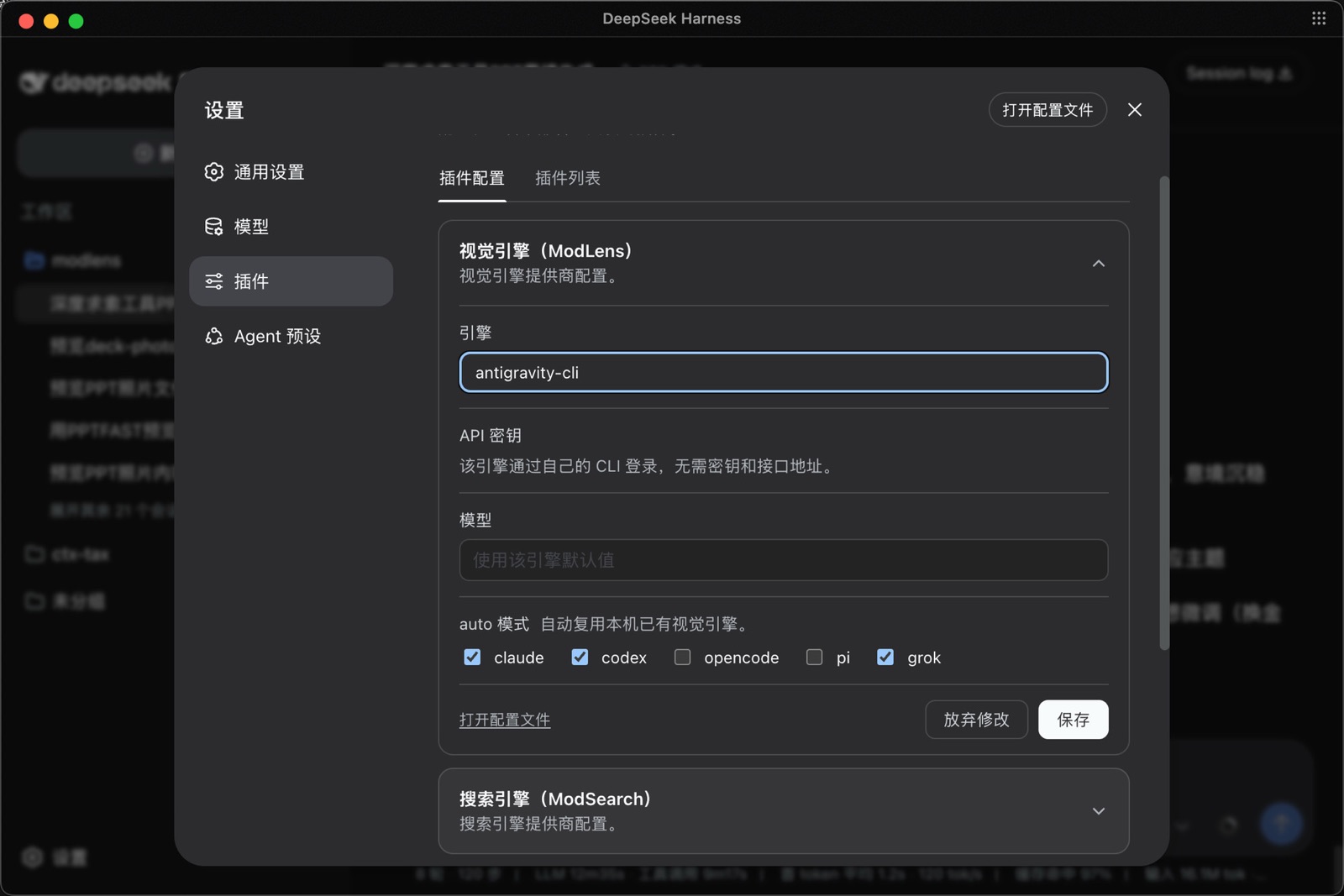
ModLens is a vision plugin for DeepSeek Harness that gives text-only models sight by reading images pasted directly into chat, with zero-config setup and multiple vision engines.
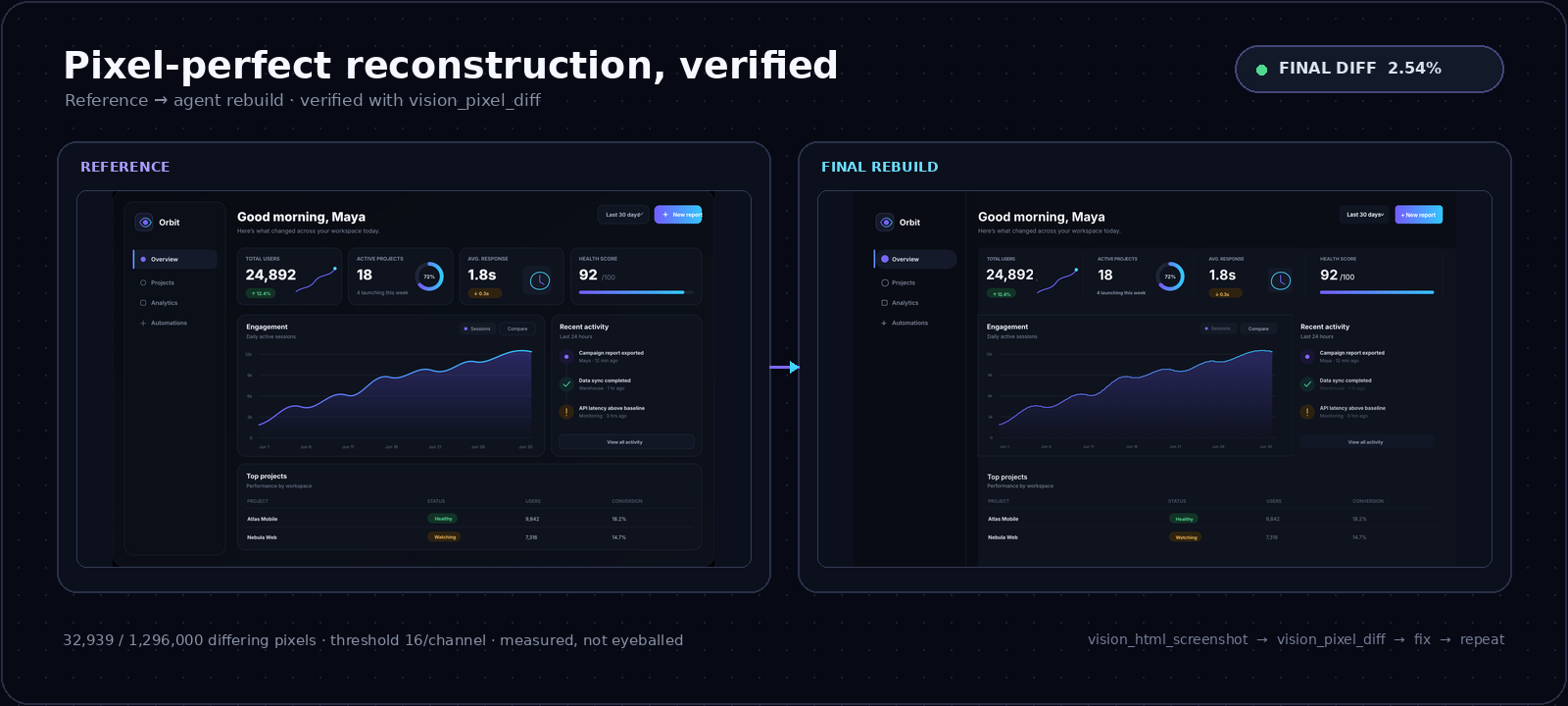
On-demand vision for text-only DeepSeek Harness agents: built-in free keyless vision chain and 14 vision tools, routing image turns as tool calls to vision models with pixel fidelity, no Python needed, one-command install.
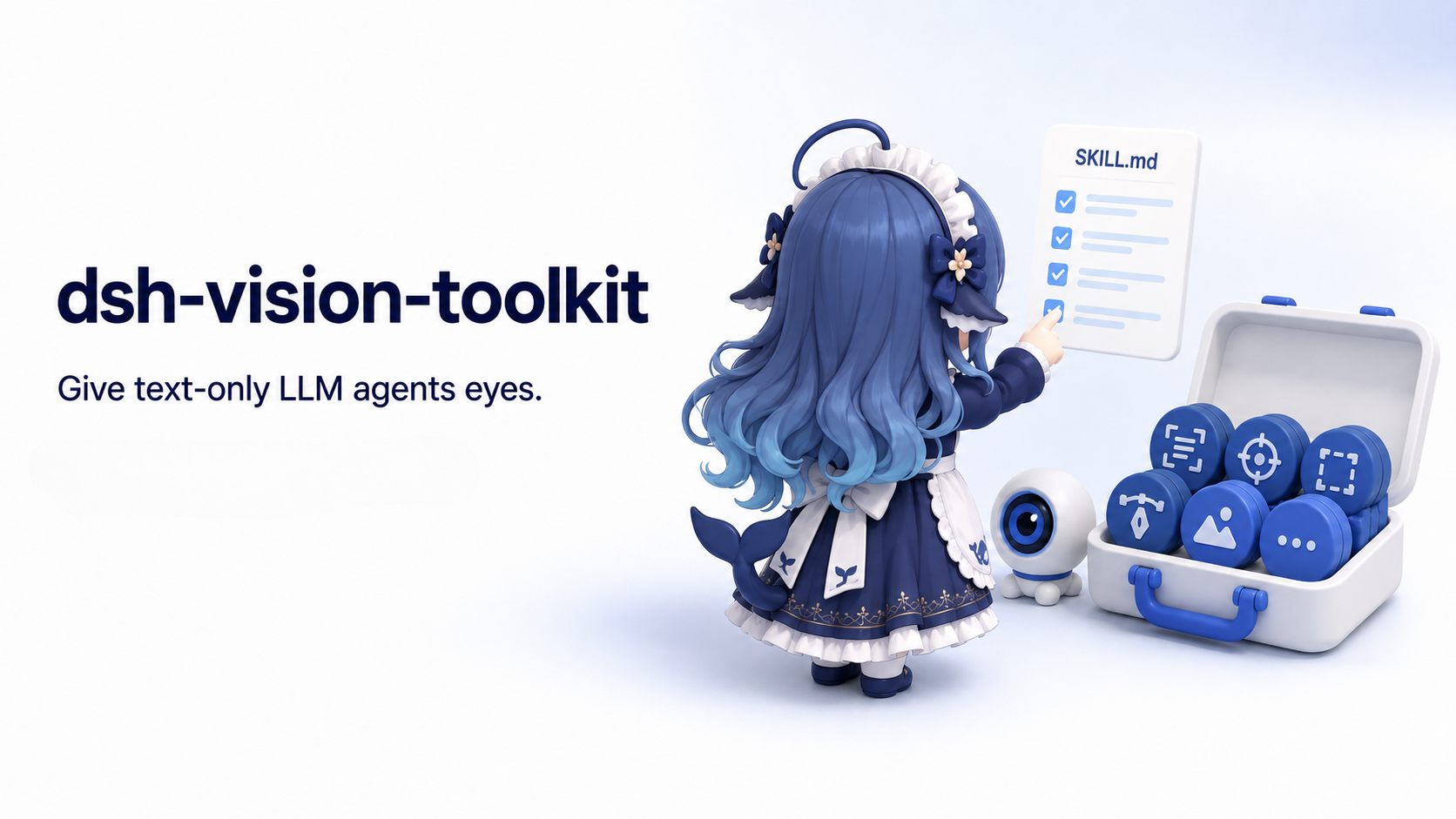
Give text-only models in DeepSeek Harness eyes, enabling image Q&A, long-screenshot OCR, UI restoration, and GUI visual tasks.