dsh-local-models
Run the following command in DeepSeek Harness:
dsh plugin install Vmarcelo49/dsh-local-models
Paste the following prompt into your AI chat to install this plugin:
Run dsh plugin install Vmarcelo49/dsh-local-models in DeepSeek Harness to install this plugin; the source code is available at https://github.com/Vmarcelo49/dsh-local-models
About this plugin
Running local LLMs has always felt like glue-work: terminal commands, hand-wired OpenAI-compatible endpoints, guessing whether VRAM holds the model, and restarting servers every time you switch. dsh-local-models pulls the entire workflow into a single tab in the dsh Web GUI, so managing local inference feels as straightforward as configuring a cloud provider.
Open the tab and browse for a .gguf file right in the app. The plugin parses the GGUF header to surface architecture, quantization, layer count, and MoE detection without loading weights. From there you tune the context slider, MTP speculative-decoding depth, thinking level, and optional vision mmproj, with MoE expert-placement controls for mixed GPU/CPU layouts. A live VRAM estimate tallies weights, KV cache, recurrent state, and compute overhead against your target GPU, flagging fit, safe margin, and the maximum context that still fits. Save named profiles to swap configurations in one click, or launch router mode to serve every saved profile from a single OpenAI-compatible endpoint—models load on demand and auto-register in dsh the moment the router starts.
This plugin is for developers and power users who run stock upstream llama.cpp on a local GPU and want dsh to talk to their local models without extra glue. It depends on no forks, no build patches, and a zero-dependency client bundle, making it a drop-in addition to an existing llama.cpp setup.
Use Cases
- Pick a GGUF file in the dsh Web GUI, tune context, MTP depth, and MoE placement, then load it through llama-server with one click
- Use the live VRAM estimate to confirm whether your GPU fits the target model and discover the max usable context with safe margin
- Launch router mode to serve multiple saved profiles from a single OpenAI-compatible endpoint, with on-demand loading and auto-registration into dsh
Best For
- Developers running stock upstream llama.cpp on a local GPU and wanting seamless dsh integration
- Power users who prefer zero-dependency, no-fork, no-build tooling for local LLM inference
- Local model practitioners who rely on real-time VRAM estimates to plan context length, quantization, and MoE placement
Related Plugins
A unified suite combining hot runtime injection, task-aware thinking-mode routing, and a graded session protocol with red-team gates to sustain model diligence across long-horizon inference.
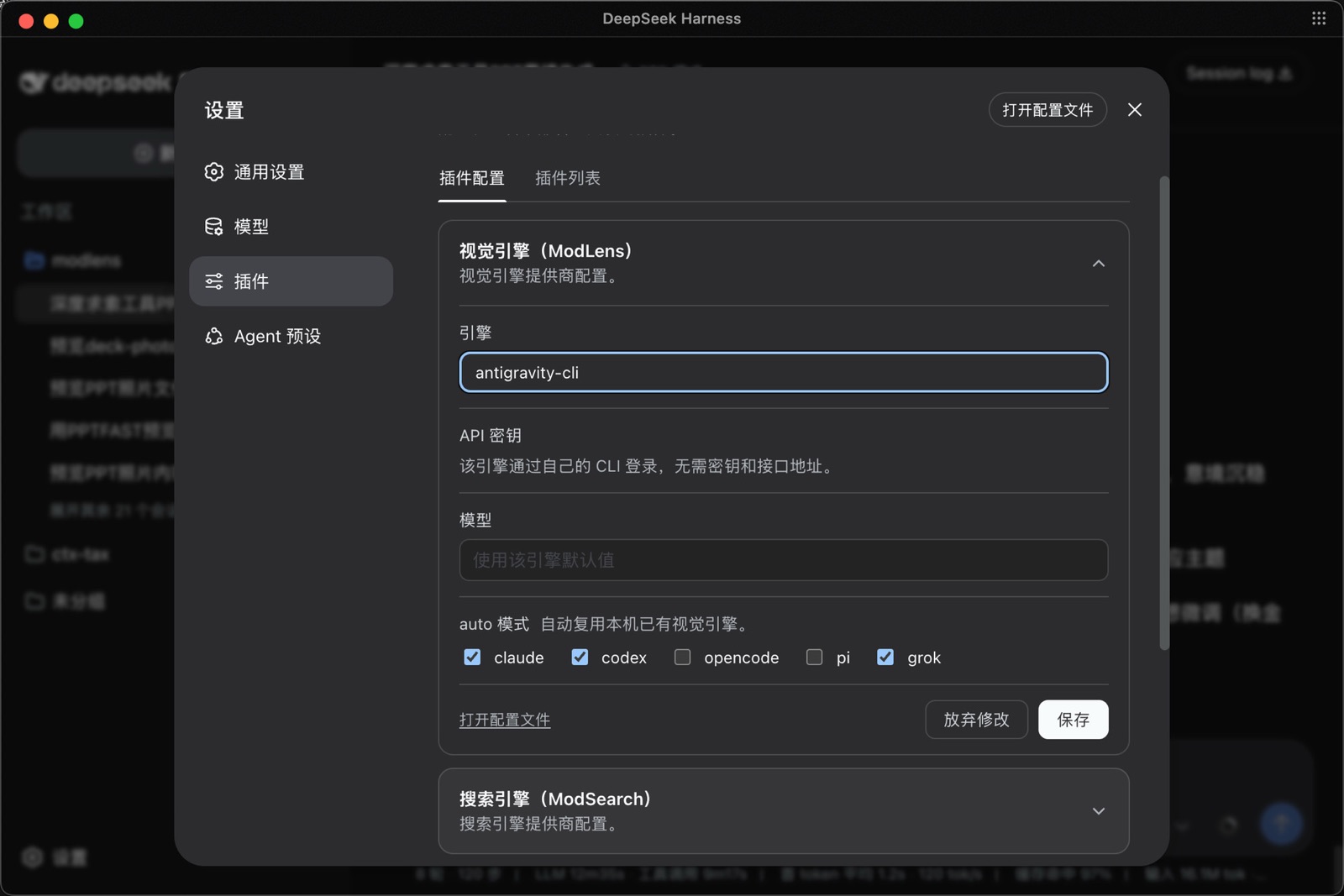
ModLens is a vision plugin for DeepSeek Harness that gives text-only models sight by reading images pasted directly into chat, with zero-config setup and multiple vision engines.
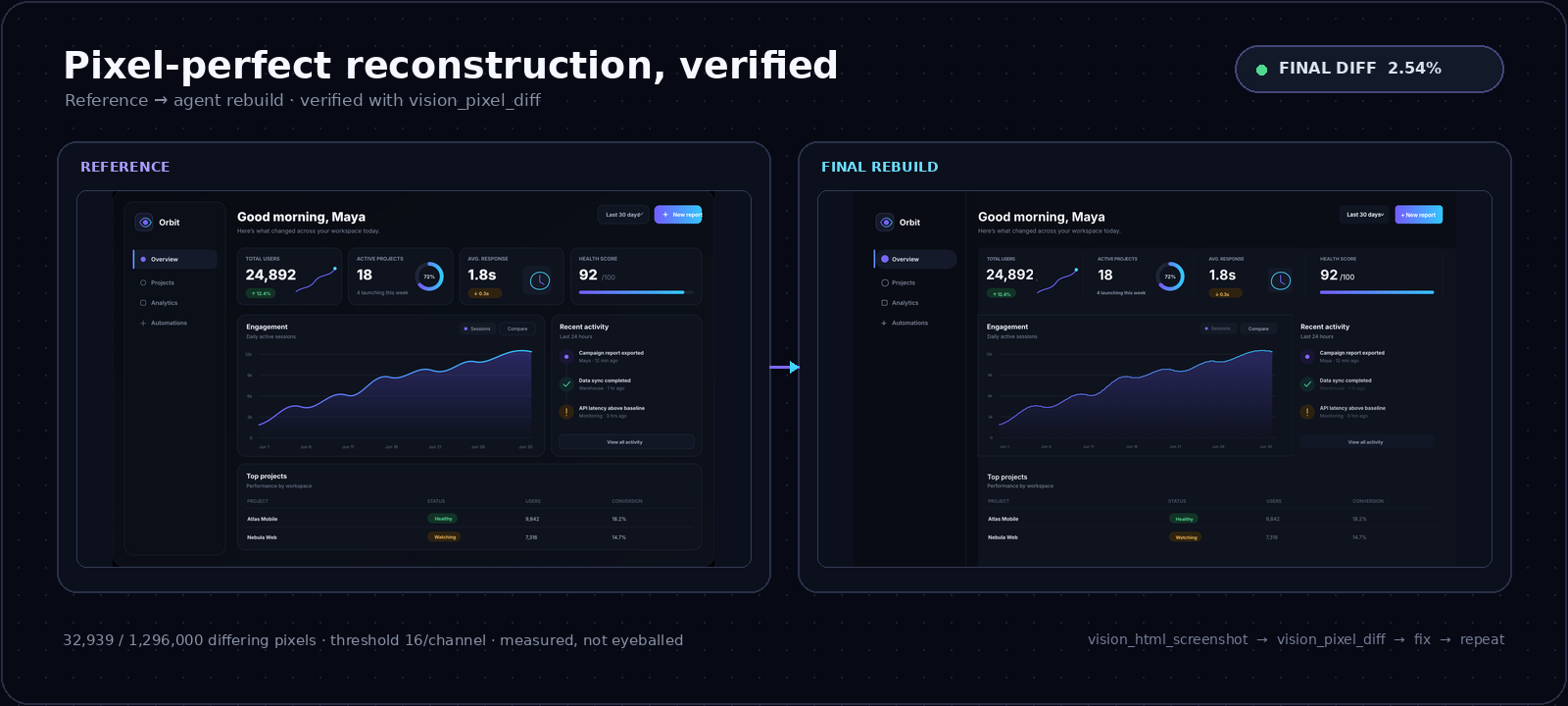
On-demand vision for text-only DeepSeek Harness agents: built-in free keyless vision chain and 14 vision tools, routing image turns as tool calls to vision models with pixel fidelity, no Python needed, one-command install.
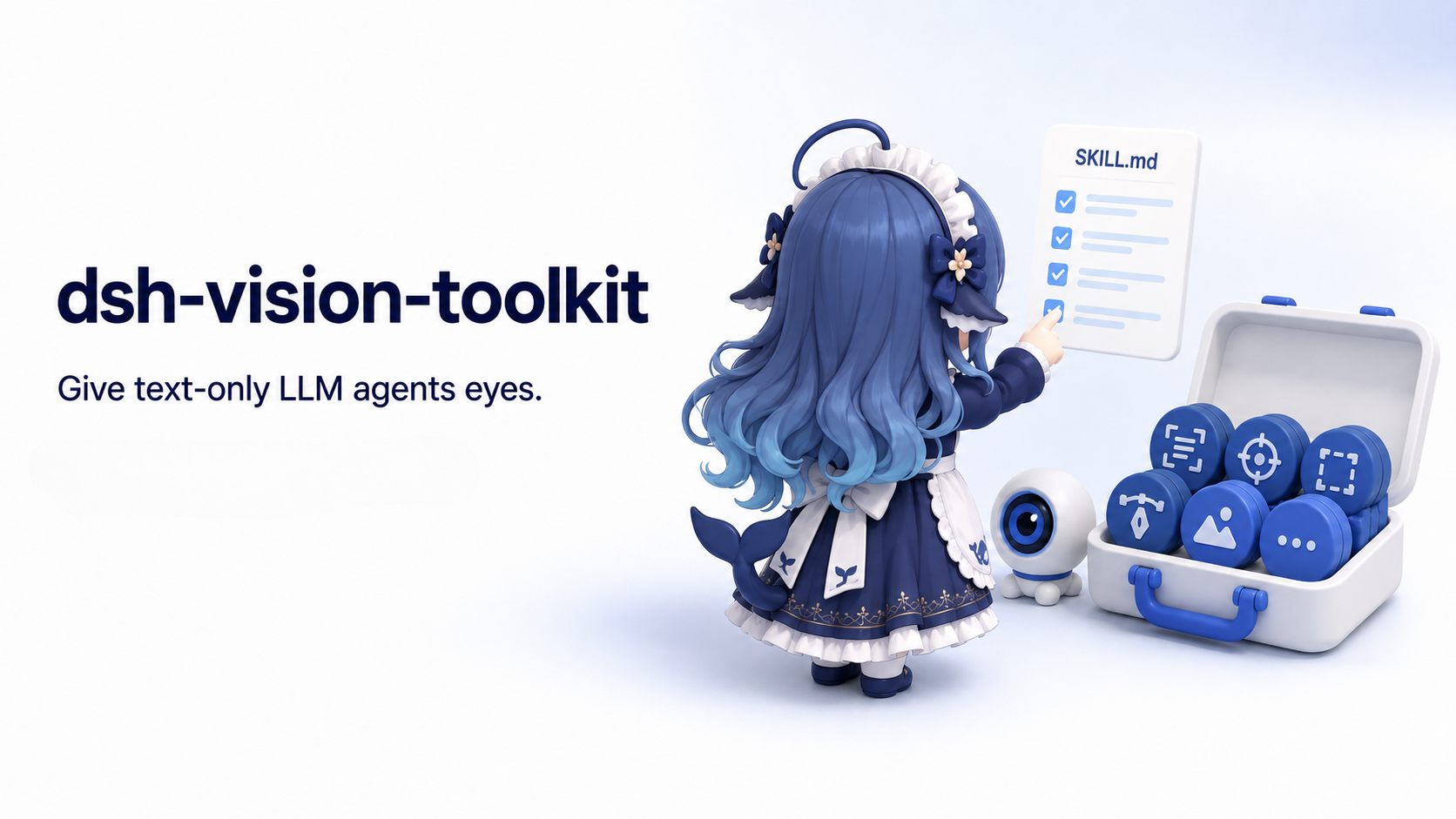
Give text-only models in DeepSeek Harness eyes, enabling image Q&A, long-screenshot OCR, UI restoration, and GUI visual tasks.