dsh-local-memory
Run the following command in DeepSeek Harness:
dsh plugin install caopu16/dsh-local-memory
Paste the following prompt into your AI chat to install this plugin:
Run `dsh plugin install caopu16/dsh-local-memory` in your terminal to install this plugin; the source code is available at https://github.com/caopu16/dsh-local-memory .
About this plugin
Every new DSH session starts from scratch, forcing users to re-paste context and re-introduce themselves over and over. dsh-local-memory captures each turn as a concise markdown bullet, persists it to a local date-stamped file, and auto-injects a snapshot of the last few days into the next session, so the model still recognizes you after a restart.
The workflow has three parts: capture summarizes the user-assistant exchange at every turn/end and appends it to the day file; inject feeds the last N days (default 2, capped at 40 lines per file) into the system context as the very first step of a new session; memory_search registers as a tool the model can call on demand, scanning all date files with pure-JS keyword and substring matching and returning scored, ranked hits, making it easy to retrieve memories outside the injection window. The directory layout and anchor format are aligned with the opencode memsearch plugin, so the two can coexist, read from each other, and never overwrite.
Built for DSH users who run ongoing development, research, or daily assistant workflows and need real cross-session continuity. The entire plugin is pure JavaScript and plain text with zero native dependencies, requiring no pymilvus, numpy, or x86-64-v2 ISA baseline, so it runs out of the box on older CPUs and ARM.
Use Cases
- Continuous multi-session development without re-pasting context every turn
- Cross-day research where the model carries forward prior conclusions
- A daily assistant that remembers preferences, past questions, and pending items
Best For
- DSH users running ongoing development, research, or assistant workflows
- Developers who need explicit cross-session context continuity
- Users on older CPUs, ARM, or environments that cannot install native dependencies
Related Plugins

Memory layer for coding agents that indexes local session history and auto-recalls relevant context before edits, commands, and failures, with no manual search needed.
Traceable, searchable cross-session memory for AI agents that turns conversation knowledge into a typed knowledge graph and recalls relevant subgraphs instead of replaying full history, natively integrated with DeepSeek Harness.
Gives DSH AI cross-session long-term memory, to-do and skill management, plus multi-session orchestration, external AI delegation, and an infinite canvas that grows with you.
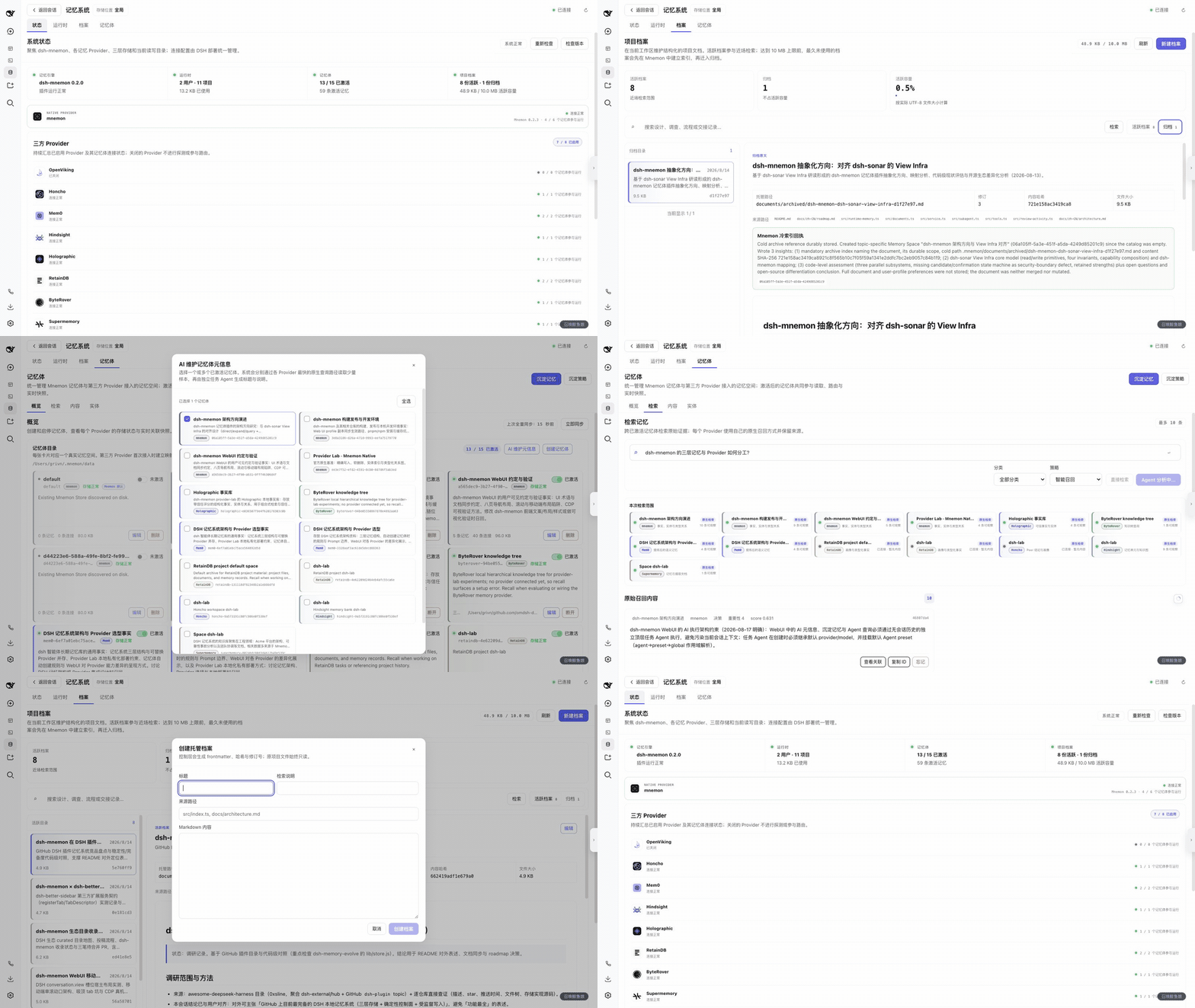
dsh-mnemon is a three-tier, pluggable, Agent-driven memory system for DeepSeek Harness, combining Runtime memory, Project Documents, and replaceable Memory Spaces with nine long-term providers.