dsh-wsl-gpu
Run the following command in DeepSeek Harness:
dsh plugin install 173787247/dsh-wsl-gpu
Paste the following prompt into your AI chat to install this plugin:
Install the plugin in DeepSeek Harness by running dsh plugin install 173787247/dsh-wsl-gpu; the full source is available at https://github.com/173787247/dsh-wsl-gpu.
About this plugin
The subtler failure mode in WSL2 local inference is not a wrong model pick but resource contention. On a single 16 GB-class RTX card, running Ollama, llama-server, and vLLM side by side means any extra few hundred MB of VRAM can push the stack into an OOM, and the crash often does not surface until the next large GGUF load. gpu_doctor is a diagnostic built exactly for that moment: it pulls GPU visibility, VRAM headroom, live utilization, and inference port occupancy into one report so you know how much the card can still take before you hit swap.
Under the hood it parses each GPU row for name, driver version, VRAM used vs. total, and compute capability; adds Blackwell / RTX 50-specific hints around sm_120 and CUDA 12.8+ or 13.x compatibility; scans the common inference ports 11434, 1234, 8000, and 8080 to flag whether Ollama, vLLM, or Unsloth Desktop are competing for the same device; and hands off to companion tools like host_reach or docker_doctor focus=vllm when the bottleneck sits at the host network or container layer.
It is aimed at developers doing local LLM inference on a Windows + WSL2 stack with a single NVIDIA card, particularly those who juggle Ollama, vLLM, and llama.cpp, or who hit load failures after a driver update or a CUDA rebuild. Run it once after a driver update, once after a CUDA build failure, and once before loading another large model, and a two-second output tells you which engine to close or whether it is time to reach for a bigger card.
Use Cases
- GPU not visible after a driver update or CUDA rebuild
- VRAM OOM when running Ollama, vLLM, and llama.cpp together
- Checking VRAM headroom and port conflicts before loading a large GGUF
Best For
- Developers doing local LLM inference on a single NVIDIA card in WSL2
- LLM users juggling Ollama, vLLM, and llama.cpp
- Engineers hitting load failures after driver updates or CUDA builds
Related Plugins
A unified suite combining hot runtime injection, task-aware thinking-mode routing, and a graded session protocol with red-team gates to sustain model diligence across long-horizon inference.
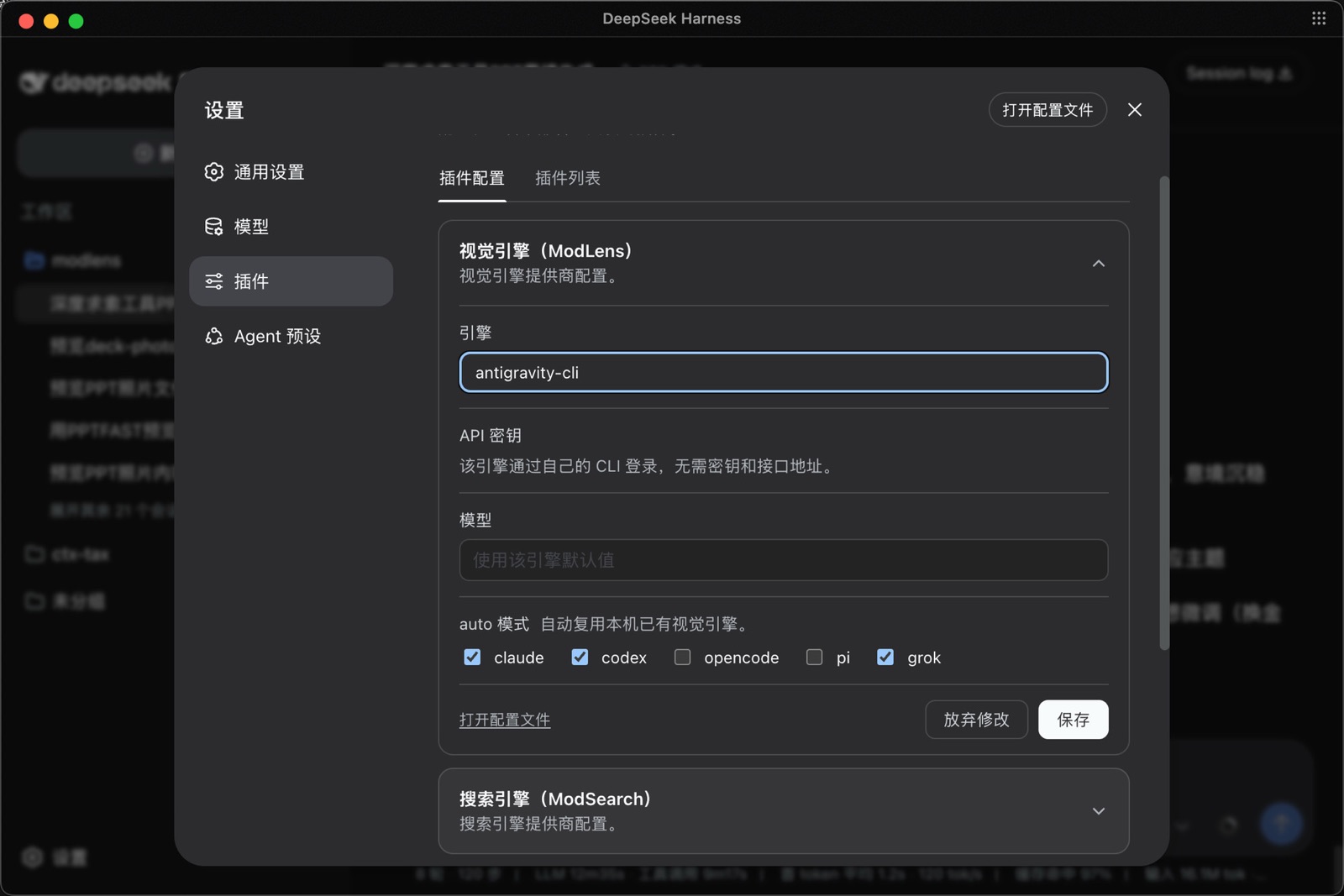
ModLens is a vision plugin for DeepSeek Harness that gives text-only models sight by reading images pasted directly into chat, with zero-config setup and multiple vision engines.
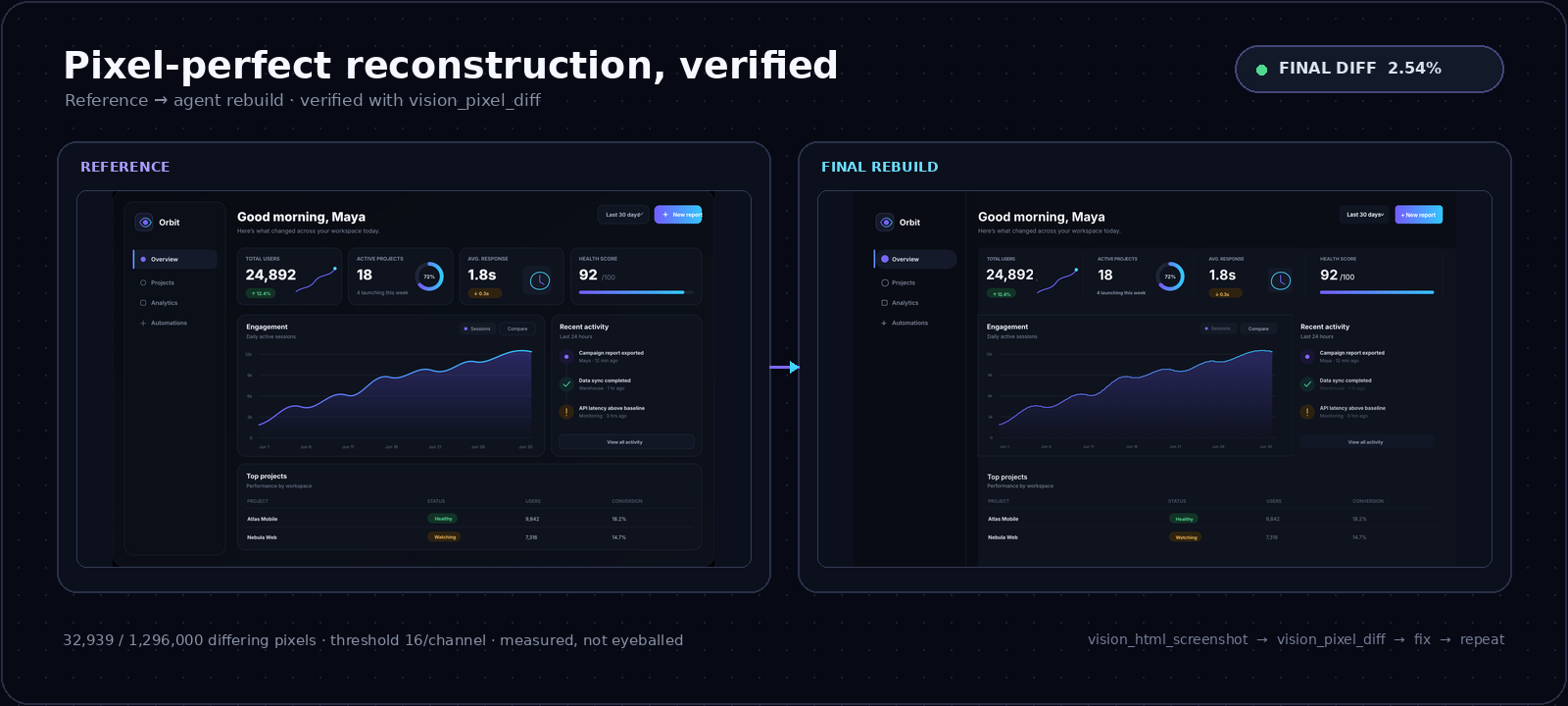
On-demand vision for text-only DeepSeek Harness agents: built-in free keyless vision chain and 14 vision tools, routing image turns as tool calls to vision models with pixel fidelity, no Python needed, one-command install.

Give text-only models in DeepSeek Harness eyes, enabling image Q&A, long-screenshot OCR, UI restoration, and GUI visual tasks.