dsh-plugin-csv-report
Run the following command in DeepSeek Harness:
dsh plugin install SUFE-Chaoyi/dsh-plugin-csv-report
Paste the following prompt into your AI chat to install this plugin:
In a DeepSeek Harness environment, run dsh plugin install SUFE-Chaoyi/dsh-plugin-csv-report to install this plugin; the source repository is https://github.com/SUFE-Chaoyi/dsh-plugin-csv-report .
About this plugin
In tariff data analysis, the data preparation stage that comes before any operational decision is often the most painful part: raw files arrive in inconsistent formats, analysis scripts are hard to reuse, quality issues are difficult to trace, and results lack a hash chain linking upstream and downstream artifacts. dsh-plugin-csv-report packages this entire workflow into two callable DeepSeek Harness tools, turning the path from raw tables to an auditable statistical report into a standard, reproducible, and traceable pipeline.
On the capability side, tariff_prepare reads XLSX, XLSM, and CSV files, standardises user identifiers, entry dates, and numeric fields, generates a 19-field data dictionary, and runs comprehensive quality checks covering required fields, duplicate identifiers, invalid values, brand enumerations, binary flags, and saturation ranges before emitting a normalised CSV and a preparation manifest. tariff_describe then produces a per-field data-quality report, computes mean, standard deviation, median, and quartiles for numeric fields, delivers Top-N distributions for categorical fields, and aggregates group statistics by plan name, user region, and brand series, culminating in a full Markdown report index.
The plugin is well suited for telecom operators or data teams working with de-identified tariff data in local environments. It does not make business decisions or perform causal inference; instead, it ensures that every step is connected by a SHA-256 hash chain spanning raw files, normalised data, and the final report, making results auditable and independently verifiable.
Use Cases
- Standardising raw tariff tables and generating field dictionaries
- Producing per-field descriptive statistics and grouped distribution reports
- Verifying the end-to-end pipeline from raw data to report via SHA-256 hash chains
Best For
- Tariff data analysts at telecom operators
- Data teams requiring local descriptive statistics on de-identified data
- Engineers pursuing auditable and reproducible reporting pipelines
Related Plugins
A unified suite combining hot runtime injection, task-aware thinking-mode routing, and a graded session protocol with red-team gates to sustain model diligence across long-horizon inference.
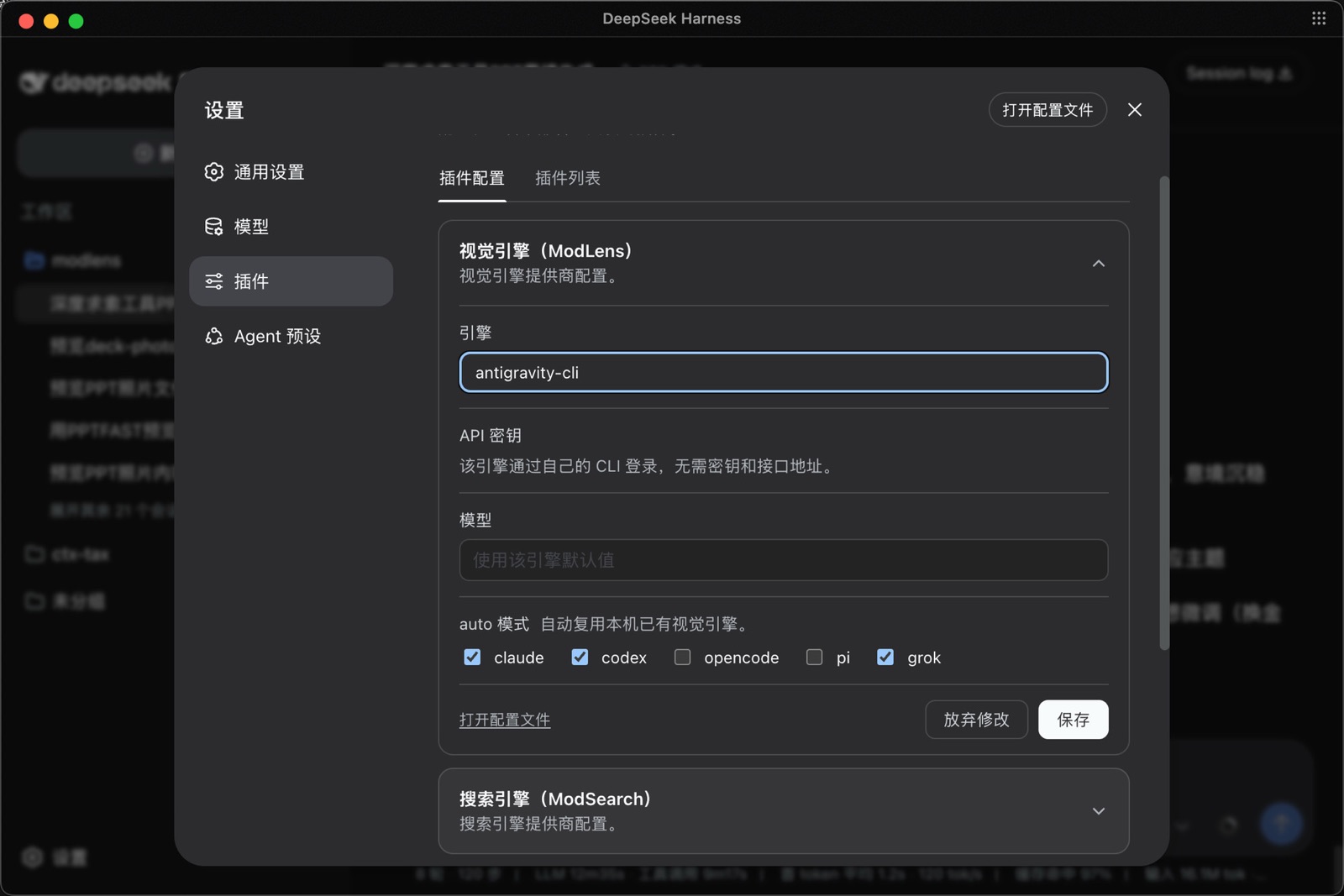
ModLens is a vision plugin for DeepSeek Harness that gives text-only models sight by reading images pasted directly into chat, with zero-config setup and multiple vision engines.
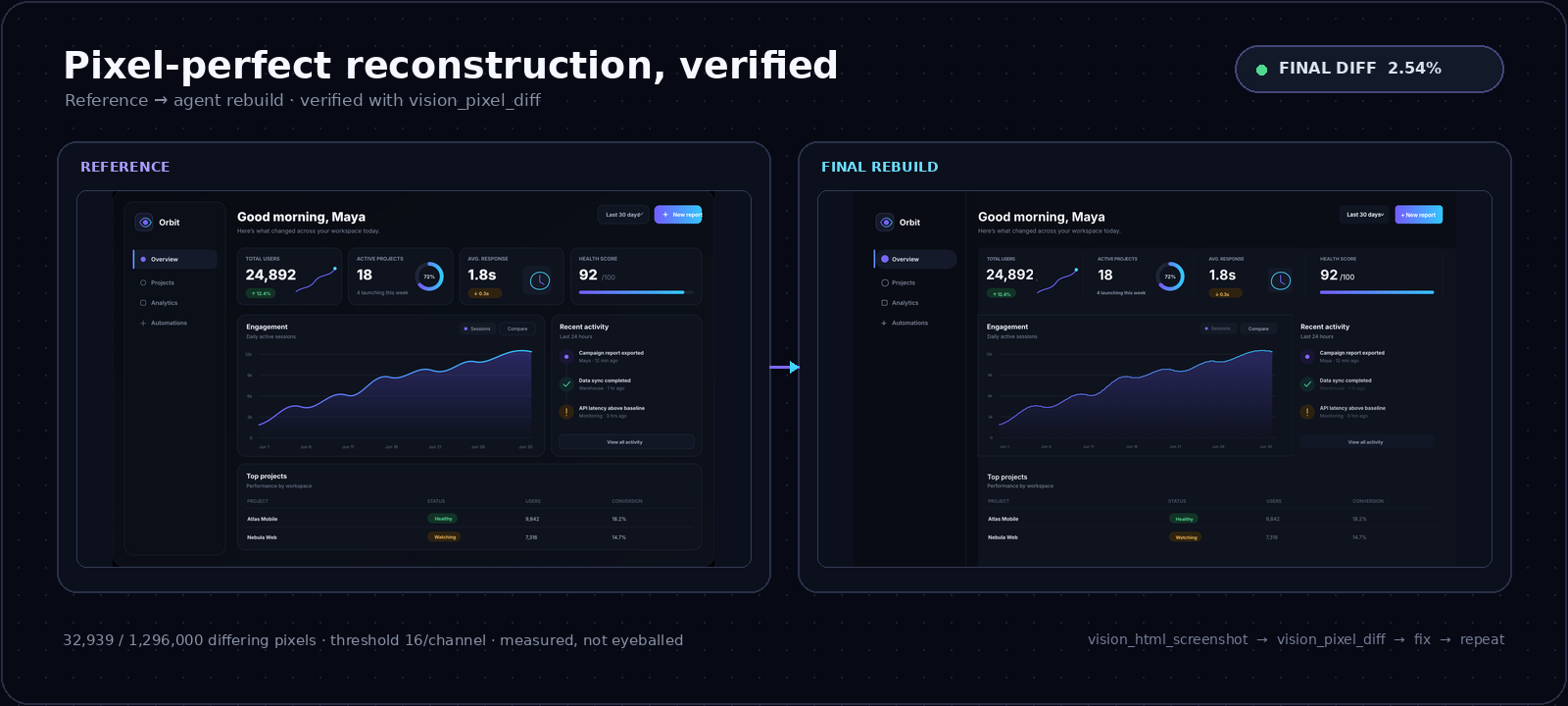
On-demand vision for text-only DeepSeek Harness agents: built-in free keyless vision chain and 14 vision tools, routing image turns as tool calls to vision models with pixel fidelity, no Python needed, one-command install.

Give text-only models in DeepSeek Harness eyes, enabling image Q&A, long-screenshot OCR, UI restoration, and GUI visual tasks.